
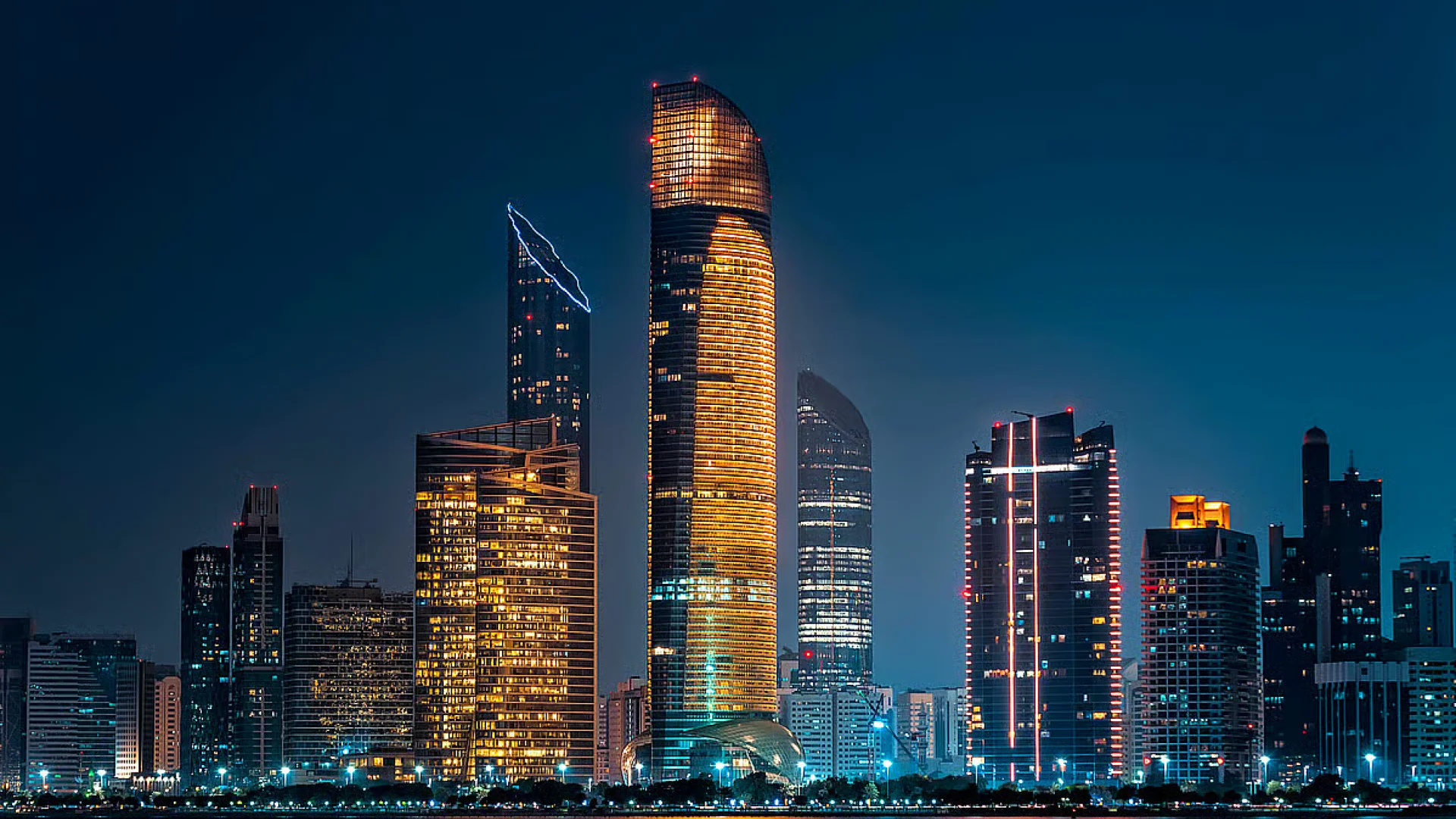

Seventy-five million square metres is not a statistic in Abu Dhabi—it’s a horizon line. The capital has approved that amount of development area for 2025, a move that strengthens its project pipeline and signals continued momentum in urban growth, connectivity, and long-term economic diversification. Beyond the headline figure, the decision points to a coordinated push for new communities, supporting infrastructure, and more capacity for homes, workplaces, and services. For the property market, it’s a clear message: the next cycle is being planned now, not improvised later.
The light in Abu Dhabi does something strange in the morning. It turns the city’s edges crisp, almost architectural, as if the skyline has been cut from paper and placed against the Gulf. On the outskirts, where the asphalt still smells new, a site supervisor lifts his chin and gestures with a gloved hand. “Picture it,” he says, not pointing at a single tower, but at empty space—flat, quiet, sun-struck. A truck reverses with a steady beep. Dust rises and hangs, then disappears. “This isn’t one project,” he adds. “This is the next chapter.”
That chapter has a number attached to it—one that lands with the weight of a masterplan: Abu Dhabi has approved 75 million square metres of development for 2025. On paper it’s a headline. On the ground, it’s a future made of roads and pipes, shaded walkways and service corridors, schools and clinics, storefronts that will smell of coffee at 7am, apartment windows that will glow at midnight.
In real estate, approvals are not a ceremonial stamp. They are the moment the city’s intentions become legible to everyone watching—developers, contractors, utilities, financiers, employers, and families deciding where to live next. A development-area approval of this scale suggests a broad and deliberate pipeline: land readied for masterplanning, infrastructure coordination, and a sequence of projects that can be scheduled rather than guessed.
Abu Dhabi has built a reputation for thinking in systems—how a neighbourhood connects to employment, how mobility and utilities scale with population, how new districts avoid becoming isolated “islands” of buildings. The 2025 approval sits inside that mindset: growth, but planned; expansion, but connected.
Stand near a major arterial road and you can feel how the capital moves. Cars glide, buses pull in, delivery vans stitch together the city’s daily logistics. Urban expansion here is less like sprawl and more like choreography—nodes, corridors, and the careful placement of density.
A planner once described it to me with a simple line: “A building is a product. A district is a promise.” The promise depends on what surrounds the buildings: the travel time to work, the quality of the public realm, the shade, the retail mix, the parks that become weekend rituals. The 75-million-sq-m approval is, in that sense, a promise of more “complete” urban pieces—areas large enough to be designed as communities, not just parcels.
2025 is close enough to shape the market’s near-term expectations and far enough to require discipline. Approvals now help align design, procurement, and infrastructure sequencing—so that roads arrive before traffic becomes a problem, and utilities arrive before keys are handed over.
For the property sector, timing also influences sentiment. Investors and end-users don’t only ask, “Is there demand?” They ask, “Is the city making room for demand?” A development pipeline of this magnitude answers with confidence. It signals that Abu Dhabi wants to accommodate growth in residents, businesses, and services through structured planning rather than scarcity-by-accident.
It always begins with noise. The metallic clank of temporary fencing. The rhythm of piling rigs. The shout of a foreman cutting through engine hum. Then, gradually, the quiet details arrive—the first curb stones, the first streetlights, the first small trees that look almost comic against the scale of the site.
And then come the first human moments. A security guard learns the names of early residents. A supermarket opens with too-bright lighting and an aisle of dates stacked like sculpture. A child tests a new pavement on a scooter, wobbling, laughing, repeating the same loop until the street feels like theirs.
This is the translation of square metres into life. Approving 75 million sq m for 2025 expands the canvas on which those moments can happen—and increases the city’s flexibility to deliver different kinds of homes and workplaces, depending on what the next few years demand.
Large development approvals are a deep breath for a real estate market. They can ease pressure by enabling more supply over time—but they also raise the bar. More pipeline typically means more competition: between developers on delivery speed, between projects on design and amenities, between districts on lifestyle and access.
In practical terms, that can reshape buyer and tenant behaviour. When choices multiply, people stop asking only “How big is it?” and start asking “How does it live?” A broker I spoke with recently put it plainly: “People don’t rent a floor plan. They rent a routine.” The routine is built from proximity to schools, commutes, shade, walkability, retail, and the quality of management after handover.
In a desert climate, infrastructure is destiny. Water, power, district cooling, drainage, telecoms, roads—these are not hidden mechanics but the conditions that make urban life comfortable and resilient. Approving a vast development area implicitly commits the city and its partners to a parallel expansion of capacity and connectivity.
That’s why the announcement matters even to people who will never buy property. It suggests more coordinated planning, more construction activity, and an urban growth story that is being written with utilities and mobility in mind—not treated as afterthoughts.
Abu Dhabi’s transformation has never been a single “moment.” It’s a sequence—each cycle adding density here, a new corridor there, a fresh node of activity where yesterday there was only distance. The 75 million sq m approval for 2025 fits that pattern. It’s the city saying: we are still expanding, but we want that expansion to be legible, investable, and liveable.
For real estate investors, the headline is not only “more development”—it’s more optionality. Approving 75 million sq m for 2025 indicates Abu Dhabi is widening its future supply base, which can influence pricing power, rent growth trajectories, and the timing of entry and exit across submarkets.
1) Supply pipeline = portfolio planning tool. A bigger pipeline can moderate overheating by increasing future stock, especially where many similar units are delivered in the same window. Investors should treat the approval as a prompt to map upcoming completions and identify where supply clusters may compress rents or incentives.
2) Micro-location becomes everything. When the city expands, “prime” can migrate. New roads, bridges, schools, retail anchors, and employment clusters can re-rate areas quickly. The most attractive risk-adjusted opportunities typically sit where connectivity is improving but pricing hasn’t fully caught up—think emerging nodes rather than fully matured addresses.
3) Cycle discipline: approvals are early-stage. Development approval is the start of a timeline that includes design, procurement, construction, leasing, and stabilisation. Investors should align strategy with horizon:
4) Look beyond residential. Large-scale urban growth typically expands demand for convenience retail, education and healthcare space, community services, and logistics supporting last-mile delivery. Diversified exposure—rather than a single-asset bet—can improve resilience across cycles.
5) Differentiation and operating quality will matter more. As competition increases, assets with strong property management, efficient layouts, credible sustainability features, and demonstrably lower operating costs tend to hold occupancy and pricing better. In a larger pipeline environment, “average” becomes more replaceable.
Investor checklist for 2025–2028:
Bottom line: the 75 million sq m approval is a structured growth signal. It can unlock upside in emerging micro-locations and early-cycle entries—while simultaneously demanding sharper underwriting as future supply and competition become more visible.