
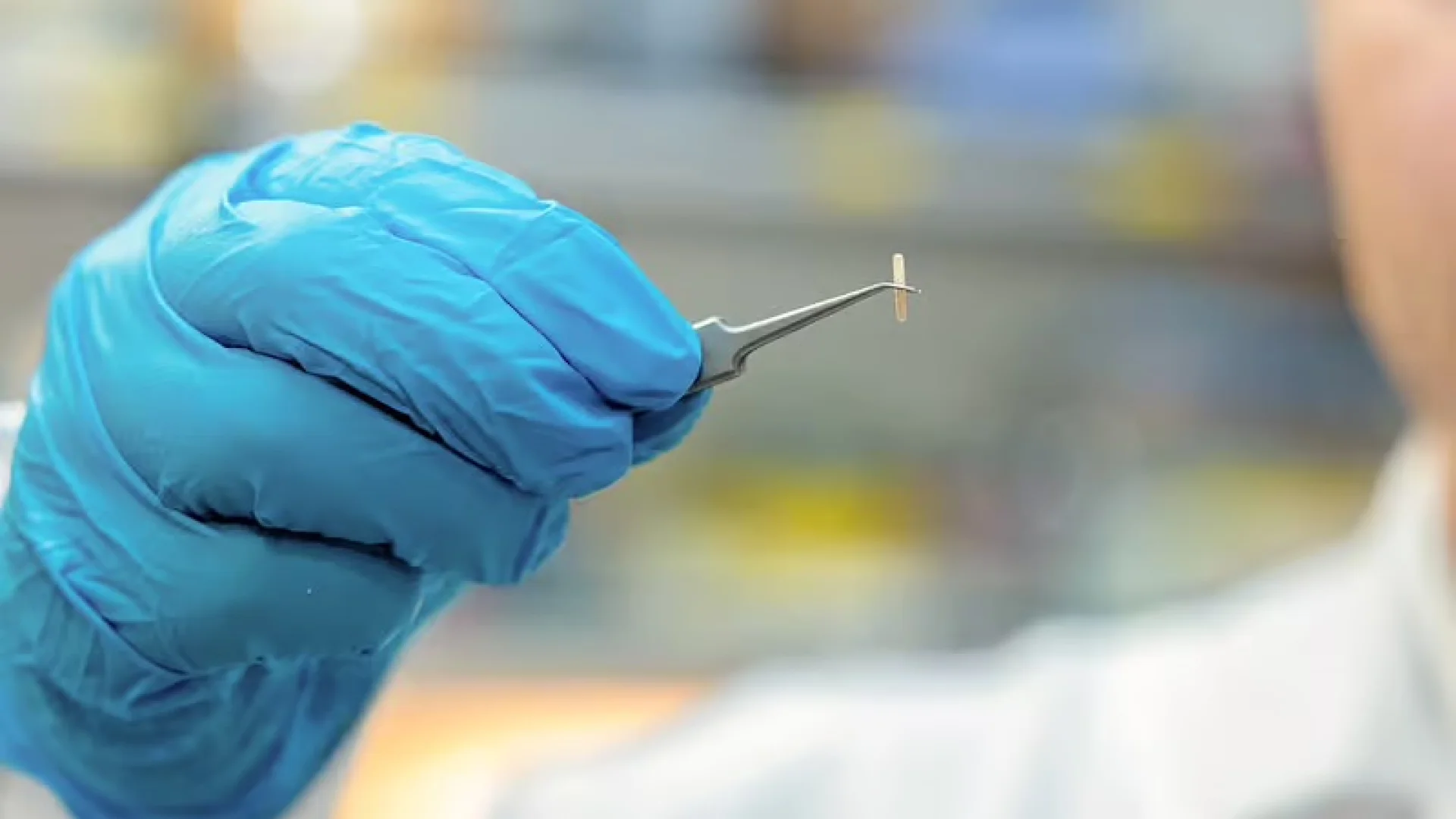

Chronic pain doesn’t arrive like a storm — it settles in like humidity, clinging to every movement and decision. Researchers in Abu Dhabi are now working to disrupt that daily grind with a new wearable device aimed at modulating pain pathways in the nervous system. The goal is practical relief: fewer debilitating spikes, less reliance on heavy medication, and more control in ordinary life. It’s an advance rooted in local research ambition — and in a global need for smarter, gentler pain care.
The morning is perfectly ordinary — until it isn’t. A foot meets the floor and hesitates. A shoulder refuses the simple act of reaching for a cup. There’s no drama, no siren, just that familiar internal “warning light” that flickers on before you’ve even fully woken up.
That’s the thing about chronic pain: it turns the smallest motions into negotiations. And it’s exactly that daily bargaining that researchers in Abu Dhabi want to change. According to the report, a team has developed a wearable device intended to help ease chronic pain by influencing how pain signals move through the nervous system — a technology-driven attempt to give people something many have lost: a sense of control.
Ask anyone who lives with chronic pain what they’re tired of, and you’ll hear it quickly: the fog. The cycle of pills and side effects. The way treatment can sometimes feel like trading one limitation for another — less pain, but also less clarity, less energy, less you.
The Abu Dhabi device is positioned as a different kind of answer. Instead of masking symptoms with broad, body-wide effects, it aims to work with targeted stimulation — the kind of careful, measured input that can alter how pain is processed and perceived. Think less “blanket,” more “dial.” Less sedation, more modulation.
In the language of science, this is about pathways and signals. In the language of everyday life, it’s about the moment you can finally sit through a meeting without shifting every 30 seconds, or the evening walk you don’t cancel because your back feels like a locked door.
Chronic pain is not just pain that lasts. It’s pain that reorganizes your life. It changes how you plan, how you socialize, how you sleep. It can narrow a world down to the distance between the sofa and the kitchen, measured in careful steps.
It also comes with a cruel uncertainty: flare-ups can feel random, like a switch you can’t reach. That’s why the idea of a wearable tool — something that can be used in real life, outside clinical walls — matters so much. It suggests relief that travels with you.
Pain is a signal. Nerves carry it. The brain interprets it. When those signals become persistent — or when the system becomes overly sensitive — pain can keep firing long after an original injury has healed, or in conditions where the body’s alarm system stays on high alert.
The device developed by Abu Dhabi researchers is described as a way to intervene in that signaling process through controlled stimulation. You can picture it like recalibrating an overactive smoke detector: you don’t want it silent forever — you want it accurate again.
The real test for any medical innovation is not just whether it works in ideal conditions, but whether it works on an average Tuesday — in traffic, under stress, after a bad night’s sleep. That’s the promise of wearable technology: it’s built for the messy, human reality of routine.
The report frames the Abu Dhabi development as part of a broader push in the UAE toward practical, high-impact research. For patients, that translates into something tangible: a potential tool that supports pain management without demanding constant clinical supervision.
And there’s a psychological shift, too. Chronic pain often makes people feel passive, as if life is something happening to them. A wearable intervention — used consistently, adjusted thoughtfully — can represent a move toward active self-management. Not bravado. Not denial. Just agency.
Most people living with chronic pain aren’t asking for a cinematic cure. They’re asking for small, precious returns: sleep, movement, predictability. The ability to make plans and believe them.
For now, the device sits in the compelling space between research and real-world rollout — an invention shaped by urgent need and careful engineering. But even at this stage, the story carries weight: it’s about treating pain with precision, and about building health innovation where people actually live.
Health and life-sciences innovation increasingly shapes city demand patterns. Where research teams, clinics, and MedTech startups cluster, housing demand from skilled professionals often rises, and commercial ecosystems follow — labs, flexible offices, and mixed-use districts that support talent retention.