
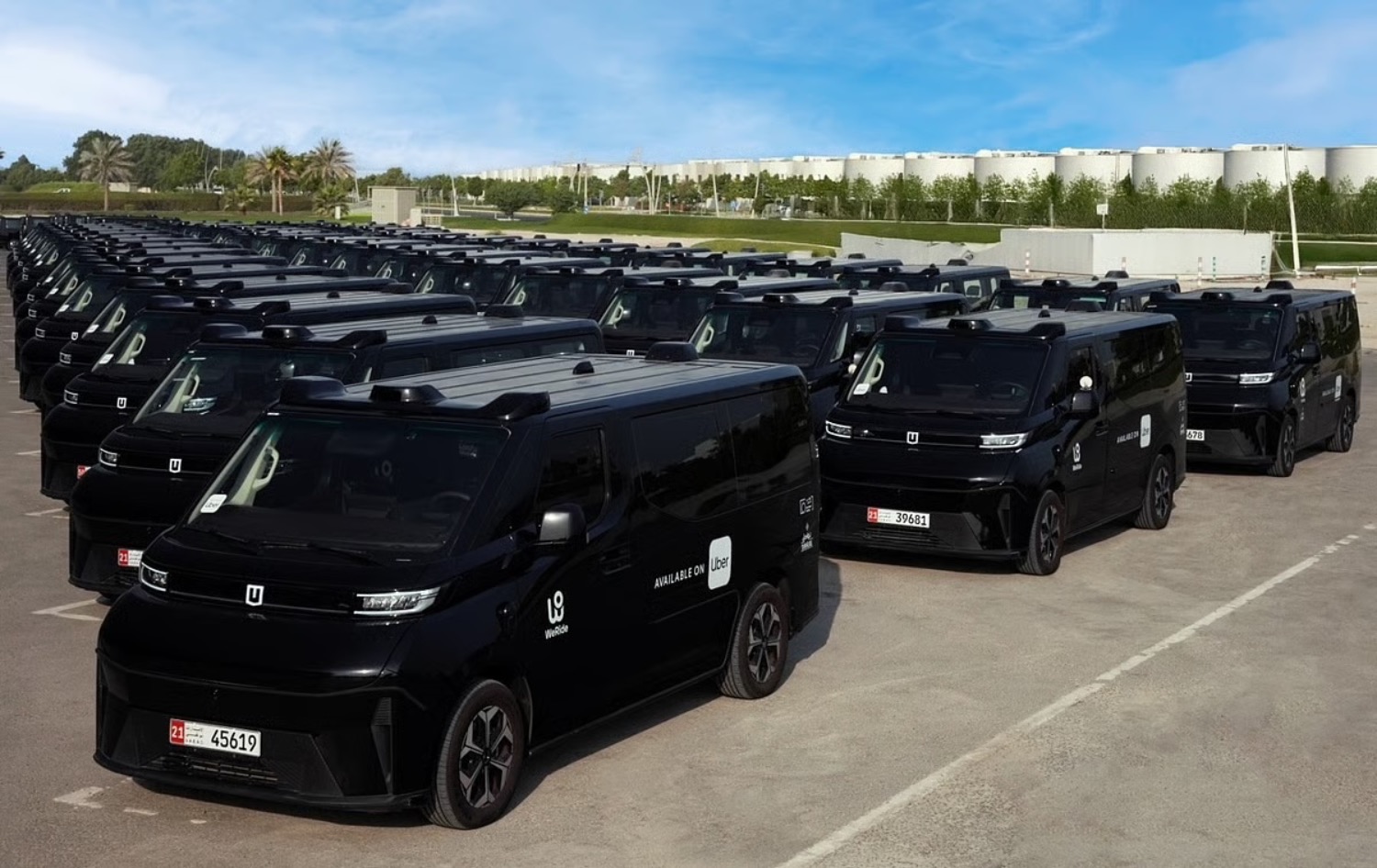

On a quiet Yas Island street, an electric SUV glides to the curb, its headlights blinking politely and its driver seat completely empty. This is not a test track, not a closed demo, but everyday Abu Dhabi traffic – and the city has just switched on its first fully driverless robotaxi service for the public. Operated by Bayanat under the TXAI brand, the vehicles navigate a mapped-out zone on Yas Island without a human behind the wheel, watched over instead by a control room full of screens and engineers. After earlier pilots with safety drivers and more than 16,000 trips completed, Abu Dhabi is now stepping confidently into a future where taxis can arrive on command, but the driver is made entirely of code.
The boy on the pavement leans forward, peering through the windscreen. Driver seat: empty. The back door swings open with a soft hiss.
Where is the driver, he asks, half whisper, half giggle.
His mother laughs, holds up her phone with the TXAI app still glowing on the screen. In Abu Dhabi's newest taxis, she tells him, the driver lives in the car's computers and in a control room a few kilometres away.
On Yas Island, the future of urban transport does not arrive with a siren. It rolls up quietly, no steering wheel hands, no small talk, just a voice that greets you when you buckle up and a map that lights the way on a screen.
Abu Dhabi has officially launched its first fully driverless robotaxi service for the public, turning what was once a pilot project into a real transport option. The vehicles, operated by Bayanat under the TXAI brand, now run on public roads in a designated zone on Yas Island without a human safety driver sitting in the front.
It is a big step forward from the earlier test phase that started during Formula 1 weekends and continued as a supervised trial. Then, a safety driver sat ready to take over. Now, that seat is empty. The human backup has moved to a remote operations centre, where staff monitor live feeds, vehicle locations and performance on giant screens.
Within this geofenced area, the robotaxis follow pre-approved routes, handle intersections and roundabouts, and share the road with everyday traffic. To anyone watching from the curb, they look like regular white SUVs. The only giveaway is the roofline: a compact crown of sensors quietly spinning and watching.
Getting into a robotaxi starts like any modern ride: with an app. The TXAI app shows a familiar map view of Yas Island. You drop a pin, confirm your pick-up point and destination, and watch a small icon glide across the screen as the vehicle approaches.
When the robotaxi arrives, the doors unlock via the app. Inside, the cabin looks reassuringly normal: comfortable seats, seat belts, air conditioning humming at a polite volume. What is different is the display in front of you, showing the planned route, current speed and a stylised view of the surrounding traffic that the car's sensors can see.
A calm voice welcomes passengers, reminds them to buckle up and explains that the ride is being monitored. During the launch phase, rides are offered at promotional rates, with many early adopters jumping on board simply to experience the sensation of moving through the city with no one at the wheel.
Behind the smooth ride is a dense mesh of technology. Each robotaxi is packed with lidar, radar and cameras that scan the road in 360 degrees, feeding a constant stream of data to the onboard computer. High-definition maps, produced by Bayanat, give the car a centimetre-precise understanding of lanes, curbs, crossings and landmarks.
The vehicle's software takes all of this in, predicts what other road users are likely to do, and decides when to accelerate, brake or change lanes. If anything unusual happens, the remote operations centre can step in, slow the car, reroute it or bring it to a safe stop.
Layers of redundancy are built in: multiple sensors cross-check one another, communication lines are encrypted, and strict safety protocols govern how the fleet behaves in heavy rain, unclear situations or if a sensor fails.
The launch of fully driverless service did not happen overnight. In its first phase, the TXAI project clocked more than 16,000 trips with safety drivers on board, collecting data on traffic patterns, rider behaviour and edge cases. Those trips also served a softer purpose: building trust.
Early passengers talk about their first few seconds of unease. Then comes the shift: noticing how cautiously the car approaches roundabouts, how early it slows at crosswalks, how it obeys speed limits with textbook discipline. Families snap photos, teenagers film TikToks, office workers quietly test the new service on their commute.
For the emirate, the robotaxi launch fits into a broader ambition: weaving autonomous mobility into daily life. UAE strategies envision a future where a significant share of trips in major cities are handled by self-driving vehicles, cutting congestion, lowering emissions and reshaping how people think about car ownership.
On Yas Island, it is the small moments that tell you something has changed. A resident leaves the gym and orders a robotaxi instead of walking to the car park. A tourist hops in near a hotel to glide over to a mall without ever speaking to a driver. Parents send a quick picture of the empty front seat to a family group chat, half joke, half milestone.
At first, people stand on the sidewalk and stare as an empty-front-seat car glides past. By the third or fourth one, heads turn less. In cities, the future always starts as a spectacle, then it becomes background noise.
Autonomous taxis are not just a transport story; they are a city-shaping story. When a neighbourhood suddenly gains effortless, on-demand mobility, the map of what feels close and convenient shifts.
On Yas Island, the new robotaxi zone stitches together residential clusters, malls, leisure attractions and offices. For residents, that makes car-light living more realistic: you can step out of your building and rely on a driverless ride for the last mile instead of owning a second car.
For developers and investors, that shift has real implications.
Forward-looking projects in Abu Dhabi are already experimenting with car-light communities, shaded walking paths and integrated micro-mobility. Fully driverless taxis add another powerful layer to that vision, turning smart mobility from brochure slogan into a daily, callable service.
For long-term investors, the message is clear: follow the infrastructure. As robotaxi routes expand from Yas Island to other districts, they will redraw invisible lines of convenience, and with them, the next wave of prime locations in the capital.