
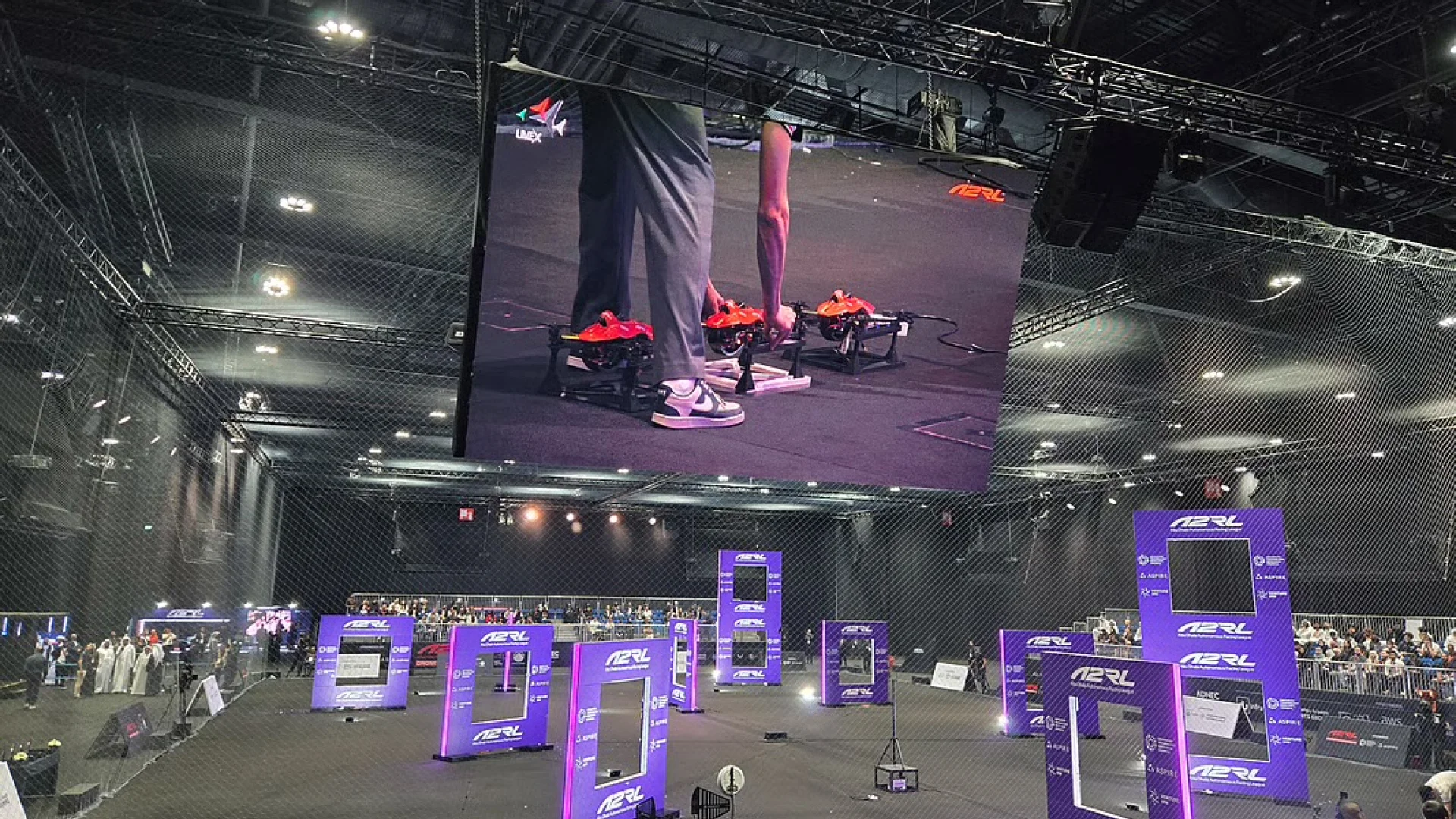

Under the bright, antiseptic lights of ADNEC Centre Abu Dhabi, the drone-racing hall feels like a laboratory—until the first propellers scream and the crowd forgets to breathe. South Korean FPV pilot Minchan Kim, goggles on and nerves tight, faces a course he knows by heart and an opponent that never gets tired: TII Racing’s autonomous AI drone. The A2RL Drone Championship season finale grinds into a 4–4 deadlock, forcing one last, winner-takes-all heat. Then the machine clips a gate and can’t recover—while the human stays clean, calm, and just fast enough.
The sound hits first. A thin, metallic whine that makes your shoulders rise. Somewhere behind me, someone murmurs, “Don’t blink.”
The AI drone darts out like it’s been fired from a rail—perfect line, perfect speed. Minchan Kim doesn’t chase. He lets it lead, carving smooth arcs through the gates with the kind of restraint that looks almost lazy… until you notice his knuckles.
Heat by heat, the arena turns into a pressure cooker. The AI answers with faster laps. Kim answers with something machines still struggle to fake: recovery, rhythm, composure. When crashes—rare, brutal—start to creep into the autonomous runs, the scoreboard keeps snapping back to level. 2–2. 3–3. Then 4–4, and everyone stands.
The final heat is a tunnel of neon frames and jittering air. Kim pushes early, threading the opening gates with surgical precision, keeping just enough distance to avoid the “dirty air” turbulence off the drone ahead. Then it happens: the AI clips a gate. A tiny mistake. A huge consequence. It doesn’t regain control. Kim stays on line, and the race is suddenly—finally—his.
Seconds later he pulls off his goggles, shaken. “When I was flying, I couldn’t even breathe,” he says. On the tech side, TII researcher Aaesha Al Shehhi calls it plainly: their drone is among the fastest, but speed isn’t everything when real-world lighting shifts and sensor disturbances bite.
Organised by ASPIRE, the championship is a proving ground beyond the lab. For now, the final word is human—but the gap is narrowing fast.
Recurring tech exhibitions and competitions around ADNEC strengthen Abu Dhabi’s pull as an innovation hub—supporting demand for hotels, serviced apartments, and flexible office space near exhibition and research clusters. For investors, well-connected areas with reliable event-driven footfall can translate into steadier short- and mid-term rental performance, especially where transport links and mixed-use amenities keep occupancy resilient year-round.