
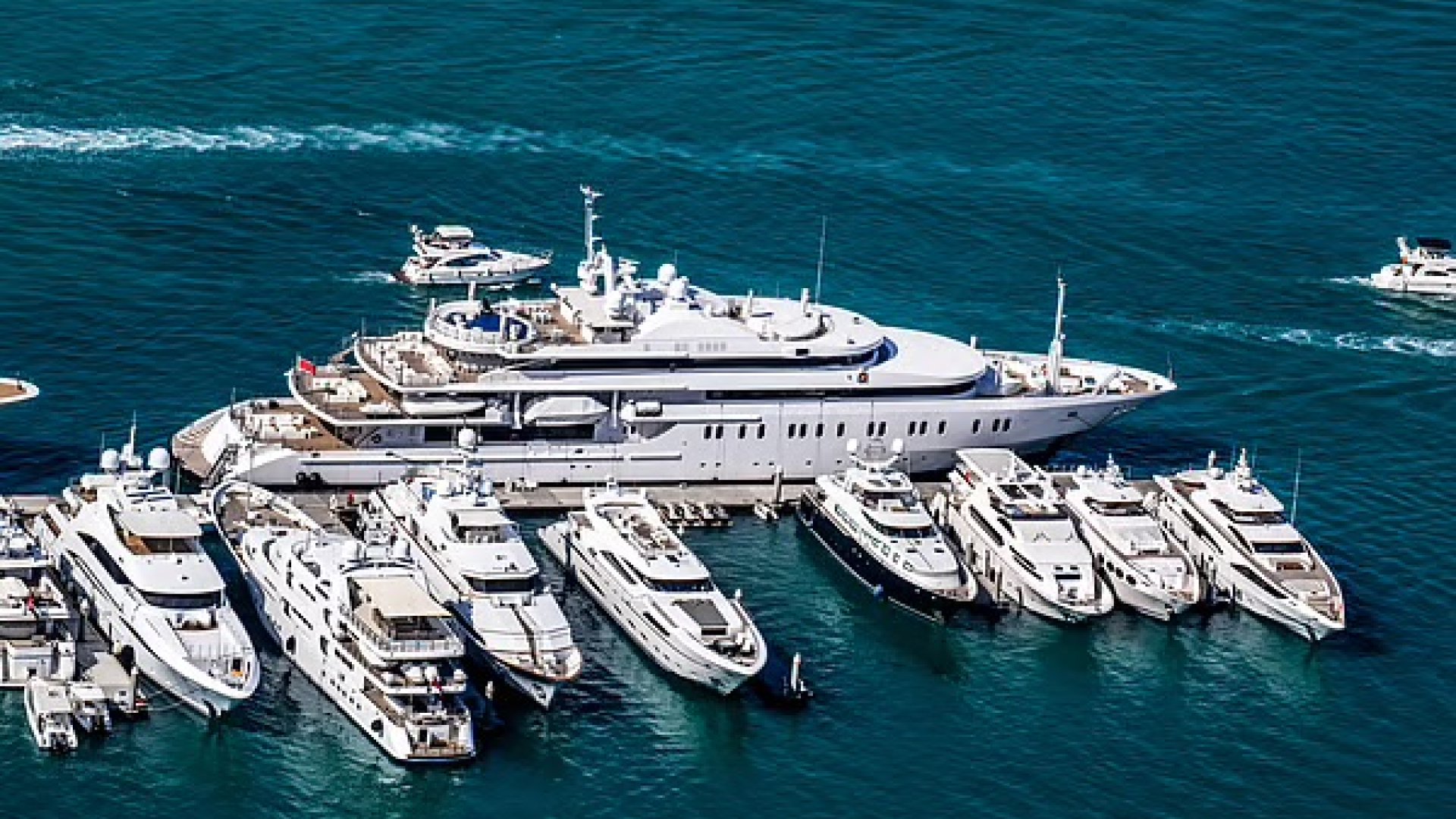

A weekend on the water is about to feel a lot more like freedom and a lot less like admin. Starting January 2026, authorities plan to simplify yacht travel between Abu Dhabi and Dubai through coordinated processes designed to make departures, arrivals and checks faster and clearer. The change effectively sketches a maritime “corridor” between two of the UAE’s most magnetic coastlines—boosting charter routes, marina traffic and the rhythm of waterfront life. For investors, it’s a practical lifestyle upgrade that can ripple into demand for marina-adjacent homes, hospitality and retail.
The lines are still sleeping on the cleats when the first light hits the marina. A gull floats low over the water. Somewhere behind you, a coffee machine hisses like a tiny steam engine. On the dock, a captain checks his phone, then the horizon, then his phone again.
“Dubai today?” a guest asks, barefoot, hopeful.
The captain smiles—one of those polite, measured smiles that says it depends. Not on wind. Not on tides. On process.
Because for years, the idea of cruising between Abu Dhabi and Dubai has felt like the most natural thing in the world and, at the same time, slightly heavier than it should be. On the chart it’s a clean coastal glide: sea, skyline, sea again. In real life, yacht owners and charter operators have often had to think beyond fuel and weather—into paperwork, checkpoints, coordination, timing.
That’s why the announcement now making waves in the UAE’s yachting circles lands with the quiet force of a well-tuned engine: from January 2026, yacht travel between Abu Dhabi and Dubai is expected to become significantly easier, thanks to simplified, coordinated procedures. Not a flashy new bridge or a record-breaking terminal—something more modern, more invisible, and sometimes more powerful: friction removed.
Think of it as an express lane built from alignment. When authorities coordinate processes, the journey changes shape. Fewer unknowns. Fewer stops that feel like interruptions to the very purpose of being at sea.
And yachting is sensitive to small frictions. A family might happily pay for a charter, plan outfits, argue about playlists—then hesitate when the route starts to feel complicated. A corporate group wants a clean schedule. A high-end guest wants the feeling that the city anticipates them, not the other way around.
“When it’s straightforward, people do it more often,” a marina manager says, glancing toward a row of white hulls catching the sun. It’s a simple sentence, but it describes a whole market truth: frequency is built on ease.
A date is more than a date. In coastal economies, it becomes a planning anchor. Charter operators start designing two-emirate itineraries with confidence. Marinas look at berth demand differently. Waterfront restaurants think about peak nights, not just peak seasons. Service businesses—maintenance, detailing, provisioning—start imagining a busier calendar.
And there’s something else: Abu Dhabi and Dubai are not just neighbors. They are contrasting moods.
Abu Dhabi is the wide, calm inhale: cultural landmarks, deliberate luxury, space. Dubai is the bright exhale: events, energy, a skyline that performs. When travel by yacht becomes smoother between them, those moods can be combined into one weekend narrative—a city-to-city glide where the journey itself is part of the headline.
No one books a yacht for the privilege of waiting. People book it for the first moment the dock falls away and the coastline starts to move.
Simplified procedures are, ultimately, about protecting that feeling. In practical terms, smoother coordination can unlock:
It’s a quality-of-life upgrade disguised as administration.
Watch what happens when a yacht pulls in on a warm evening. The dock becomes a stage. A couple pauses for a photo. Someone waves from the upper deck. A child points at the ropes. You hear the soft thud of fenders. A restaurant host steps forward like they’ve been waiting for that exact arrival.
If travel between the two emirates becomes smoother, those arrivals can become more frequent—and frequency is the currency that supports:
In other words: the ecosystem around the marina. The part of the city that smells faintly of sunscreen and salt and new money.
The UAE has mastered the art of turning infrastructure into experience. Museums become weekend plans. Beaches become brands. Restaurants become landmarks. Yachting fits neatly into that story: it’s luxury you can touch, photograph, and narrate.
A smoother Abu Dhabi–Dubai yacht connection encourages a “dual-city” itinerary that’s easy to sell internationally. Charter guests can start in one emirate and end in the other without the mental friction that makes people choose a simpler loop.
And that’s how a coastline becomes a product: when it can be consumed comfortably.
Cities compete on skyscrapers, sure. They also compete on how easy it is to live and move.
When authorities streamline procedures, they’re not only helping yacht owners. They’re broadcasting a message: maritime leisure is a priority, and the government is willing to do the unglamorous work required to make glamour feel effortless.
For investors and developers, that matters. Smooth processes reduce perceived risk, and perceived risk has a direct relationship with pricing—especially in premium lifestyle assets.
Here’s the curious thing about changes like this: markets react early. Once a start date exists, expectations start behaving like demand.
A charter company may renew or expand a fleet in anticipation of higher turnover. A marina may push upgrades sooner. A waterfront hotel may tune its packages toward “arrive by sea.” And a buyer who’s been circling a marina-view apartment may suddenly decide that “someday” is too late.
Because when movement gets easier, places become closer—even if the miles don’t change.
For real estate investors, the planned January 2026 simplification is best read as a mobility improvement with a premium-lifestyle multiplier. By making it easier to move between two high-demand hubs, the UAE effectively strengthens the coastal strip as one connected leisure market—supporting pricing power in marina-adjacent residential, hospitality and retail.
1) Marina-adjacent homes gain narrative value
In prime markets, buyers don’t only purchase square meters; they purchase a story. “I can step out, board, and be in the other emirate with less hassle” is a story with tangible lifestyle appeal. That can lift interest in:
2) Hospitality and short stays can benefit
Smoother inter-emirate yacht routing supports split-stay behavior: one night in Abu Dhabi, one in Dubai, anchored by the journey. Hotels and serviced apartments near marinas may see stronger weekend demand and higher willingness to pay for sea-facing units and concierge-led experiences (subject to local rental regulations).
3) Waterfront retail and F&B: footfall is the fuel
More yacht traffic typically increases promenade activity. For commercial investors, the winners are often the units closest to the “arrival moment”: visible terraces, easy drop-off, direct sightlines to the docks. Marine services—provisioning, detailing, maintenance—may also see steadier revenue as trip frequency rises.
4) Development strategy: process is part of the product
Developers who integrate marina adjacency, berthing partnerships, boat-friendly design (storage, wash-down areas, concierge), and clear guest flow can translate the policy shift into a stronger value proposition. The most resilient assets tend to be those that convert lifestyle into repeatable convenience.
5) Investor checklist
Bottom line: streamlining yacht travel is not a niche tweak. It strengthens the Abu Dhabi–Dubai waterfront as a continuous premium corridor—one that can translate into higher utilization, stronger weekend economics and improved long-term desirability for well-positioned coastal real estate.