
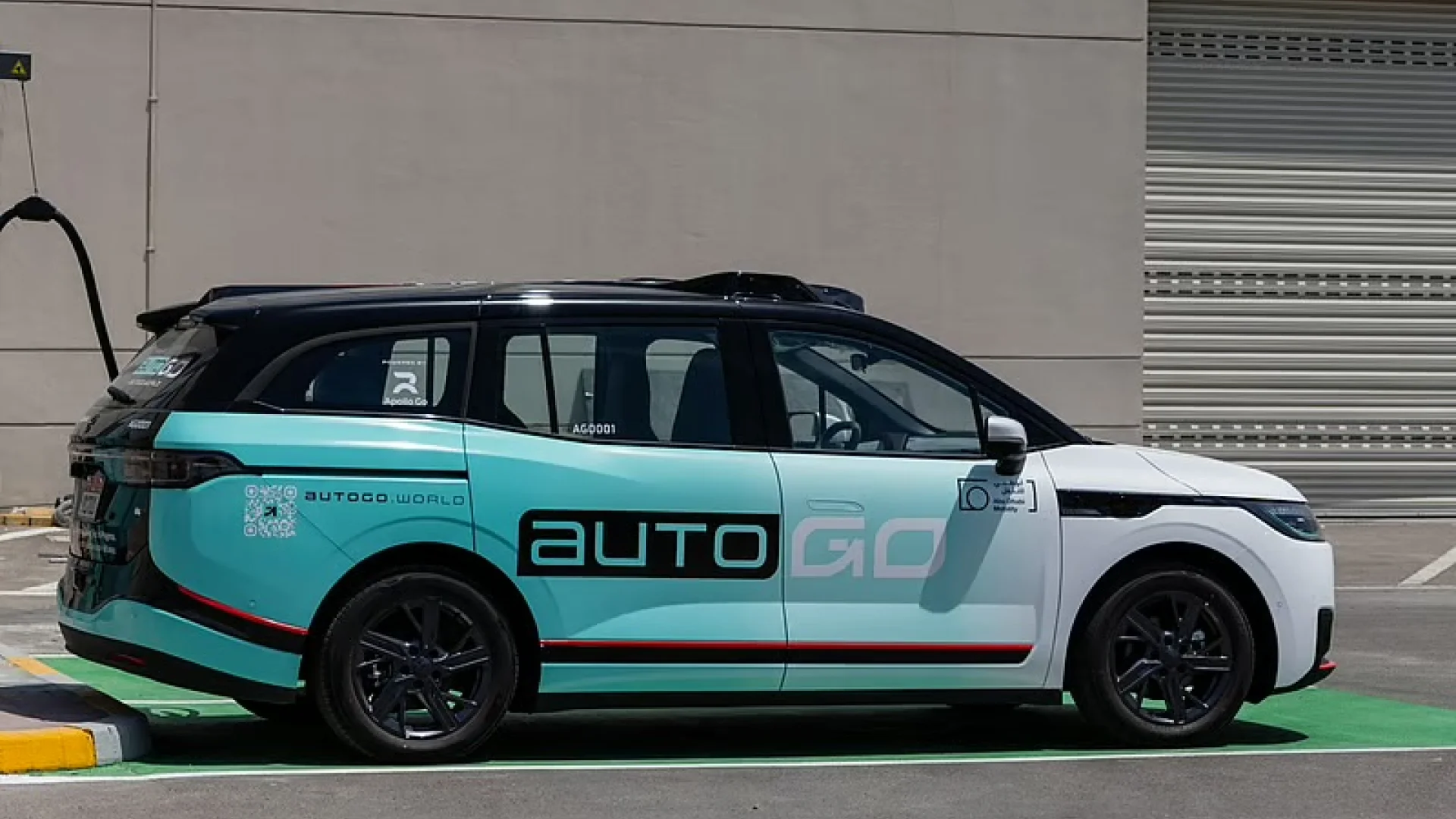

On Yas Island, the future doesn’t announce itself with a roar—it glides in, quiet and self-assured, with no hands on the wheel. Abu Dhabi is expanding the operating areas for its autonomous taxis across the island’s key leisure and hospitality zones, making driverless rides more visible, more practical, and closer to routine. In a destination built on seamless experiences—from hotels to attractions to event venues—the move signals a shift from controlled pilots to a broader, service-minded rollout. It’s a small geographic change with a big message: autonomy is being trained for real streets, real crowds, and real expectations.
The air on Yas Island holds its warmth long after sunset. Lights spill from hotel lobbies and glossy storefronts, painting the pavement in soft gold. Out by the curb, a car eases forward—smooth, measured, almost polite. And then the detail lands: the driver’s seat is empty.
A man next to me squints through the windshield as if the missing human might materialize at the last second. “So… it’s really on its own?” he asks, half-joking, half-hopeful. His friend answers without looking away from the moving car: “If it gets us there faster, I’m in.”
The vehicle signals, merges, and continues—no showmanship, no revving, no impatience. Just a calm little glide into the traffic stream, like it belongs there. Like it has always belonged there.
Abu Dhabi has expanded the operating areas of its autonomous taxis on Yas Island. On paper, that sounds like a technical update. On the street, it’s a statement. Yas Island isn’t a sleepy suburb with predictable turns and empty lanes. It’s a living stage: hotels, malls, waterfront promenades, entertainment districts, and event surges that can flip a quiet road into a slow-moving parade in minutes.
That’s precisely why it matters. If driverless taxis can function here—where visitors hesitate at crossings, rideshare pick-up points get crowded, and rental-car drivers sometimes change lanes at the very last second—they’re not just demonstrating technology. They’re demonstrating readiness.
The expansion means the robotaxi service can operate across additional parts of Yas Island, covering more routes and making it easier for people to encounter—then actually use—autonomous rides as a normal option between hotels, attractions, and key destinations.
We’ve been trained to read driving as body language. The slight lean before a merge. The micro-hesitation at a roundabout. The eye contact—quick, negotiated, human—that says, You go first. Autonomous taxis translate that language into sensors and rules. And the result can feel oddly mannered.
Some people call it overly cautious. Others call it comforting. On Yas Island, cautious can be a feature. Tourists walk like they’re still inside a hotel lobby—slow, distracted, looking up. Families fan out across sidewalks. Someone stops suddenly for a photo because the light hits a building just right. In a place built for delight, unpredictability is part of the design.
A driverless car that prefers to brake instead of bully its way through traffic fits that rhythm. It’s not trying to win the road. It’s trying to complete the trip.
The UAE’s mobility ambitions aren’t subtle. Smart infrastructure, seamless transport, and technology-forward public services have become part of the broader competitive identity: cities that work efficiently, feel modern, and scale fast.
Expanding autonomous taxi operations in a high-visibility destination like Yas Island does two things at once. First, it gathers the kind of operational experience you only get under real conditions—mixed traffic, visitor peaks, event nights, delivery vehicles, and the constant ebb and flow of people who are not trying to commute, but to enjoy themselves. Second, it markets the city without needing a slogan. A robotaxi is a moving headline.
And the island is an ideal laboratory because it’s self-contained enough to manage carefully, yet complex enough to be meaningful. It’s controlled reality—still reality.
You open the door and instinctively glance toward the front-left seat, expecting a nod, a greeting, a quick “Where to?” But there’s no one to greet you. The cabin becomes your own little pocket of quiet. Your conversation stays private. Your music stays yours. The trip feels—strangely—more like an elevator than a car: you choose a destination, you trust the system, you arrive.
Two guests step in behind me, still giggling with that theme-park energy. “I can’t believe we’re doing this,” one says, as if they’re about to jump from a height. The other replies, “It’s fine. It’s Abu Dhabi. They don’t do things halfway.”
The car moves. Smooth start. Clean lane position. A careful slowdown near a crossing where a couple is hovering at the curb, undecided. The moment passes like a well-edited scene—no drama, no horn, no abrupt jerk of the wheel. The guests stop giggling. They start talking about dinner.
Autonomous mobility doesn’t succeed because it’s futuristic. It succeeds because it’s structured. Defined operating areas. Continuous monitoring. Operational protocols. A system that’s designed to be conservative when the environment gets messy.
That’s why expansions matter more than flashy launches. Each additional zone suggests that regulators and operators have built enough confidence—through testing and data—to let the service breathe a bit wider. Not everywhere, all at once. But more than yesterday.
The core question in autonomous transport has shifted. It’s no longer “Can it drive?” It’s “Can it serve?” Can it show up reliably when people need it? Can it handle the awkward moments—the sudden stop, the unexpected pedestrian, the confusing pick-up point—without turning every ride into a nervous story?
Yas Island is the kind of place where expectations are high and patience can be low. Guests want experiences that feel frictionless. They don’t want to think about logistics. So if autonomous taxis become part of the island’s daily choreography, that’s a powerful validation: not just of technology, but of service design.
And then something subtle happens. People stop talking about the empty driver’s seat. They start saying, “Let’s just grab a taxi.”
For real estate investors, Abu Dhabi’s expansion of autonomous taxi operations on Yas Island is a location-quality signal—an indicator that the island is being optimized not only as an entertainment hub, but as a high-functioning, tech-enabled urban district. In hospitality and mixed-use environments, mobility is not a side issue; it directly shapes guest satisfaction, footfall patterns, and the “felt distance” between assets.
Bottom line: mobility innovation on Yas Island is not a gadget story. It’s part of the island’s competitiveness as a destination and an investment district—one where reduced friction can support stronger tenant demand, better trading performance, and, ultimately, more defensible valuations across hospitality-led and mixed-use assets.