
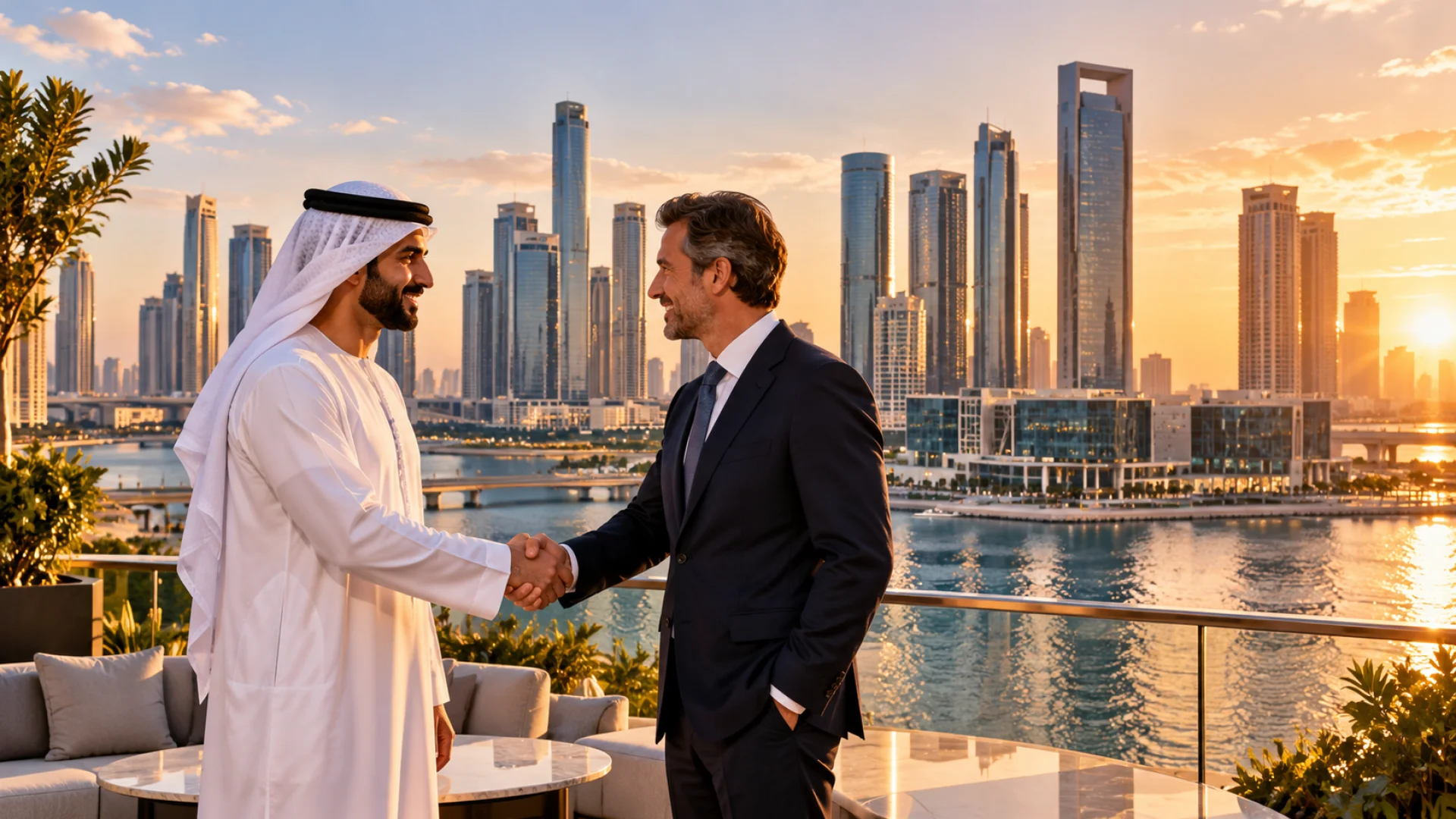

Abu Dhabi is turning energy wealth into a long-term global investment strategy. Mubadala, Apollo and BlackRock represent different parts of an expanding financial ecosystem that links sovereign capital, private markets and international asset management. The ambition goes beyond returns: Abu Dhabi wants to diversify its economy, attract companies and talent, and help finance the industries that will shape its future.
At sunrise, the Corniche is almost silent. The sea catches the first light, traffic moves beneath the palms, and the towers of Al Maryah Island begin to glow. Behind those windows, the conversation is not about crude oil. It is about data centres, private credit, infrastructure, artificial intelligence and the next destination for the world’s long-term capital.
That is the quiet transformation under way in Abu Dhabi. The emirate is using its energy wealth not simply to accumulate assets, but to build an investment machine with global reach. Mubadala sits at its centre. Around it are international banks, asset managers, private-equity firms, sovereign investors and a growing financial-services infrastructure.
“Think in decades, not quarters.” That could be the unofficial motto of Abu Dhabi’s strategy. Sovereign wealth allows the emirate to take a longer view than many publicly traded companies or short-term funds. It can back infrastructure before it becomes fashionable, support technology through volatile cycles and build relationships that may take years to produce visible results.
Mubadala Investment Company is more than a portfolio manager. Its investments span technology, healthcare, energy, industry, finance and infrastructure. The fund is designed to generate returns, but also to support the wider economic transformation of Abu Dhabi. In that sense, every major investment carries two questions: What will it earn, and what capability will it bring home?
That second question matters. A stake in an international company can create market access, know-how and connections. A partnership can bring a new business line to the emirate. An infrastructure investment can support an entire cluster of companies. Capital becomes a bridge between the present economy and the one Abu Dhabi wants to build.
The involvement of Apollo and BlackRock adds another layer. Apollo is deeply associated with private markets and long-term financing. BlackRock brings a vast global network and experience across institutional asset management. Their relationships with Abu Dhabi reflect a broader shift in global finance: Gulf sovereign investors are no longer passive providers of capital, while international firms increasingly view the region as a strategic base.
On Al Maryah Island, the architecture tells part of the story. Glass towers, polished lobbies and waterfront promenades create the setting. But the real foundation is regulatory. The Abu Dhabi Global Market is intended to offer a familiar, internationally oriented environment for funds, asset managers, companies and financial transactions.
A financial centre cannot be built with towers alone. It needs clear rules, reliable courts, skilled professionals, strong technology and the confidence that agreements will be respected. Abu Dhabi is investing in that invisible infrastructure while competing with Dubai, Riyadh, Doha and other regional centres for firms, talent and transactions.
At a conference, a fund executive might put the proposition simply: “We are not looking for a quick trade. We are looking for a partner for the next cycle.” That long horizon is one of Abu Dhabi’s strongest advantages. It allows the emirate to participate in projects whose returns arrive slowly, whether they involve renewable power, logistics networks, digital infrastructure or advanced manufacturing.
The strategy is closely tied to diversification. Oil and gas have provided the financial base, but the global economy is changing. Energy transition, decarbonisation and technological disruption will reshape markets over the coming decades. Abu Dhabi is using today’s resources to prepare for that reality.
Artificial intelligence has become an especially powerful magnet. The sector requires chips, computing power, data, electricity, skilled workers and patient funding. It also needs political stability and an ability to move quickly. By combining capital with infrastructure and state-backed planning, Abu Dhabi is trying to position itself within the emerging AI economy rather than merely importing its products.
The same logic applies to renewable energy, logistics and healthcare. These are not isolated bets. They are pieces of an ecosystem. A clean-energy project can support industrial users. A logistics platform can attract manufacturers. A healthcare investment can create demand for laboratories, offices and specialised housing. One investment creates the conditions for another.
The relationship between Gulf capital and Western financial firms has become more sophisticated. In earlier decades, capital often travelled from resource-rich states into established markets. Today, partnerships are more complex. Sovereign investors take positions in global platforms, while international managers seek access to patient capital and a region with ambitious development plans.
Private markets are central to this shift. Companies are staying private for longer. Infrastructure requires large pools of capital. Pension funds, insurers and sovereign investors are searching for opportunities beyond traditional stocks and bonds. Private credit, real estate, logistics and energy assets have consequently become important parts of institutional portfolios.
For Abu Dhabi, the benefit is not only financial. Partnerships can transfer expertise, attract international staff and make the emirate more visible to companies considering a regional base. The ambition is to become a place where capital does not merely arrive, but is structured, deployed and reinvested.
Drive across Abu Dhabi and the strategy appears in physical form. New districts rise, roads expand and waterfront sites are developed. Yet the deeper question is how to turn a successful energy capital into a knowledge and investment capital.
The answer includes offices, but also schools, culture, transport, housing and quality of life. Financial professionals do not relocate for a conference room alone. They need neighbourhoods where families can live, international connections and a sense that the city has a future beyond a single industry. Urban development is therefore part of the investment strategy.
The competition is regional and intense. Dubai offers a highly developed business and services ecosystem. Saudi Arabia is investing at enormous scale in new cities and financial institutions. Qatar and Bahrain have established financial credentials of their own. Abu Dhabi’s response is a combination of sovereign capital, institutional stability and long-term planning.
Large funds do not automatically create a diversified economy. Abu Dhabi will need to show that partnerships generate companies, skilled jobs and local capabilities. Diversification is not complete when money is placed into a new fund. It is complete when new industries can grow, compete and produce value independently.
That is why the links between investment and the real economy matter. A data-centre investment needs power and fibre networks. A technology company needs engineers and offices. A new industrial venture needs logistics, suppliers and homes for its workforce. Capital only becomes transformation when it touches the ground.
As evening settles over Al Maryah Island, the towers reflect in the water. Presentations are still being sent. Charts show global capital flows and projected infrastructure demand. The Gulf is no longer only a destination for investment. Increasingly, it is one of the places from which investment is directed.
For property markets, Abu Dhabi’s financial expansion means more than a requirement for additional offices. Global funds and asset managers create demand for premium workplaces, high-quality housing, hotels, serviced apartments and mixed-use districts. The most attractive locations are likely to be those close to financial centres, transport links and long-term infrastructure.
Institutional investors tend to favour assets with predictable income and durable demand. That can include offices leased to established companies, logistics facilities, data centres, student accommodation and sustainable residential communities. As Abu Dhabi builds its financial ecosystem, property demand may become increasingly connected to business formation and employment rather than short-term speculation.
The central observation is simple: Abu Dhabi is not only constructing buildings for a growing population. It is constructing the physical platform of a global capital hub. The more international partnerships it attracts, the more valuable the places become that bring companies, workers and innovation together.