
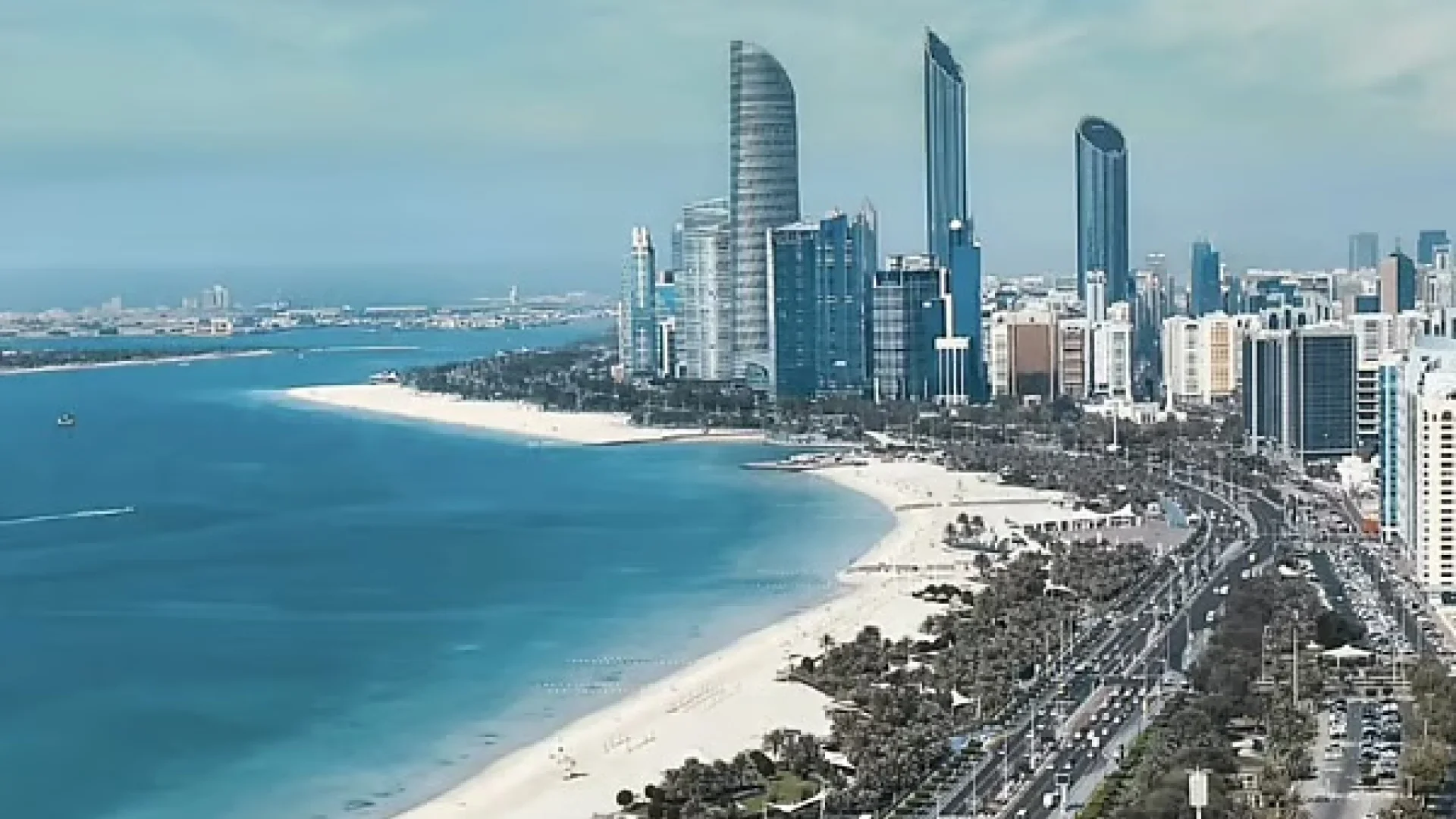

In Abu Dhabi, the shoreline is no longer just a view—it’s a system that has to work, year after year. New guidelines for future beachfront developments aim to standardise planning and approvals, strengthen environmental safeguards, and put greater emphasis on coastal resilience and public access. For developers, the message is clearer rules and higher expectations; for residents, a more usable coast; for investors, a market signalling long-term quality control. The result is a waterfront strategy designed to keep the sand, the sea, and the city in balance.
The first thing you notice is the sound. Not traffic, not music—just the soft, persistent hush of water pulling back from the sand. It’s early, the light still pale, and the shoreline looks freshly drawn. A man in running shoes slows down near a cluster of survey stakes. He squints at the markers, then at the open horizon. “They’re mapping it out,” he says to no one in particular, like the sea is listening.
In Abu Dhabi, the coast has always been a promise: weekend freedom, postcard sunsets, a balcony that sells itself. But promises need structure, especially when the stakes are this high. That’s why the emirate has introduced new guidelines for future beachfront properties—a framework meant to steer how upcoming coastal projects are designed, assessed, approved, and ultimately built.
It’s the kind of policy move that can sound distant—until you picture what it changes in real life. How close can buildings sit to the water? Who gets to walk along the shore? How do you protect a beach from erosion without turning it into a concrete edge? And how do you make sure a “sea-view lifestyle” still holds up when climate pressures, salt air, and extreme weather stop being theoretical?
Shorelines are not empty margins. They are public rooms—places where people gather, move, breathe. The new guidelines signal a stronger push to treat the waterfront as shared infrastructure, not just premium real estate. Public access, connectivity, and coherent coastal planning are placed more firmly in the conversation around new developments.
Anyone who has lived in a fast-growing coastal city knows the tension: the sea looks open, but the path to it narrows. A gate here. A private sign there. Over time, the coastline can start to feel like a sequence of interrupted moments. Abu Dhabi’s updated approach is designed to reduce that fragmentation by setting clearer expectations for how projects relate to the public realm.
For developers and planners, guidelines are less about aesthetics and more about predictability. A shared rulebook helps answer questions that otherwise linger until late-stage reviews: What defines a beachfront zone in planning terms? What studies are required? What buffers or setbacks apply? Who is responsible for which layers of coastal protection?
The intent is simple: fewer grey areas, fewer last-minute redesigns, fewer mismatched interpretations from one project to the next. In a market where timelines matter and capital is sensitive to uncertainty, standardisation is not a footnote—it’s a lever.
Standing beside the water, it’s easy to think the coast is permanent. But any engineer will tell you the truth: sand migrates, currents shift, sea levels creep, storms don’t negotiate. Building near the sea has always required extra effort—yet increasingly, it requires a different mindset.
The new guidelines put greater emphasis on coastal resilience: planning that accounts for erosion, flooding risk, and long-term shoreline stability. That can translate into design choices you don’t immediately see in glossy brochures—subgrade works, smarter drainage, protective landforms, material specifications built for salt and heat, and maintenance plans that treat the beach as a living asset rather than a decorative strip.
In other words, the beachfront is being asked to perform, not just pose.
Coastal development has a way of changing everything quietly: water circulation, habitat patterns, the way sediment settles. A small intervention can become a big shift two kilometres down the shore. Abu Dhabi’s guidelines lean more firmly into environmental assessment and mitigation, reinforcing that future waterfront projects must demonstrate how they will limit harm and manage impact.
For residents, this isn’t an abstract green agenda. It shows up as beach quality and water clarity, as healthier coastal ecosystems, as a shoreline that doesn’t need constant emergency fixes. For developers, it means environmental considerations are not a late-stage checkbox—they are part of the project’s spine.
Guidelines don’t always arrive as a single dramatic rule. They often work through practical requirements: studies, documentation, buffers, approvals, and clearer lines of responsibility. Still, the direction is readable: Abu Dhabi wants future beachfront projects to be more consistent, more resilient, and more publicly integrated.
By late afternoon, the waterfront turns theatrical. The sun drops and the sea flashes like metal. Children run with wet feet; someone shakes sand out of a towel; a café door opens and closes with the rhythm of weekend appetite. This is the coastal lifestyle that sells homes and fills hotel rooms—and Abu Dhabi is not stepping away from that ambition.
What changes is the discipline behind it. The emirate is signalling that beachfront living should be supported by stronger planning logic: a coast that remains accessible, stable, and attractive not just at handover, but a decade later.
Because the question investors and residents eventually ask is always the same: Will it still feel like this when the novelty fades?
The timing reflects a maturing market. Abu Dhabi continues to grow, and demand for coastal addresses remains strong. But the world around waterfront development is changing—climate risk pricing is real, environmental scrutiny is sharper, and public-space expectations are rising. Guidelines are the mechanism cities use to convert ambition into repeatable quality.
It’s also a message outward: the emirate wants world-class waterfronts, and it wants them done with a long view.
For real estate investors, Abu Dhabi’s new beachfront guidelines matter because they reshape the balance between risk, cost, and long-term value. The headline implication is a dual effect: tighter standards can increase upfront complexity, but clearer rules can reduce approval risk and support stronger asset durability.
1) Lower regulatory ambiguity, stronger underwriting
Standardised guidance typically improves transaction confidence. Investors can model timelines and compliance costs more accurately, lenders gain comfort around process consistency, and developers can price risk with more precision. In practical terms, that can support smoother financing and more credible delivery schedules—especially for master-planned waterfront phases.
2) Resilience becomes a pricing factor
Coastal assets are increasingly judged on their ability to withstand climate-driven stress. Projects that can demonstrate robust shoreline protection, flood strategy, and durable materials may enjoy stronger occupier demand and better long-term liquidity. Over time, this can widen the gap between “trophy” beachfront stock and product that only competes on view.
3) Public access can lift footfall—and revenue mix
A waterfront that is more permeable and publicly usable often supports higher-quality retail, F&B, and hospitality performance. For mixed-use investors, this can enhance operating income and place branding. The trade-off is operational responsibility: public-facing edges require maintenance, security, and programming to stay premium.
4) Capex may rise, but so can defensibility
Environmental mitigation, coastal modelling, enhanced construction standards—these can increase Capex. But if the market rewards quality, higher upfront spend can translate into stronger defensibility against future regulation and better retention of value. The key is to underwrite not just the build cost, but the lifecycle: maintenance, replenishment, and long-term coastal management.
5) Investor due diligence: questions to ask now
Bottom line: Abu Dhabi is treating the shoreline like a long-term asset class, not a short-term sales hook. For investors, that is a cue to prioritise projects that can prove performance—environmental, operational, and financial—well beyond the ribbon-cutting.