
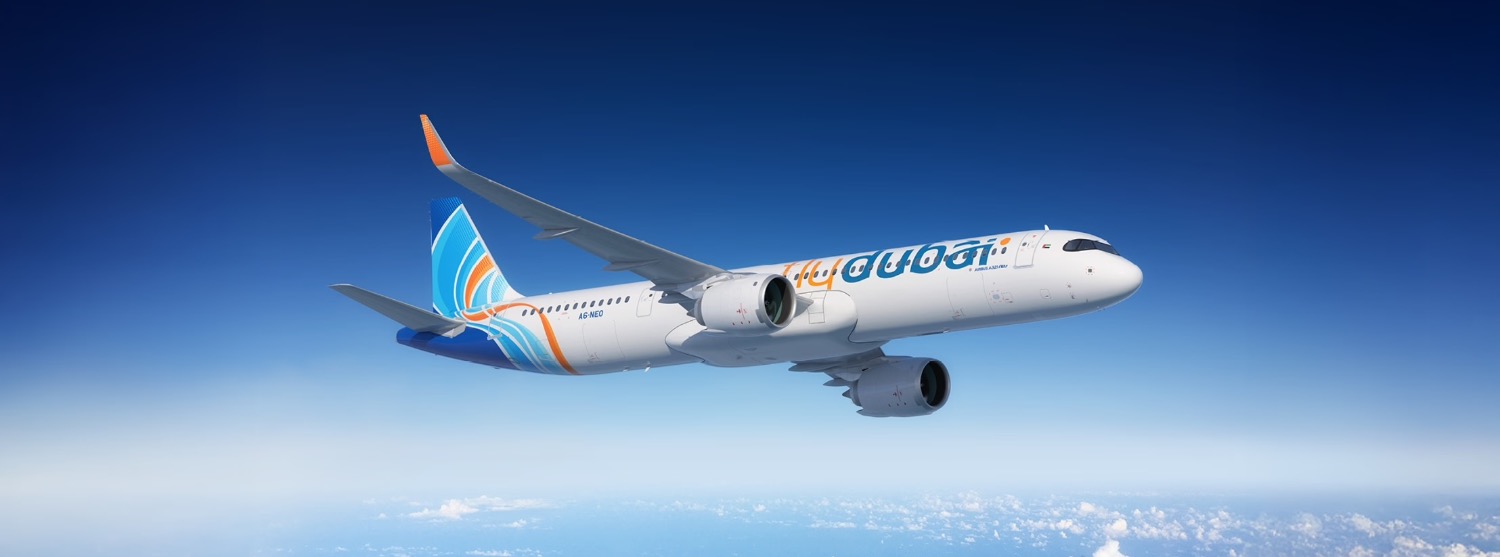

Heat shimmers above the runway in Dubai as a single handshake redraws the map of global aviation: Flydubai, long a loyal all-Boeing operator, signs for 150 Airbus A321 aircraft. For Europe’s planemaker, the deal is a prestige victory in the backyard of the Gulf carriers – and a painful blow to US rival Boeing. Behind the sober figure of 150 lies a multi‑billion‑dollar bet on the future of flying: more efficient jets, longer range, tighter networks, more destinations across Europe and Asia. What looks like a dry industrial contract is, in reality, a power play in the sky – with consequences for passengers, jobs, and the entire airline industry.
The morning sun over Dubai has that harsh, metallic glare that makes the tarmac look like a heated frying pan. Between Flydubai’s blue-and-orange jets, a small group of suits moves into position in front of a wall of cameras. Pens click. Logos are straightened. When the last signature lands on paper, everyone in the hangar seems to sense it: something big has just shifted above our heads.
Flydubai, the young, fast-growing carrier of the emirate, is turning to a European jet – and doing it in style. One hundred and fifty Airbus A321s go into the order book. A thunderclap deal, struck right in the home region of the Gulf giants and in what used to be prime Boeing territory.
Until now, the roles were clear. Flydubai meant Boeing, period. 737s in all variants, shuttling from Dubai across the region, into Europe, into Asia. Airbus was something for Emirates, Qatar, Etihad – not for the sharp, low-cost, short- and medium-haul operator next door.
And now this image: Airbus executives in tailored suits, Flydubai’s CEO grinning broadly, the number “150” glowing on the screen behind them. For industry insiders, it’s more than just another mega-order; it’s an emotional break with the airline’s own past.
“We want to grow, fly farther and fly more efficiently,” is the official line from Flydubai. Translation: we need an aircraft that outperforms the classic Boeing 737 – more seats, more range, less fuel burn per passenger. That’s precisely where the Airbus A321 has been rewriting the playbook.
One hundred and fifty aircraft is a number so big it almost slips through your fingers. Picture them nose-to-tail on a runway and you’d get a silver-and-white snake stretching beyond the horizon. On the financial side, the list price runs into double-digit billions of dollars, even if the real bill – after the traditional airline discounts – stays well below that.
For Airbus, the deal is more than fat order backlogs. It’s a strategic land grab: in a market long dominated by Boeing’s 737, the A321 is muscling in as the new wonder weapon of the middle distance.
In real life, that translates into new routes, higher frequencies and a much tighter web of connections. For Dubai as a hub, it’s another lever to wedge itself between the big traffic magnets of Frankfurt, Istanbul and Doha.
While corks pop at Airbus, the mood in Seattle is anything but festive. For years, Flydubai was a showcase customer for the 737 in the Gulf: loyal, growing, and flying nothing else. By jumping to Airbus, the airline is sending a message – even if it’s never spelled out in so many words.
No one in Dubai will publicly blame Boeing’s troubled MAX programme, but the timing speaks for itself. The last few years have shown how risky it can be to depend on a single manufacturer. One grounding, one supply-chain hiccup – and half your network is at risk. With Airbus in the fleet mix, Flydubai spreads the risk across two shoulders.
For Boeing, the loss hurts far beyond the revenue column. Symbolically, it shows how open the fight for the medium-haul crown has become. Right now, Airbus and its A321 are on a winning streak that makes competitors distinctly uncomfortable.
For the people at the gate, staring at departure boards and clutching coffee cups, all this strategy talk boils down to something simple: what’s the flight like? That’s where the A321 could make a quietly dramatic difference.
And it’s not just comfort. With the A321’s extra range, Flydubai can link smaller cities in Europe directly to Dubai, skipping the mega-hubs. Fewer connections, shorter total travel time, often keener prices: for many passengers, that’s the kind of change that quietly reshapes their travel habits.
Look down from any window seat on approach to Dubai and you can read the future of aviation straight off the apron: rows of jets waiting for slots, airports bursting at the seams, manufacturers quoting delivery dates years into the future. Flydubai’s order fits that picture perfectly. It’s part of a global shift towards efficient, but larger, single-aisle aircraft.
Airbus is surfing a wave that would have surprised even its own veterans a decade ago. Back then, the gospel said: bigger is better, and the double-deck A380 was the future. Today, the star of the show is the flexible, long-legged narrowbody. The A321 embodies that new mindset like almost no other jet.
By the time the sun slants low again over the Dubai desert, the press conference is over, the camera crews have packed up, the signatures are filed away. Out on the runway, an older 737 accelerates into the heat, drawing a faint shimmering line of exhaust through the sky. In a few years, sleek A321s in Flydubai colours will be following that line – flying farther, quieter, fuller. A deal agreed in a cool conference room that will, very visibly, redraw the patterns in the sky.