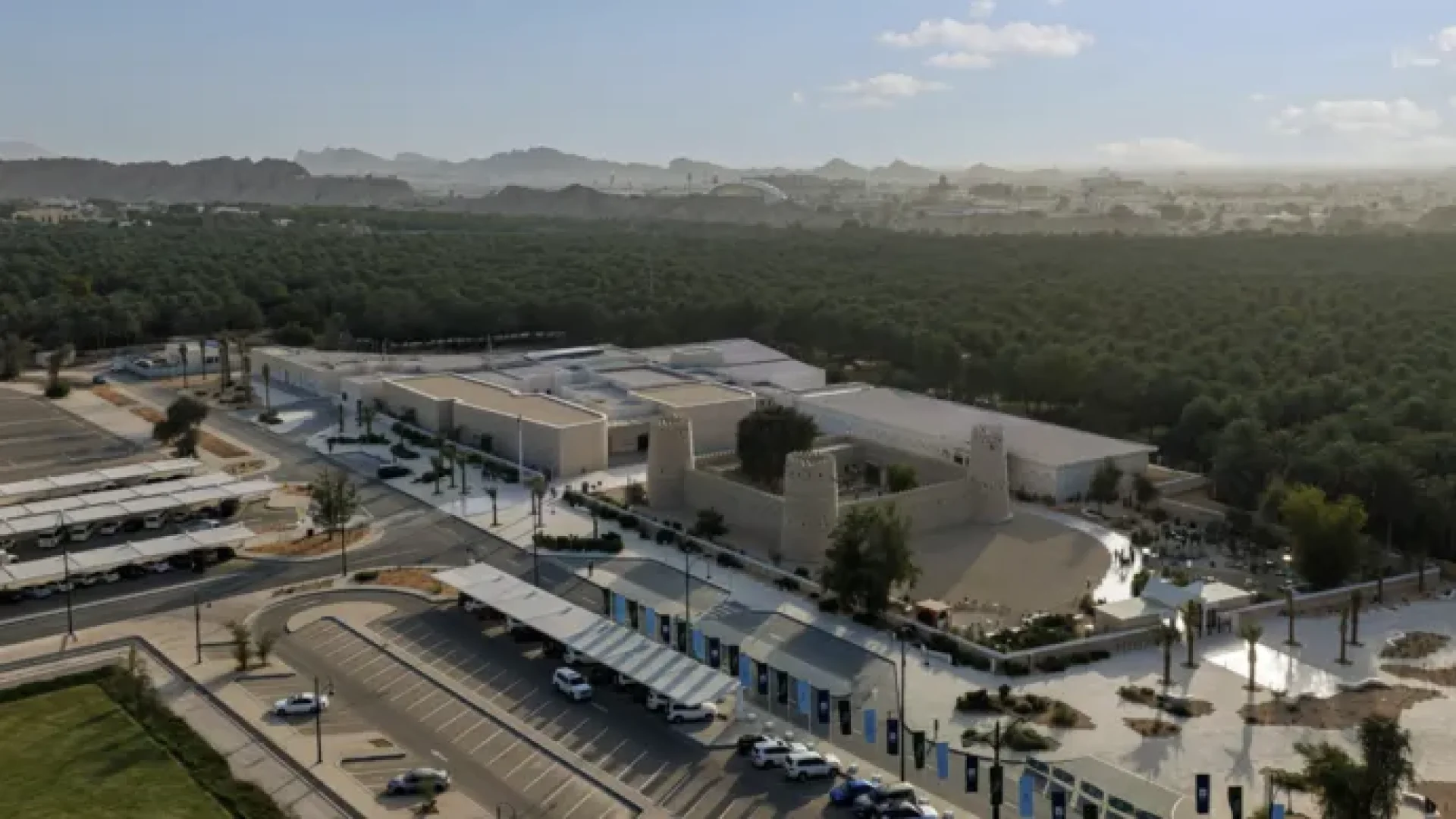
Green palms outside, a hum of conversations inside: the Abu Dhabi Department of Economic Development (ADDED) staged the first Al Ain Future Business Forum under the patronage of H.H. Sheikh Hazza bin Zayed. Public and private leaders, SMEs, start-ups, and investors mapped out non-oil growth in agritech, advanced manufacturing, logistics, tourism, and the creative economy. Across keynotes, panels, and matchmaking, the forum showcased regulatory ease, finance routes, export support, and talent pathways. The message was crisp: Al Ain is open for business—sustainable, competitive, and fast-moving.
The hall feels cool and bright, the kind of light that makes polished floors look like water. A barista snaps a lid on cardamom coffee. Name badges shimmer. On stage, the screen glows a calm green: “Al Ain Future Business Forum.” A founder rolls out a shoebox-sized rover onto the carpet. “It tastes the soil,” he says, tapping a sensor. “Same yield with 30% less water.” Across the aisle, an investor smiles, already drafting a follow-up email in her head. “Send the deck by morning,” she says. A handshake. Opportunity, mid-flight.
Under the patronage of H.H. Sheikh Hazza bin Zayed, ADDED brought the forum to the city that knows how to grow quietly—Al Ain, the oasis stitched with falaj channels, the city that keeps its promise of shade. In the rows: hoteliers next to logistics execs, agritech beside machine-builders, founders and family businesses shoulder to shoulder. Panels move quickly—regulatory clarity, green growth, cluster strategies, future skills. No grandstanding. Instead: roadmaps on screens, pens racing in notebooks.
“What changes for me if I incorporate tomorrow?” someone asks from the front row. An ADDED advisor draws a neat journey on a notepad. “Faster licensing. Clear timelines. A single digital window for the heavy lifting. And partners aligned to help.” Behind her, maps ripple into view—routes to Dubai and Oman, air cargo cut-off times, industrial plots with utilities, nearby training centers. The take is simple: you can see the path from a sketch to a factory floor.
On the exhibition floor, a living wall of lettuce runs like a green curtain. “Summer harvest in Al Ain?” a visitor teases. The engineer nods. “Controlled environments, solar on the roof, tight water loops.” Two stands down, a metalworker shows a slender brace that eats up vibration. “For light industrial sheds—faster to erect, less steel.” Business cards flutter. A logistics manager marks his map with a red dot. “Cross-docking here, cold chain next door.” The rhythm is fast but friendly.
The skills panel turns into a lively micro-dialogue. “We can train locally,” a plant manager calls out. “But we also need niche experts—yesterday.” From the audience: “How fast is the visa runway now?” A government rep raises a hand. “Faster than last year. With checklists you can hold us to.” That earns claps. Pragmatism is the default here, not spin.
By midday, three themes hold steady. First: speed with certainty. Investors want timelines they can bank on, and the forum delivers them as printable checklists. Second: sustainability as strategy, not garnish—water, energy, and circular materials baked into business models. Third: collaboration that actually shares load—public agencies, financiers, universities, and operators at the same table, trading phone numbers rather than speeches.
Later, in the matchmaking zone, conversations lift like kites in a steady wind. “Musataha? 30 years?” “Yes, with extensions based on milestones.” “Export cover?” “Introductions happen here.” A young hotelier spreads out renderings—earth-toned walls, shade arcades, slim water channels. “An eco-lodge just outside the oasis belt. Quiet, rooted, real.” A tourism advisor looks up from the model. “The story sings. Let’s run the numbers.” A nod. Another lane opens.
Beyond the glass, Jebel Hafeet warms into gold. A handful of founders sit on the curb, laptops balanced on knees, coffee warming their palms. “If not now?” one asks. The designer laughs. “Nine a.m. at the desk, eleven with the investor.” Behind them, a gardener lowers a young date palm into the ground. Al Ain keeps growing, not loudly, not slowly—just right.
The forum is more than a calendar dot. It makes the city legible: agritech, advanced manufacturing, logistics, tourism, and the creative economy—five fingers on one working hand. Partners are in place. Routes are drawn. The tempo feels measured and ambitious at once. With each meeting, it becomes clearer: the oasis is not a backdrop. It is a business engine.
For asset owners and developers, the forum’s signals are bright. Al Ain offers reach without rush: serviced land, connectivity to national corridors and Oman, steady demand from public institutions, education and healthcare, and a tourism narrative that prefers authenticity to spectacle. That mix supports patient capital and operating returns.
Watch the axes. The Al Ain–Abu Dhabi–Dubai spine, the gateway to Oman, and proximity to university campuses create micro-markets and demand hotspots. Sustainability is an operations thesis, not a brochure page: water and energy efficiency, passive cooling, and circular materials shift NOI for the better.
Bottom line: the forum plants a firm stake. Place capital with care—in sheds and schools, in lodges and labs—and the oasis returns more than shade. It returns momentum.