
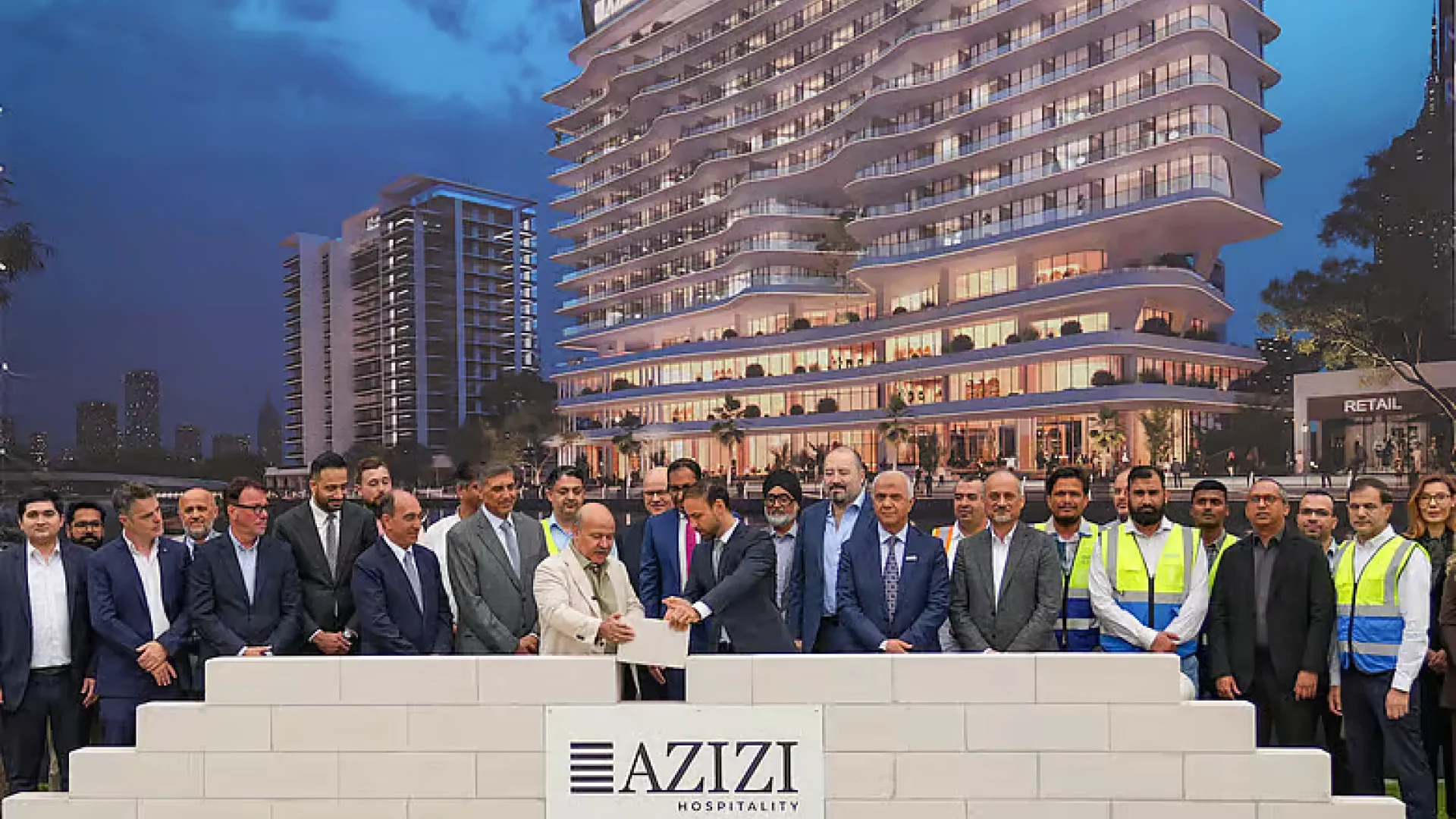
Azizi Developments is pitching a hospitality expansion on a national scale: Dh75 billion earmarked for 151 hotels across the UAE, alongside a projected 75,000 new jobs. The plan spans multiple hotel segments—from accessible city stays to high-end, experience-led luxury—designed to ride the UAE’s sustained tourism momentum and growing calendar of global events. Beyond the headline numbers, the announcement signals intensifying competition for prime locations, operators, and brand differentiation in an increasingly professionalised market. For real estate investors, it’s a clear prompt to revisit assumptions on supply, pricing power, and the value of micro-location.
The first thing you notice is the sound: wheels on stone. A suitcase gliding across a polished lobby floor, click-click-click, steady as a heartbeat. The second thing is the light—warm, flattering, engineered to make everyone look like they’ve arrived in a better version of themselves. A bellman leans in, almost conspiratorial: “First time in Dubai?” The guest smiles. “No,” she says. “I’m back.”
That word—back—is the quiet engine behind the UAE’s hotel economy. And it’s the feeling Azizi Developments is betting on with a plan big enough to redraw the map: an announced investment of Dh75 billion to develop 151 hotels across the United Arab Emirates, alongside an expectation of 75,000 jobs created.
Dubai has long understood the power of a single, iconic project. But 151 hotels isn’t a landmark. It’s a network—multiple addresses, multiple price points, multiple reasons to stay an extra night. It suggests a strategy that’s less about one glittering ribbon-cutting and more about building the everyday machinery of tourism: rooms, lobbies, restaurants, meeting spaces, pools, corridors that smell faintly of citrus, and elevators that deliver you to a view you’ll photograph before you’ve even dropped your bag.
Azizi’s stated ambition stretches across segments, from midscale to luxury. In a market like the UAE, that range matters. Midscale fills on weekdays with business travellers and short-stop visitors. Upscale thrives on conferences and city breaks. Luxury trades on experiences—private beaches, destination dining, spas where time seems to soften at the edges. Put together, it’s a portfolio designed to catch demand wherever it lands.
Walk through Dubai on a Thursday evening and you can feel it: the city doesn’t “slow down” as much as it changes costume. The business district loosens its tie. The beach clubs turn the volume up. Hotel foyers become crossroads—families in sandals, executives in crisp shirts, couples dressed for dinner, all sharing the same air-conditioned calm.
The UAE’s tourism story has been fuelled by connectivity, safety, and programming: events, exhibitions, sports, entertainment, cultural institutions, and a steady pipeline of new attractions. Hotels are where that energy becomes measurable—through occupancy, average daily rate, length of stay, repeat visitation. A major hotel build-out is, in effect, a vote of confidence that the calendar will stay full and the flights will keep coming.
A hotel looks effortless when it’s done right. The bed is tight enough to bounce a coin. The shower is hot within seconds. The espresso tastes like someone cared. But the ease is manufactured—by people, processes, and relentless repetition.
So when Azizi links its plan to 75,000 jobs, it’s not only front-of-house roles. It’s the vast ecosystem that keeps a property alive: engineering, facilities management, procurement, kitchens, security, housekeeping leadership, guest experience teams, revenue managers watching the numbers like hawks, sales teams chasing the next corporate account, and event specialists turning empty ballrooms into moments.
More hotels mean more choice. And more choice makes guests bolder. They compare. They switch brands. They read reviews in the taxi on the way from the airport. In a market as fast as the UAE, new supply can be a gift—and a test.
If openings cluster in the same districts, pricing power can soften. If the product is undifferentiated, it disappears into the crowd. The winners tend to be the hotels that feel inevitable: the one that’s actually walkable to the metro, the one with a lobby that doubles as a meeting place, the one where breakfast somehow tastes like a local secret rather than a global template.
That’s why the concept of micro-location becomes so valuable. Not “Dubai” as a whole, but the difference between one junction and the next. The shade on the sidewalk. The five-minute shortcut to a conference hall. The view that makes guests pause before they speak.
There’s also a city-building logic to a hotel wave. Hotels pull in restaurants, retail, transport patterns, service providers. They generate demand for staff housing and everyday amenities—laundry services, clinics, supermarkets, quick cafés for night-shift workers. Entire neighbourhoods start to behave differently once a hospitality cluster takes root.
Think of the city at night: a grid of light. Every lit window is a story—someone arriving, someone leaving, someone staring out at a skyline that seems to keep inventing itself. Add 151 hotels and you add thousands of those stories, stacked floor by floor.
For real estate investors, Azizi’s announcement is both opportunity and warning. Opportunity, because a Dh75 billion hospitality push implies confidence in demand and the broader UAE growth narrative. Warning, because 151 additional hotels increase competitive intensity and make underwriting assumptions—on occupancy, ADR, and exit yields—more sensitive to timing and location.
Investor takeaway: Positioning beats volume. The most resilient plays are likely to be those that combine location certainty with operational excellence—prime mixed-use nodes, well-run serviced apartments with both business and leisure demand, and retail/amenity assets that benefit from tourism without depending on it entirely. In a market about to get louder, the clearest story—and the best run building—wins.