
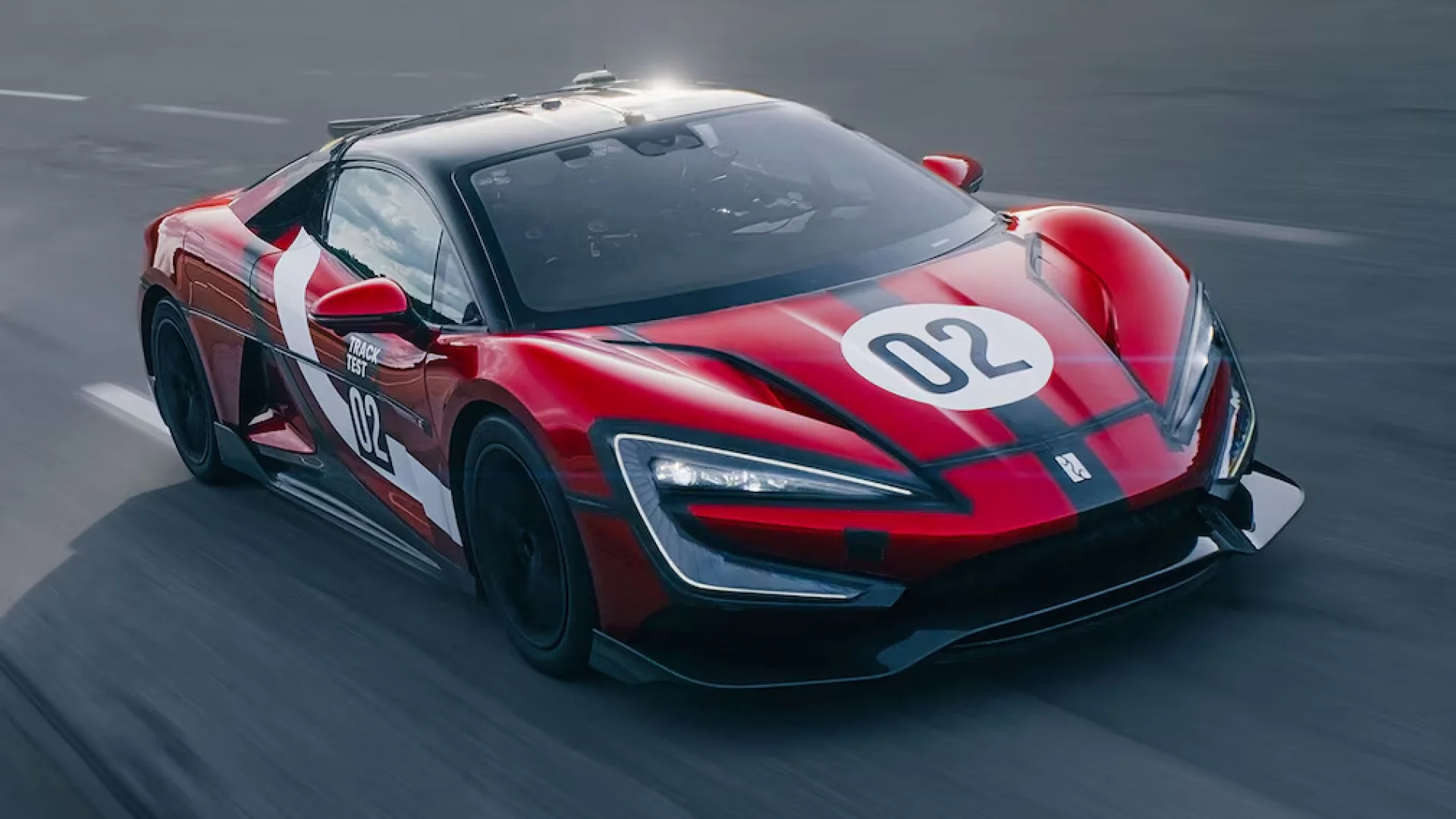

The E11 is empty, the desert is shimmering, and the horizon seems to stretch forever. Then a BYD electric hypercar tears through the stillness and reaches 503.17 km/h in Abu Dhabi. The run marks a new speed record for an electric production vehicle and turns a strip of highway into a vivid showcase for battery power, software and Gulf ambition.
The road looks almost unreal in the early heat. Abu Dhabi’s E11 runs straight into the distance, bordered by sand, barriers and a pale sky. For once, the highway is not carrying its usual stream of commuters, trucks and taxis. It is waiting.
A low, sharp-edged machine appears at the far end of the course.
There is no familiar roar from a petrol engine. Instead, the sound rises like a metallic whistle. The car gathers speed with startling calm. 300 km/h. 400. Then the number crosses a threshold that once belonged almost exclusively to the most extreme combustion-powered machines.
503.17 km/h.
That is the figure reported by BYD after its high-speed run on the E11 in Abu Dhabi. The result establishes a new benchmark for an electric production vehicle and offers a dramatic answer to a question the automotive industry has been asking for years: can electric power be thrilling as well as efficient?
At this speed, a car is no longer simply travelling quickly. It is negotiating with physics. Air becomes a heavy, invisible force. Every opening in the bodywork, every wing and every millimetre of ground clearance matters. A small disturbance can become a serious problem in an instant.
The machine therefore needs much more than powerful motors. It needs a battery capable of delivering enormous bursts of energy, cooling systems that can manage heat, software that can adjust torque in fractions of a second and tyres prepared for extraordinary loads. All of those elements must work together while the driver remains calm and the car stays planted.
“Hold it steady,” someone at the roadside might say. The sentence sounds simple. At more than 500 km/h, it is anything but.
Electric motors bring one major advantage to this contest: immediate torque. There is no long climb through revs and no gear change interrupting the surge. Power arrives instantly. That response can make an electric hypercar violently quick off the line, but top speed demands another kind of engineering. The battery must sustain output. The motors must remain efficient. Aerodynamics must reduce drag without sacrificing stability.
The run also carries a message about BYD itself. The company has become one of the world’s best-known electric-vehicle manufacturers, with a broad portfolio ranging from affordable cars to premium models. A 503.17 km/h hypercar, however, speaks a different language. It is not primarily about commuting, charging convenience or ownership costs. It is about desire.
It tells buyers, investors and competitors that electric mobility can occupy the emotional territory once dominated by supercars. Silence does not have to mean softness. Efficiency does not exclude drama. A battery-powered car can still make people stop talking and turn their heads.
That symbolism matters in a fiercely competitive global market. Manufacturers are racing to improve batteries, power electronics, software and autonomous systems. A headline-grabbing speed record gives those invisible technologies a face – a low, fast, silver shape on an empty highway.
The location is part of the story. The United Arab Emirates has built a reputation for ambitious infrastructure, large-scale engineering and a willingness to host events that push familiar boundaries. Abu Dhabi offers long roads, modern logistics and an open landscape suited to controlled testing. The E11, normally a vital transport artery linking communities and economic zones, becomes a temporary proving ground.
That transformation is striking. During an ordinary day, the highway is practical infrastructure. During the record attempt, it becomes a stage. The barriers mark the edges of a carefully managed experiment. The desert provides the backdrop. The city, just beyond the horizon, supplies the ambition.
For Abu Dhabi, the event reinforces a broader strategy. The emirate wants to be seen not only as an energy centre, but also as a place for advanced manufacturing, research, mobility and technology. A record attracts global attention quickly. It creates images that travel further than a technical report and can help a destination compete for companies, talent and capital.
Of course, no one will drive to work at 503.17 km/h. Public roads, traffic, tyres, charging needs and safety rules make the figure irrelevant to everyday motoring. The significance lies in the technology developed along the way.
Extreme programmes test the limits of thermal management, traction control, battery delivery and structural design. Those lessons can filter into more practical cars. Better cooling may improve fast charging. More precise torque control can enhance safety. More efficient power electronics can extend range. The spectacular vehicle is the tip of a much larger research effort.
There is also a cultural dimension. Speed records have always been stories of human curiosity: how far can the machine go, and what happens when the boundary moves? In Abu Dhabi, the answer arrived almost without a roar. The electric future did not creep onto the E11. It flashed past it.
The record has no immediate effect on apartment prices, but its wider economic signal is important. Abu Dhabi is presenting itself as a destination for technology companies, advanced industry, research facilities and mobility ventures. That positioning can support long-term demand for industrial land, logistics parks, engineering campuses and high-quality offices.
Major transport corridors such as the E11 are particularly valuable in this context. Well-connected sites can attract distribution centres, testing facilities and innovation clusters. As companies establish operations, demand may spread to serviced apartments, staff housing, retail and hospitality near employment hubs.
For investors, the story is therefore less about a hypercar showroom and more about ecosystem formation. A record can focus attention. Infrastructure enables activity. Activity creates jobs. Jobs generate demand for real estate. The electric car crosses the finish line first, but the investment story may continue in the buildings, roads and districts that support the next generation of mobility.