
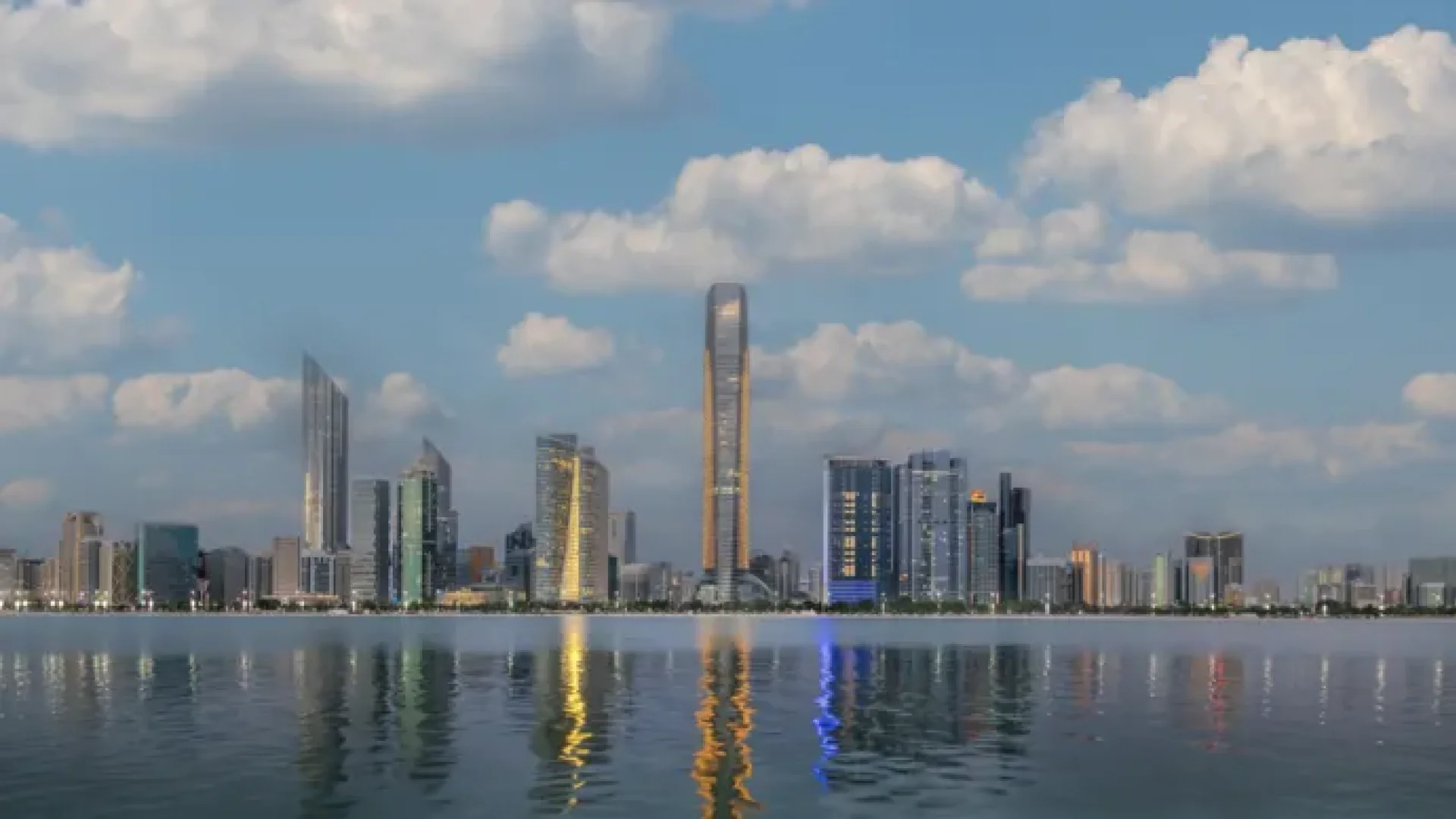
Dawn spills over the Corniche and the air hums with intent: Abu Dhabi is hosting the second Reuters NEXT Gulf Summit in partnership with the Abu Dhabi Department of Economic Development (ADDED). The city gathers policymakers, corporate leaders, investors and builders of the next economy to stress-test ideas on diversification, AI, the energy transition and cross-border capital. Reuters editors steer sharp conversations; ADDED’s partnership ties them to on-the-ground execution. For Abu Dhabi, it’s not just a date on the calendar – it’s a live stress test of its role as the Gulf’s ideas-and-investment hub.
The doors slide open. A cool rush of air, a hiss from the translation booth, the bright scent of fresh coffee. Badges blink with names you’ve seen on front pages. “What’s your thesis this year?” someone asks in passing. A firm handshake. A quick smile. A glance at the clock. In this moment, Abu Dhabi feels like the transfer gate of a global ideas bridge.
Welcome to the second Reuters NEXT Gulf Summit in Abu Dhabi — powered by Reuters’ editorial backbone and anchored by a partnership with the Abu Dhabi Department of Economic Development (ADDED). This is where the region’s momentum condenses: new industries, digital capability, resilient energy systems, and the capital to stitch them together. Not a desert of slide decks. A dealroom with a view — where questions cut cleanly and answers have consequences.
I’m standing at the edge of the main stage. Spotlights slice bright angles in the air. A Reuters moderator opens, dry and precise: “Growth — but resilient. How?” The answer isn’t a slogan. It’s a build-sheet: policy that de-risks starts and scales, energy that stays reliable while decarbonizing, talent that sticks because it gets to shape the future.
Breakouts crowd the floors: policy roundtables where ministers and market players take tariffs, data flows and supply chains apart; sector labs where product leads flip open prototypes and fund managers frown into cash-flow curves. At a high table, someone says, “We want manufacturing close to markets and close to research.” The reply comes quick: “Abu Dhabi gives you both — and patience for long horizons.”
The big words land as real things. Energy is pipeline and panel, molecule and software. AI is not a buzzword but a toolkit for logistics, assets, and build cycles. Diversification isn’t a press line — it’s factory bays, data halls, and labs with safety glasses on the table. Behind it all is a place that draws clear rules, digitizes process, and aligns capital. You see ADDED’s role not in banners, but in rhythm: approvals that click into place, programs that lift SMEs, industrial policy turning into touchable metal and fiber.
Between sessions, I meet a founder. “We signed more pilots in six months here than in two years elsewhere,” she says, tapping the plastic of her badge. “The difference? Decision speed.” An investor nods: “And visibility. This stage ties the nodes together — regulator, operator, financier.” Someone slides in a chair: “Let’s talk storage tech.” The tone stays warm. The ambition is exacting.
So what’s actually on the docket?
Abu Dhabi doesn’t use summits for mirror-gazing; it uses them to wire alliances. You feel it in the corridors: memoranda that don’t just get signed — they get operationalized. A developer swipes through an app: “Permits? Trackable. Customs? Pre-cleared.” A public official explains quietly, almost offhand, how a new rule helps prototypes cross the bridge to series production. That’s the signature: less friction, more speed.
In 202X, the Gulf is not a footnote — it’s a node where risk and opportunity meet. Trade lanes shift. Capital wants safety and yield. Climate-credible industry needs places that couple feedstock, sun, infrastructure and data. Abu Dhabi sits at that crossroads. The Reuters NEXT Gulf Summit makes it legible. Not as spectacle, but as an equation that balances: policy x market x technology = scale.
And because summit signals translate into concrete and square meters, you see the pulse in the city. Hotels edge toward full. Meeting rooms juggle schedules. Brokers pull up heat maps on phones. “Come later — there’s a new campus by the tech park,” someone whispers. “Tomorrow? Industrial zones, then the waterfront — moving fast.”
At dusk, when the light softens over the water, decisions feel less abstract. You can see what they’re for: quality of life and competitiveness. A place where you can do your best work and feel at home. The summit throws the spark. The city absorbs it — and answers with space that works.
For investors, this summit is an early-warning light — in the best sense. Where brains, blueprints and balance sheets sit at the same table, space demand follows. Watch these seams:
Actionable next steps:
The second Reuters NEXT Gulf Summit is more than a conference date. It’s a metronome. If you listen closely, you’ll anticipate flows. If you act, you’ll shape markets — and skylines.