
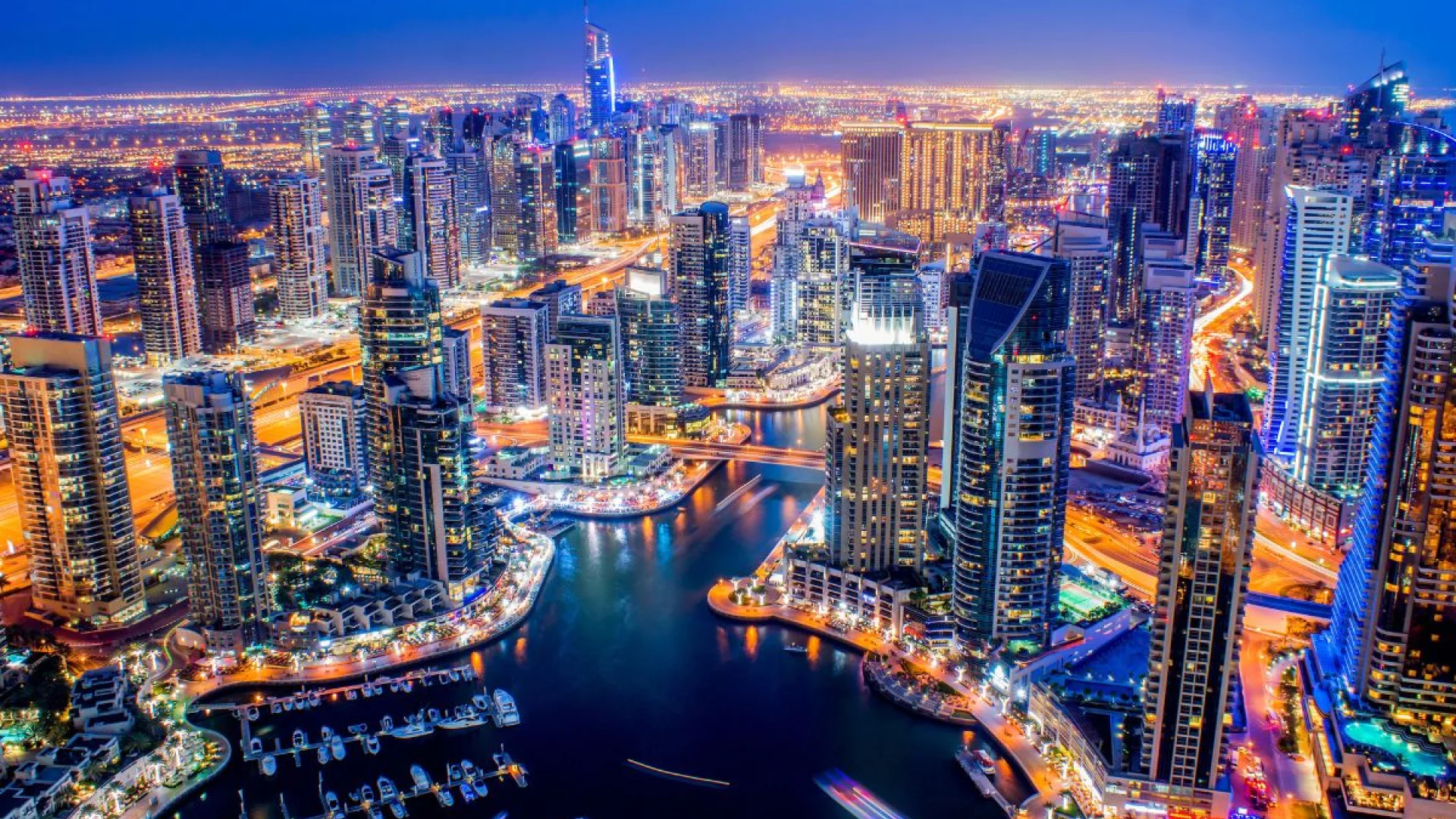

Dubai is a city that runs on continuity—cool air, fast lifts, always-on payments, and skylines that refuse to dim—and DEWA has just put a number on that feeling. According to Arabian Business, the Dubai Electricity and Water Authority has set a world record with an annual power outage time (Customer Minutes Lost, CML) of only 0.82 minutes. In a high-rise metropolis where comfort and uptime are part of the promise, that figure is more than a statistic: it’s a competitiveness signal for households, hotels, industry, and the digital economy. For investors, it reads like infrastructure-grade confidence—quietly supporting property values, tenant demand, and operational resilience.
You only notice electricity when it misbehaves.
A brief dimming in a corridor. The soft cough of an air-conditioner restarting. A lift that hesitates between floors. In many cities, those moments are background noise—tiny interruptions you accept like traffic lights. In Dubai, they feel almost unreal, like a scratch on glass.
And that’s why the number lands with such weight: 0.82 minutes.
Not “under an hour.” Not “pretty good.” Less than a single minute—spread across an entire year—of average outage time per customer. The Dubai Electricity and Water Authority, DEWA, has, according to Arabian Business, recorded the lowest annual power outage time in the world, measured in Customer Minutes Lost (CML).
Picture Dubai at night. The heat outside is still awake, pressing against the glass. Inside a hotel lobby, the air is cool enough to raise goosebumps. Suitcase wheels whisper over polished stone. A concierge leans in slightly: “Welcome back.” Somewhere above, hundreds of rooms hum with invisible routines—charging phones, chilled water, softly lit bathrooms, curtains gliding at the touch of a button. None of it is dramatic. That’s the point. Reliability is the city’s quiet luxury.
The record centers on annual outage duration across Dubai’s network area. DEWA’s figure—0.82 minutes CML—means the average customer experienced less than a minute of outage time in a year. CML is one of the most closely watched metrics in utility performance because it translates engineering reality into human experience: how long the lights are actually out for people and businesses.
In a city built vertically, that metric carries extra gravity. A power interruption isn’t just “lights off.” It can mean lifts pausing, building pumps stalling, access systems resetting, chilled rooms warming, cash registers blinking, routers dropping. In the modern high-rise, electricity is not merely a service—it’s the connective tissue.
Utility records can feel like spreadsheets until you place them in everyday scenes.
A packed restaurant in Downtown. Cutlery clinks. A waiter slips between tables with a tray of saffron-scented rice. In the kitchen, the extraction fans keep their steady breath; the pass lights glow like a runway. Nobody pauses to ask, “Did you feel that?” Because there was nothing to feel.
Or a data hall on the outskirts of the city. Long rows of servers. LEDs blinking like a contained galaxy. A low, constant drone that sounds—strangely—like calm. In the digital economy, downtime isn’t inconvenience; it’s cost, reputational risk, and lost transactions. A grid that keeps outages to fractions of a minute becomes part of the business case for staying, expanding, hiring.
DEWA’s number is, in that sense, both engineering and messaging: Dubai isn’t only about the spectacle you can photograph. It’s about the systems that keep running when nobody’s looking.
Across the world, annual outage times vary widely depending on grid design, geography, regulation, and investment cycles. Many places consider “tens of minutes” per year a strong performance. Dubai’s 0.82 minutes doesn’t just beat a benchmark—it redraws the map of what “normal” can look like.
It also fits the city’s operating logic. Dubai sells frictionless experience: airports that move, roads that expand, services that digitise, towers that rise. In that model, reliability isn’t a bonus feature. It’s the foundation underneath everything else.
No grid becomes this steady by accident. Behind a figure like 0.82 minutes are maintenance regimes, redundancy planning, monitoring systems, fast-response teams, and a culture that treats outages as solvable—not inevitable.
Imagine a control room: wall-sized screens, quiet conversations, a finger tracing a line on a network map. “Load here. Switch there.” The city outside continues, unaware. That’s success in utility work: the best interventions are the ones the public never has to think about.
In a way, DEWA’s record is like stagecraft. The show is the skyline, the lifestyle, the commerce. The lighting crew is the grid. When the crew is excellent, the audience forgets they exist.
Walk into a residential tower on a weekday morning. The lobby smells faintly of lemon polish. The security guard nods without breaking rhythm. The lift arrives quickly, doors opening with a soft sigh. Upstairs, the shower runs hot, the kettle clicks on, the router stays steady, the AC cools without drama. These are small things—until you’ve lived somewhere they aren’t guaranteed.
In hospitals and clinics, the stakes rise higher. Power quality underpins life-support systems, diagnostic equipment, medication storage, and digital records. High reliability translates to operational confidence, and operational confidence translates to trust.
Ask business owners what they want from the grid and you rarely hear poetry. You hear predictability.
For these sectors, a world-record CML figure is not trivia. It’s a location advantage with direct operational consequences.
Dubai has long understood that infrastructure is part of brand. A city can build iconic architecture, host global events, and announce bold strategies—but if the basics wobble, the promise weakens. DEWA’s 0.82-minute record reads as proof of something deeper: not only the ability to build, but the ability to run—smoothly, repeatedly, at scale.
It’s the kind of achievement that doesn’t trend like a new tower opening. It doesn’t need fireworks. It sits under the fireworks and makes sure they go off on time.
For real estate investors, grid reliability is an unglamorous variable with outsized impact. A world-leading 0.82-minute CML influences property performance through tenant experience, operational risk, and the long-term attractiveness of Dubai as a base for high-value industries.
What investors can do with this: incorporate Dubai’s reliability profile into leasing and positioning for assets targeting tech, healthcare, hospitality, and mission-critical occupiers; emphasise uptime as a differentiator in marketing; and treat infrastructure performance as a supporting factor when underwriting long-term rent growth assumptions in prime, service-intensive submarkets.
The bigger picture: as cities compete for talent, tech, and high-value services, electricity reliability becomes a hidden form of “soft power.” DEWA’s 0.82 minutes is a signal that Dubai is not only ambitious—it is operationally disciplined. In real estate terms, that discipline tends to show up where it matters most: in consistent demand and fewer unpleasant surprises.