
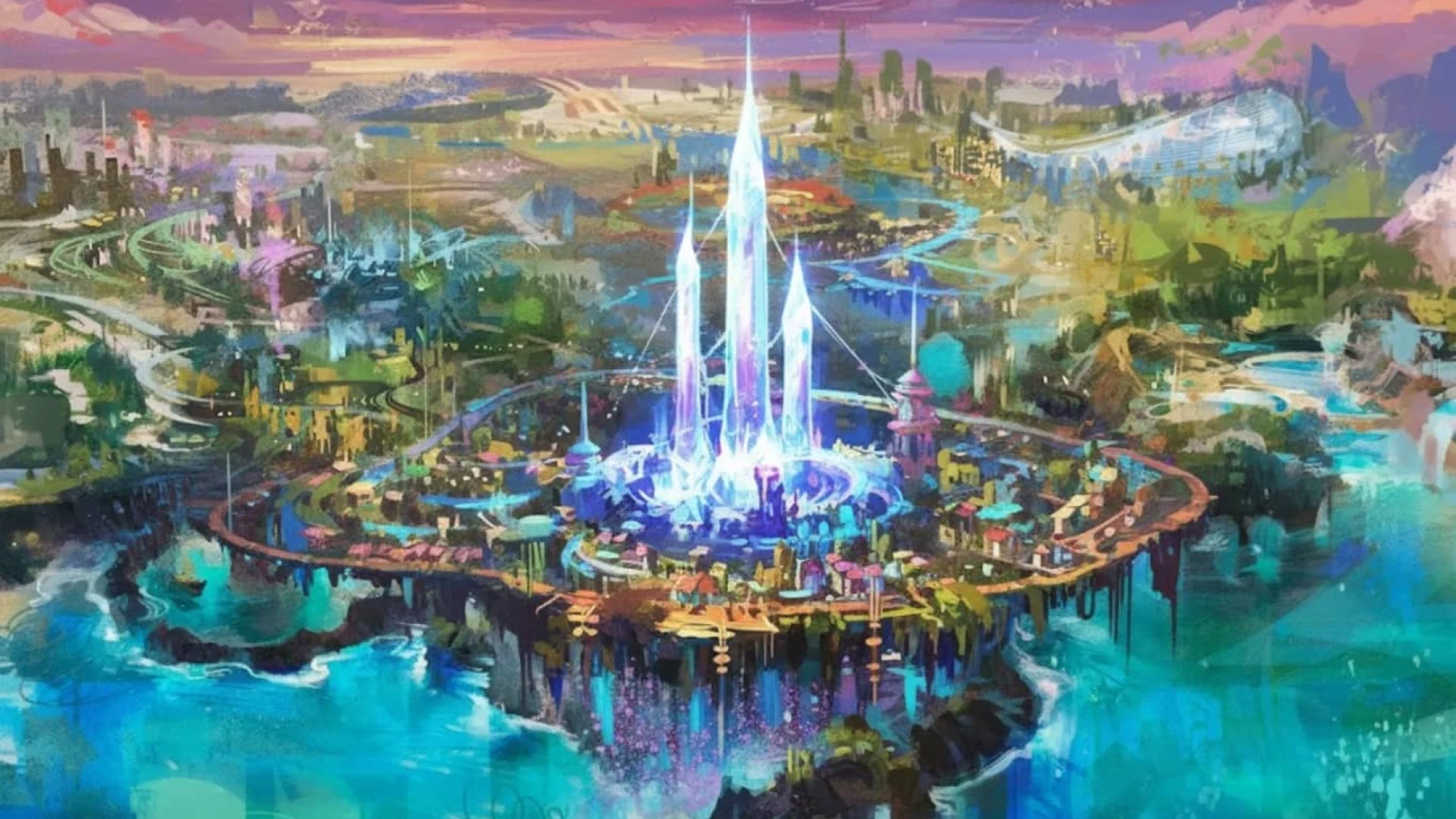
Disney has confirmed that its Abu Dhabi theme park plans are unchanged—an unusually firm note in a world of constantly revised megaproject timelines. For the UAE capital, the confirmation strengthens a broader strategy: turn global stopovers into longer stays, and longer stays into sustained demand for hotels, retail, transport and new neighborhoods. For investors, the bigger story is not just another attraction, but an anchor capable of shifting footfall, occupancy patterns and location premiums. In other words: this isn’t simply about rides—it’s about real estate gravity.
The morning heat arrives early in Abu Dhabi, slipping in like a stage light before the actors take their places. The sea is bright enough to squint at. Glass towers shimmer. On the highway, a taxi driver nods toward the horizon as if he’s pointing out a rumor that turned into steel. “Here,” he says. “Things don’t stay small.”
For a few days, the story around Disney’s planned theme park in Abu Dhabi had that jittery, modern feel—headlines ricocheting, timelines questioned, certainty treated like an endangered species. Would the plan be trimmed? Delayed? “Reconsidered,” that favorite word of the anxious news cycle?
Then came the simplest kind of answer, and the most powerful: Disney confirmed the plans are unchanged.
In megaproject economics, a steady sentence can be worth more than a flashy rendering. “Unchanged” signals continuity—on scope, intent, and the kind of partner alignment that makes large developments possible. It tells suppliers to keep the machinery running, tells operators to keep hiring, and tells financiers that the narrative hasn’t cracked.
And Abu Dhabi, in particular, runs on narrative as much as it runs on oil, art, and aviation. This is a city that knows how to build a destination portfolio: museums that pull culture travelers, arenas that pull event crowds, beaches that pull winter sun seekers, and a growing menu of family-friendly experiences that turn a quick trip into a longer one.
In a hotel lobby not far from the water, you can hear the city’s business model in miniature. A father checks his phone, frowning at flight times. A child swings a souvenir bag like a pendulum. “Two nights,” the mother says, counting softly. “Then we fly on.” A major theme park has a way of rewriting that sentence. Two nights becomes four. “We’re passing through” becomes “we’re staying.”
Disney’s parks are not just entertainment assets; they’re long-term ecosystem plays. They thrive where logistics are strong, where discretionary spending is high, and where governments and developers can execute at scale. Abu Dhabi checks those boxes with a kind of calm confidence. The airport network is global. The region’s purchasing power is deep. The tourism strategy is explicit—and backed by infrastructure.
Geographically, the UAE capital sits at a crossroads. Europe is a flight away. South Asia is close. East Africa and the wider Middle East funnel through the Gulf’s hubs. That positioning matters because a theme park isn’t only a destination; it’s a reason. A reason to choose one stopover over another. A reason to extend a weekend. A reason to bring the grandparents.
And in a city building itself into a year-round tourism economy, family demand is a stabilizer. Business travel comes in waves. Culture tourism has its seasons. Families, given the right magnet, can help smooth the curve.
To the public, the phrase may sound like corporate neatness. But in the project world, it’s a line in the sand. It suggests the underlying partnership framework remains intact and the strategic intent hasn’t shifted—two conditions that often determine whether surrounding investment accelerates or freezes.
Because no major theme park stands alone. It pulls on everything around it like gravity:
That’s why a confirmation matters: it keeps the ecosystem’s dominoes standing in the right order.
Abu Dhabi’s recent trajectory has been about layering—adding one compelling reason to visit on top of another, so the city becomes more than a single highlight. A museum day. A beach day. A concert night. A food tour. A desert excursion. A theme park day that turns into two.
In that sense, Disney isn’t competing with the emirate’s existing attractions; it’s complementing them. The visitors drawn by a global brand may also step into galleries, book boat tours, or spend an extra evening shopping. A well-planned destination portfolio cross-pollinates demand.
At a café so cold it raises goosebumps, an architect scrolls through a tablet, zooming in and out as if testing a future. “It’s not a building,” he says. “It’s a behavior change.” He means the way people move, where they stay, what they pay for, and how long they linger when the city offers them one more reason not to leave yet.
When a large-scale leisure anchor is credible, it can create new micro-markets. Not always the obvious “right next door” premium—sometimes the smart money follows connectivity: places with clean access, quick transfers, and enough land-use flexibility to host mixed-use clusters.
For hospitality, the value isn’t just higher peak rates; it’s the possibility of stronger year-round performance. Theme parks can help fill weekends, shoulder seasons, and family holiday periods. They can also shift the composition of guests: more families, more multi-generational groups, more travelers who prefer space, kitchens, and two-bedroom setups over classic hotel rooms.
And then there is the workforce effect—less glamorous, but crucial. A major park requires thousands of jobs across operations, food, security, maintenance, entertainment, management, and logistics. Those jobs generate housing demand and transport demand. They also generate an entire secondary economy of suppliers and services.
For real estate investors, Disney’s “unchanged” message is essentially a risk signal—a reduction in uncertainty that can unlock adjacent decision-making. Theme parks are demand engines, but the real opportunity often sits in the second ring: where visitors sleep, eat, shop, and how employees live.
1) Hotels: occupancy smoothing, not just peak nights
The most valuable impact is often the shoulder season. A credible family magnet can bolster weekend and holiday occupancy and help justify expanded family-focused room inventory (connecting rooms, suites, kid-friendly amenities). If positioned correctly, operators can gain pricing power through packages and ancillary revenue (F&B, transfers, experiences).
2) Serviced living: kitchens, space, flexibility
Serviced apartments and aparthotels often match the practical needs of theme-park travelers: multiple beds, dining-in options, longer stays. They also serve a second segment—project teams, event crews, consultants—especially during construction and ramp-up phases. Investors should watch sites with strong connectivity and zoning that supports extended-stay product.
3) Retail & F&B: design for throughput
Leisure-driven retail is less about luxury frontage and more about flow. The best-performing assets tend to be those aligned with visitor rhythms: quick-service dining, family-friendly casual concepts, convenience retail, and “experience retail” that works in heat and in evening hours.
4) Residential demand: the workforce multiplier
A large park expands the employment base. That typically increases demand for affordable rentals, staff accommodation solutions, and well-connected residential clusters. Residential investors should map commuting corridors and transport nodes rather than focusing only on proximity to the attraction.
5) Land values and development corridors
An anchored megaproject can accelerate infrastructure commitments and re-rate land on key routes—airport links, bridges, arterial roads, and mixed-use districts with hospitality and retail entitlements. “Functional proximity” (time-to-arrival, transfer ease, visibility) may outperform simple distance measures.
Investment lens: The confirmation does not equal completion—but it strengthens the probability curve. For investors, that often means revisiting underwriting assumptions, screening pipeline opportunities early, and prioritizing assets that can serve both visitor demand and the operational ecosystem that a Disney-scale project inevitably creates.