
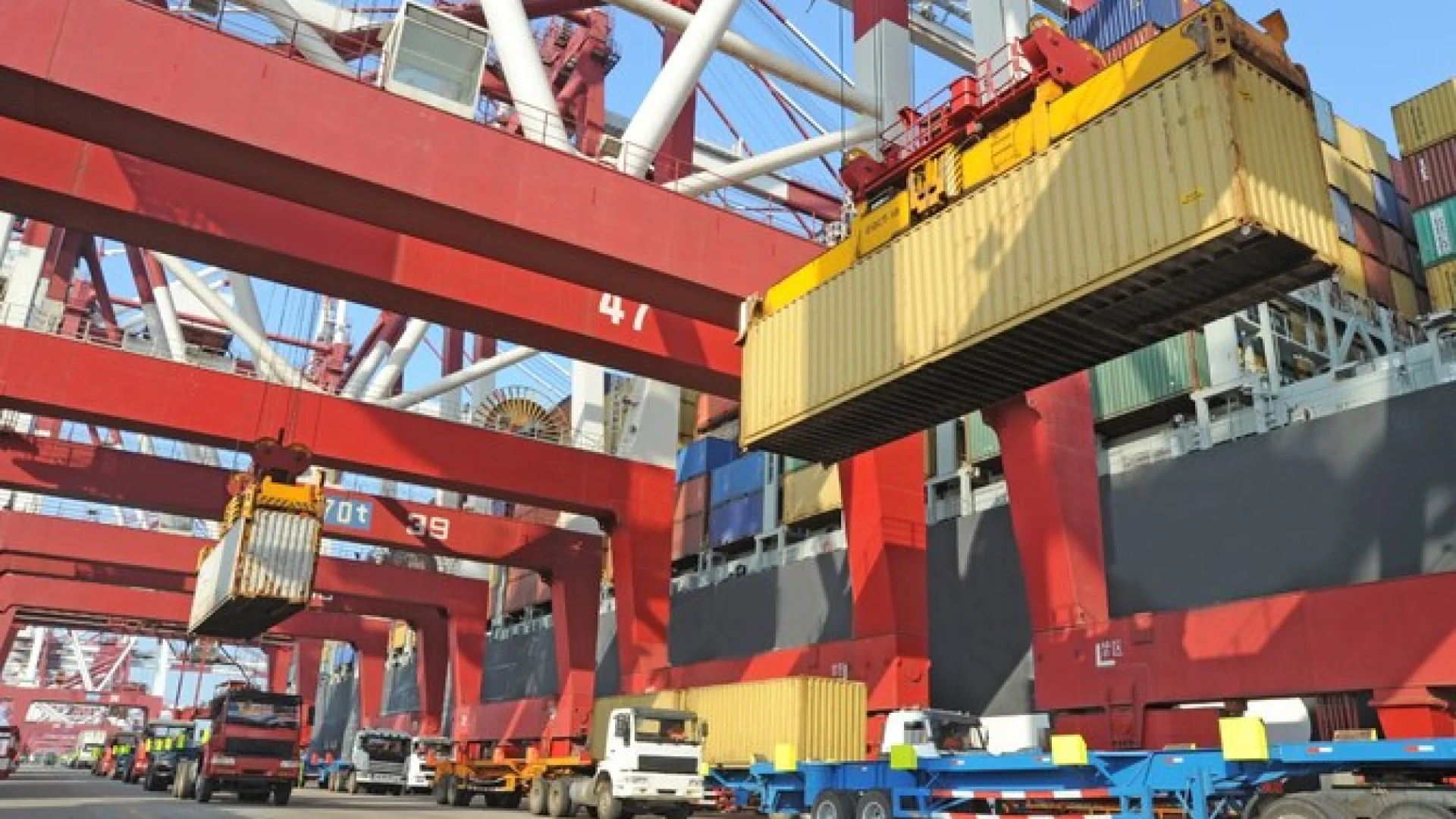

A milestone with momentum: DP World has hauled 500,000 containers across the Gulf Cooperation Council using a combined road-and-rail play while rapidly extending its inland network. The mix of rail inside the country, cross-border road corridors and digital control towers is resetting delivery rhythms across the region. For shippers, it means steadier transit times, lower emissions, and better predictability. For the GCC, it is a logistics fabric that runs from quay to desert and speeds everything in between.
Dawn breaks over a skyline of boxes. Brake lights blink, cranes hum, a low horn rolls across the yard as a freight train edges forward. “Riyadh by midnight?” the dispatcher asks into a headset. “Copy,” comes the dry reply. One truck clears the gate, another noses up to the line. The morning smells like diesel, coffee and intent.
This is where DP World has been bending the curve. Five hundred thousand containers have crossed the GCC on a blend of road and rail, a quiet, stubborn number that speaks of tempo: faster, steadier, leaner. The trick isn’t a single grand project. It’s choreography. Rail where it wins on time and emissions. Road where borders and last miles demand agility. Inland hubs where boxes change modes as easily as a football team switches formation.
Ships discharge. Boxes stack. Some slide onto rail, rolling inland in blocks that eat up distance with a calm, predictable stride. Others pivot straight to bonded road convoys, slipping across borders to hit retail windows and factory shifts in Saudi Arabia, Oman, Bahrain and beyond. Inside the control room, screens glow with maps, ETAs green and amber, weather overlays humming in the corner. “Hold lane A, convoy twelve is pushing through,” a voice calls. Outside, twistlocks click like a metronome.
It looks simple because the hard parts are hidden: night-time slotting at yards, quiet customs handshakes, the thousand tiny choices that turn a potential delay into a non-event. Rail takes the long, straight lines. Trucks stitch the edges, doing what they do best on the last, fussy miles. The result feels different at ground level: fewer queues at port gates, calmer shifts at warehouses, timetables that survive Mondays.
GCC trade is growing, lead times are tight, and shelves do not fill themselves. A dependable inland network is the shock absorber of the system. DP World’s expansion turns isolated routes into a fabric that can flex. For a supermarket chain it’s the difference between a weekend promotion that lands and one that limps. For a mid-market exporter it’s the comfort of knowing the border window will be met without heroic phone calls at 2 a.m.
There’s a sustainability edge as well. Where rail substitutes a portion of long-haul road, emissions per tonne-kilometre drop. It’s not ideology; it’s engineering. Steel wheels carry heavy loads with less energy, while trucks focus on the pieces that demand precision and speed. Each has a lane. Each plays to its strengths.
A driver tightens a strap and taps the tyre with the back of his hand. “Good to go,” he nods, mostly to himself. A forklift lifts two boxes at once and floats them onto a chassis. A planner rubs a knot from her neck and slides a cursor on a digital map. Out on the main road, traffic thins. The convoy leans into the day.
Networks aren’t statues; they’re sketches. More inland nodes, tighter road corridors, and denser rail timetables pull options closer to customers. The aim is simple and relentlessly practical: put the right box on the right mode at the right moment. In a region built on pace and possibility, that’s not a headline. It’s a habit.
Freight doesn’t just move through the Gulf; it reshapes it. Every new inland link raises the value of the land around it. Sites with rail-proximate access, fast highway exits and bonded capabilities are becoming magnets for distribution centres, e‑commerce fulfillment and cold chain nodes. For investors and occupiers, the checklists are getting sharper: high clear heights, deep yards, enough dock doors to smooth peaks, and the power, water and data to run a 24/7 operation without flinching.
Developers should sync site plans with the real cadence of freight: doors and aprons sized for the actual mix of trucks, trailer storage for peak weeks, and circulation that separates fast cross-dock flows from slower value-add operations. Owners can tie leases to operational KPIs, offering shared-yards and overflow capacity to help tenants ride seasonal spikes. And occupiers should lock in space where trains and trucks shake hands – at the node, not stuck in traffic. In a market where 500,000 containers already proved the lane, the smartest square metres are the ones plugged straight into the rhythm.