
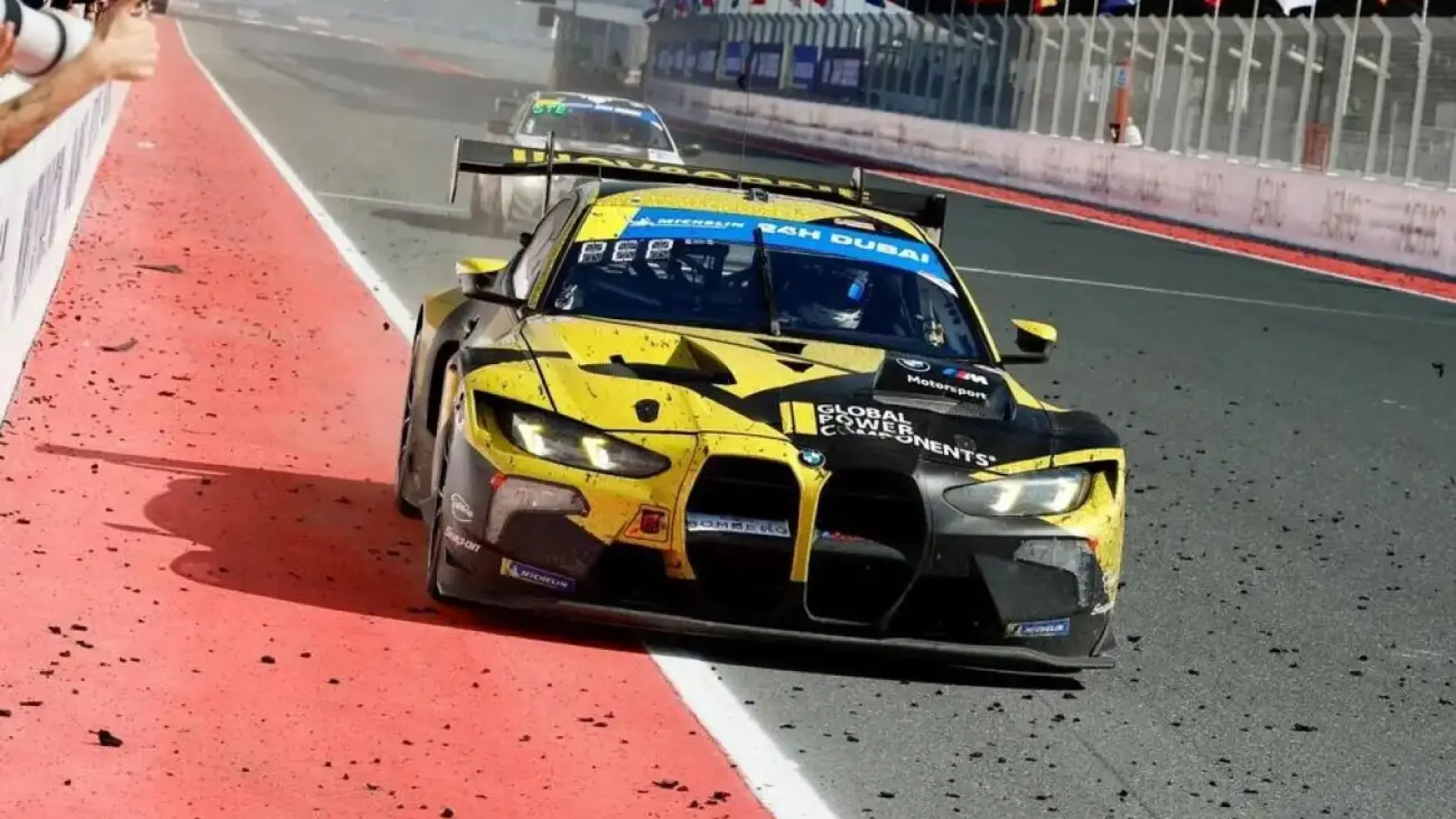

At Dubai Autodrome, the night feels endless until it suddenly isn’t: the air cools, the shadows stretch, and every radio message lands like a verdict. In the Dubai 24 Hours 2026, Team WRT tightens its grip on the event with a fourth victory in five years, proving once again that endurance racing is built on calm hands and repeatable precision. But the story doesn’t settle into a comfortable rhythm—because the last hour detonates the script, throwing drama, pressure, and split-second decisions into the headlights.
The desert has a way of making light look sharper. At 5 a.m., the beams from the cars don’t just illuminate the track—they slice it into bright corridors and deep pockets of black. A marshal stamps his feet against the chill that arrives right before dawn. Somewhere behind the pit wall, a laptop fan whines like it’s also running out of sleep.
“Keep it clean. Keep it clean,” a voice repeats on the radio—half instruction, half prayer.
That’s the Dubai 24 Hours for you. It starts with glamour in the skyline and ends with brake dust on your tongue. And in 2026, it ends with a familiar name at the top: WRT. Again. A fourth win in five years—no longer a hot streak, but a signature.
Endurance racing isn’t one story. It’s hundreds of tiny ones stapled together: a slow puncture discovered just in time, a driver squeezing past traffic without scuffing the car, a strategist staring at gaps that don’t exist yet but will in ten minutes. Dubai magnifies all of it. The track is fast, the margins are thin, and the field is never truly quiet—because there’s always someone recovering, attacking, or gambling.
Through the night, WRT looks like a team that has rehearsed the chaos. The pit lane becomes a metronome: in, up, off, on, down, out. Fuel, tires, a quick glance under the bodywork. No drama. No flailing arms. Just the kind of order that wins races when everyone else is forced to improvise.
But even the best rhythm gets interrupted. Code-60 phases compress the field like a hand squeezing a rubber ball. Traffic turns clean laps into negotiations. And every time the gaps shrink, you can feel the collective breath being held in the garages: Not now. Please, not now.
Then comes the hour that people will remember—because it refuses to behave. The last sixty minutes don’t drift toward the flag; they lurch. Something goes wrong for someone who can’t afford it. A decision has to be made before anyone has time to feel confident about it. The pit wall stops sounding like a discussion and starts sounding like a command center.
“What’s the gap?”
“Traffic ahead.”
“Copy. No mistakes.”
The sun begins to outline the grandstands, and suddenly every kerb looks higher, every braking zone tighter. Drivers aren’t just racing rivals; they’re racing fatigue—the kind that turns a simple overtake into a small act of courage. This is the moment where endurance racing shows its teeth: you’ve survived 23 hours, and the race still demands your best minute.
WRT, though, does what champions do in messy endings: it stays out of the mess. The car remains where it needs to be. The timing remains intact. The decisions are crisp enough to cut through the noise. If the final hour is a storm, WRT doesn’t try to outrun it—it navigates it.
When the flag finally drops, celebration arrives in delayed waves. Helmets come off. Faces are pale, eyes bright. A mechanic exhales like he’s been holding his breath since midnight. The handshake across the pit wall is quick—almost shy—because everyone knows what it took to get here: not one heroic moment, but a thousand disciplined ones.
Dubai loves superlatives, but this one is earned. Four victories in five years is domination with fingerprints. And it tells you something about WRT: speed is expected, but resilience is engineered.
The Dubai Autodrome isn’t just a racetrack; it’s a case study in how cities build gravity. Major events rely on connectivity, hospitality capacity, and mixed-use ecosystems—exactly the same ingredients that support resilient real estate demand. When thousands move through one venue smoothly, it highlights the infrastructure networks that investors track.