
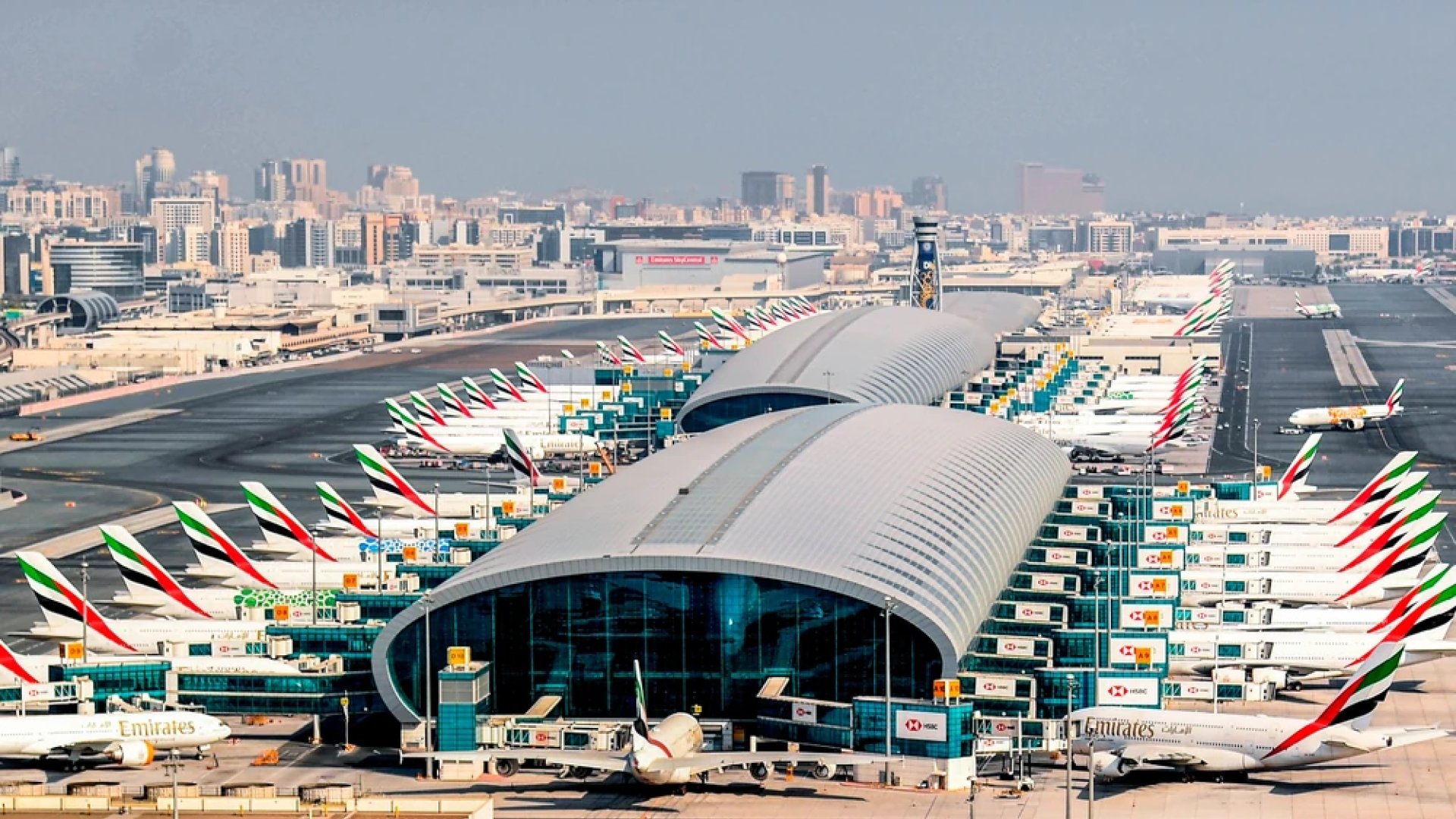

Dubai International Airport is preparing for a day that will feel less like travel and more like a moving metropolis: in 2025, DXB expects to process more than 310,000 passengers in a single day. Holiday surges and Dubai’s role as a global hub will compress check-in lines, security queues and gate areas into a high-speed choreography of luggage wheels and boarding calls. The airport’s message is practical—arrive earlier than usual, check in online, streamline cabin bags and rely on real-time flight and gate updates to avoid missed connections. On a record day, minutes become currency, and preparation is the difference between gliding through and getting stuck in the tide.
You hear it before you see it.
A soft thunder of suitcase wheels. A ripple of footsteps. The clipped rhythm of boarding announcements layered in different languages, like a radio that can’t decide on a station. Dubai International Airport—DXB—on a normal day is already a spectacle. But in 2025, the airport is bracing for something bigger: its busiest day of the year, when it expects to handle more than 310,000 passengers in just 24 hours.
That number doesn’t land in your mind as a statistic. It lands as a feeling: the gate area that looks like a concert before the headliner appears; the security line that bends and bends until it disappears behind a duty-free display; the hurried little negotiations—“You hold the passports, I’ll grab coffees”—that happen in families right before stress takes the wheel.
“Is this the line for transfers?” a traveler asks, half smiling, half worried. Another points without lifting his eyes from his phone. Everyone is moving, but no one wants to move the wrong way. That’s the psychology of a mega-hub on a peak day: the airport becomes a test not only of infrastructure, but of decision-making under pressure.
Dubai sits at a geographic sweet spot between Europe, Asia and Africa, and DXB operates like a global switchboard—connecting long-haul routes and funneling holiday traffic through a single, gleaming node. When travel peaks stack up—school breaks, seasonal getaways, weekend waves—DXB doesn’t simply get “busy.” It transforms into a high-density system where small delays can multiply quickly.
More than 310,000 passengers means more vehicles at drop-off, more bags at screening, more bodies at immigration, more last-minute gate changes, more tightly timed connections. It’s not chaos, exactly. It’s choreography performed at maximum speed.
DXB’s guidance for passengers is straightforward, but on record days, straightforward becomes strategic. The goal is simple: reduce the number of steps that require human intervention, and give yourself enough buffer to absorb the day’s inevitable friction.
On paper, “arrive early” sounds like advice your grandmother would give. In practice, it’s the one thing that turns the airport from a trap into a corridor. Online check-in can erase an entire layer of waiting. A tidy cabin bag can shave minutes at screening—minutes that suddenly matter when boarding starts earlier than expected or a gate shifts to the far end of the concourse.
And then there’s the unspoken rule of peak days: don’t leave decisions for the last possible moment. Refill your water bottle before the crowd hits. Screenshot your boarding pass. Know your terminal. The airport rewards the prepared with something precious: calm.
In the seating areas, the day becomes a collage. A businessman rehearses a pitch in whispers, as if the terminal were a glass-walled meeting room. A couple sits shoulder to shoulder, sharing earbuds, their faces lit by the same small screen. A child, sticky from juice, leans into a parent’s arm and asks the only question that matters: “How long now?”
“Soon,” the parent answers—because “soon” is sometimes the kindest word you can offer in a place ruled by schedules.
DXB has handled colossal volumes before, and it will again. But the busiest day of 2025 is a reminder that modern travel is a mass experience made of intimate moments: the hand squeeze before a long flight, the relief of seeing your gate number steady on the screen, the tiny victory of making it through security without unpacking your whole life.
When the airport hits peak density, you don’t beat it by running. You beat it by arriving ready—by turning your journey into a sequence of small, smart moves. The tide will come either way. The question is whether you’ll ride it.
A single day above 310,000 passengers isn’t just an aviation headline—it’s a signal of mobility, demand and global connectivity, all of which can ripple into property markets. High airport throughput often supports:
For investors and end-users alike, DXB’s peak-day scale underlines a broader point: in Dubai, infrastructure isn’t background—it’s a driver.