
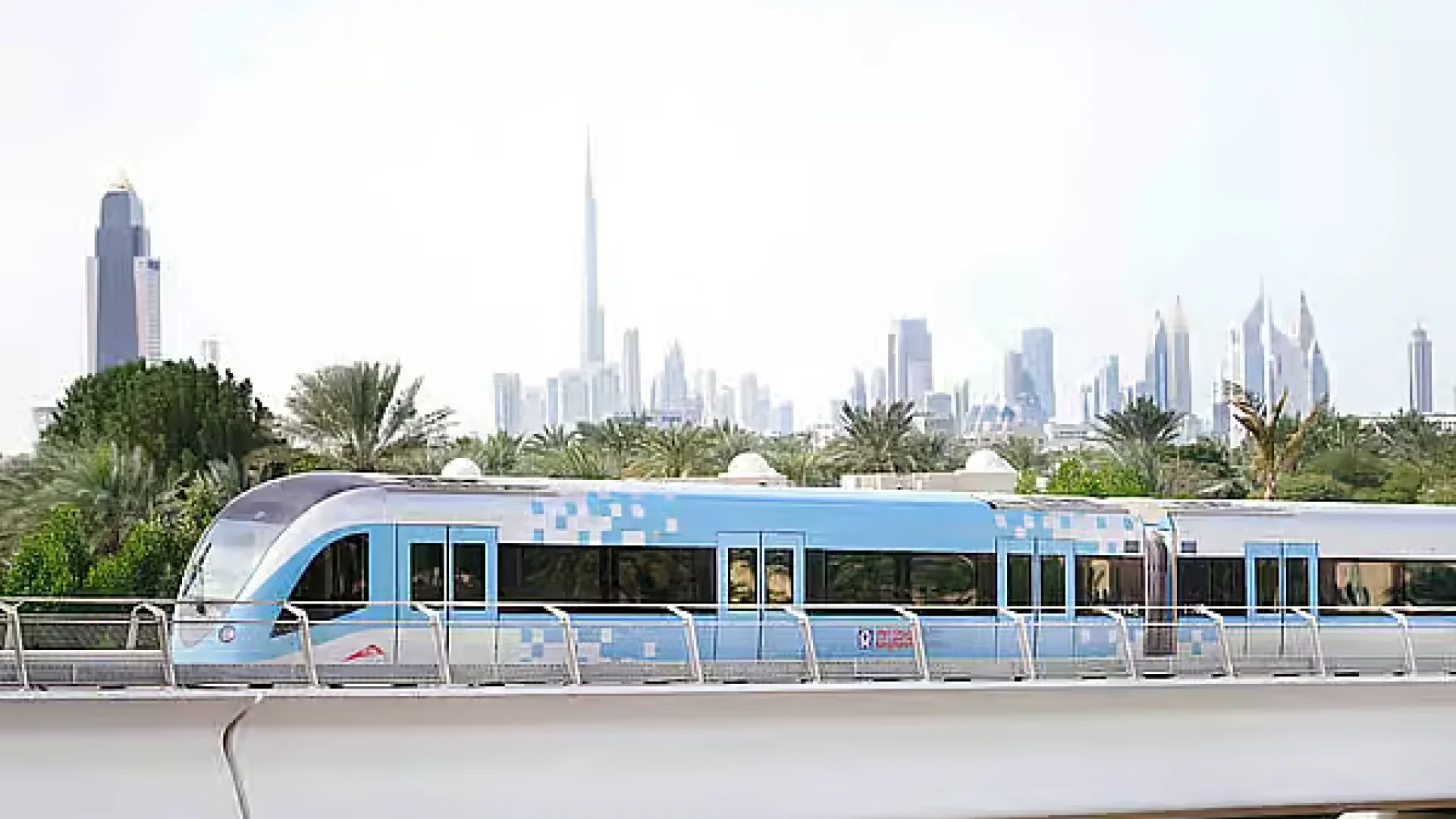
Dubai may soon be talking about airports in the singular: one seamless system, stitched together by a proposed RTA “Airport Express Line” connecting Dubai International (DXB) and Al Maktoum International (DWC). The concept focuses on speed and predictability for travellers, airport staff and anyone shuttling between the city’s two aviation giants. With new metro stations envisioned along the route, the plan isn’t only about cutting travel time—it’s about creating fresh urban nodes that could reshape commuting patterns and development priorities. In a city built on momentum, an express rail link would be a statement: the future hub is being designed in advance, minute by minute.
The suitcase wheels sing their small, hard song—tik-tik-tik—across the polished airport floor. Above, a departures board flickers through cities like a deck of cards: London. Mumbai. Riyadh. Singapore. Somewhere near the coffee queue, a traveller checks his watch for the third time in a minute and mutters to his friend, “If the road is bad, we’re done.”
Dubai is a city that understands the tyranny of minutes. It sells speed as comfort. It turns distance into something you can manage—if the connections behave.
That’s why a new proposal is drawing attention: an RTA “Airport Express Line” that would connect the emirate’s two major airports—Dubai International (DXB) and Al Maktoum International (DWC)—by metro, with new stations along the way. Not a meandering commute. Not a traffic gamble. An express idea with a simple promise: make the switch between airports feel like a single, planned movement.
On a map, DXB and DWC sit like two powerful magnets at opposite ends of Dubai’s sprawl. DXB is the familiar giant—busy, central in the story of modern Dubai, the airport many residents can navigate with their eyes half closed. DWC, further south, feels like tomorrow’s runway: more space, more expansion potential, more long-term ambition.
Between them is not just geography. It’s friction—commute time, unpredictable road congestion, and the mental math every passenger does before leaving a hotel: How early is early enough?
The proposed “Airport Express Line” tackles that friction head-on. The plan, as outlined, would provide a direct, faster metro connection tailored to airport travel, and it would bring new stations into the network—fresh doors opening onto areas that today may feel like “in between.”
Dubai doesn’t build transport in isolation. It builds it as a message. A new line isn’t only a way to move people; it’s a way to move confidence—among airlines, investors, event organisers, and the millions of travellers who treat Dubai as a hinge between continents.
Connecting DXB and DWC more efficiently fits a broader logic: two airports function best when they act like one system. A fast rail link makes the “two-airport city” feel less like a compromise and more like a strategy.
The most interesting part of any metro expansion is often not the train. It’s the station. Stations are where real life gathers: the corner bakery that opens because the footfall is reliable; the hotel that suddenly has a reason to exist; the apartment building marketed with a single line that becomes its whole identity—five minutes to the metro.
In Dubai, you can see this transformation with your own eyes. Step out of a station and watch how the neighbourhood arranges itself around the exit. Shade structures appear. Drop-off lanes get repainted. Signage multiplies. A previously quiet street starts to hum because people now have a reason to be there.
By including new stations along an express route, the proposal isn’t just offering a faster ride; it’s planting future pins on the urban map—potential new micro-centres that could grow into clusters of housing, hospitality and services.
Picture a scenario Dubai knows well: a family lands at DXB, but their onward flight departs from DWC. The children are sleepy, the hand luggage is heavier than it looked at home, and the clock feels louder than usual. Today, this transfer can mean negotiating highways, traffic patterns, and the uneasy feeling of uncertainty.
Now picture the alternative: a clear route. A timetable. A predictable journey that doesn’t depend on a red line of brake lights. That’s what “express” really sells—not glamour, but control.
And it’s not only travellers. Airport staff, airline crews, logistics professionals, and event teams—people whose working lives are measured in shifts and gate times—would also feel the difference. A fast link can expand where people are willing to live, where companies are willing to base teams, and how operations are planned across the city.
As reported, the idea is a proposed RTA metro “Airport Express Line” connecting DXB and DWC, with new stations envisaged as part of the corridor. The emphasis is on a faster, more direct connection that strengthens the metro network for airport-related movement.
There’s a moment you feel it in any well-run metro system: the doors slide shut, the carriage leans into motion, and the city stops being a puzzle. It becomes a sequence. Station to station. Minute to minute.
That’s the deeper promise of an airport express link in Dubai. It would shrink the mental distance between two airports that currently live in different chapters of the city’s daily rhythm. It would turn “southern future” and “northern present” into one integrated mobility story.
And in Dubai, stories matter. Infrastructure is one of the city’s most persuasive forms of storytelling—concrete, measurable, visible from a train window.
Dubai’s calendar is packed: conferences, exhibitions, product launches, sporting events, stopovers that turn into shopping sprees. For visitors, the stress point is often not the hotel or the venue—it’s the transfer. The uncertainty. The “what if traffic…” sentence that ruins an otherwise smooth itinerary.
An express rail connection between DXB and DWC would reduce that uncertainty and make multi-airport itineraries feel less risky. For organisers, it’s another argument when pitching Dubai as a venue: not just world-class facilities, but world-class connectivity between gateways.
For real estate investors, a proposed DXB–DWC airport express metro line is less a transport headline and more a potential re-pricing mechanism—because in major cities, property value often follows time, not distance. If new stations and an express-quality service materialise, the corridor could develop into a new “minutes-based” investment landscape.
1) Stations create investable micro-markets: New metro stops typically catalyse higher footfall and more predictable demand. In Dubai, that often translates into growth of:
2) A corridor that rewrites commuting patterns: A reliable inter-airport metro link can expand the practical catchment area for airport jobs. That can boost residential demand in locations that suddenly become realistic for shift workers and professionals moving between hubs. Investors should watch for neighbourhoods that become “equidistant” in time to both airports.
3) Dubai South/DWC: upside with timeline discipline: DWC’s surrounding areas—often discussed in the context of long-term growth—can become materially more attractive when rapid rail connectivity reduces perceived remoteness. The opportunity: earlier entry prices and longer-term appreciation. The risk: timing. Infrastructure-led strategies work best when investors track milestones and avoid overpaying before certainty increases.
4) Hospitality and short-stay strategies may broaden: An express line can create new “neutral” overnight zones—places that aren’t strictly DXB-facing or DWC-facing but connected to both. That can support hotel feasibility, serviced apartments, and mixed-use projects aimed at travellers who need one night between flights, events, or meetings.
5) The new KPI: minutes to gate
If the express concept delivers genuine time savings, developers and landlords will market properties by travel-time metrics: minutes to DXB, minutes to DWC, minutes to key business districts. Assets that can credibly offer those minutes—especially with station-adjacent access—tend to command stronger leasing velocity and resilience.
Investor takeaway: If planning advances, the DXB–DWC axis could evolve into a transit-oriented development corridor where residential, hospitality, and convenience retail outperform on the back of improved predictability. The most valuable research now is hyper-local: likely station locations, last-mile connectivity, and which existing communities can realistically absorb new demand once “express” becomes real.