
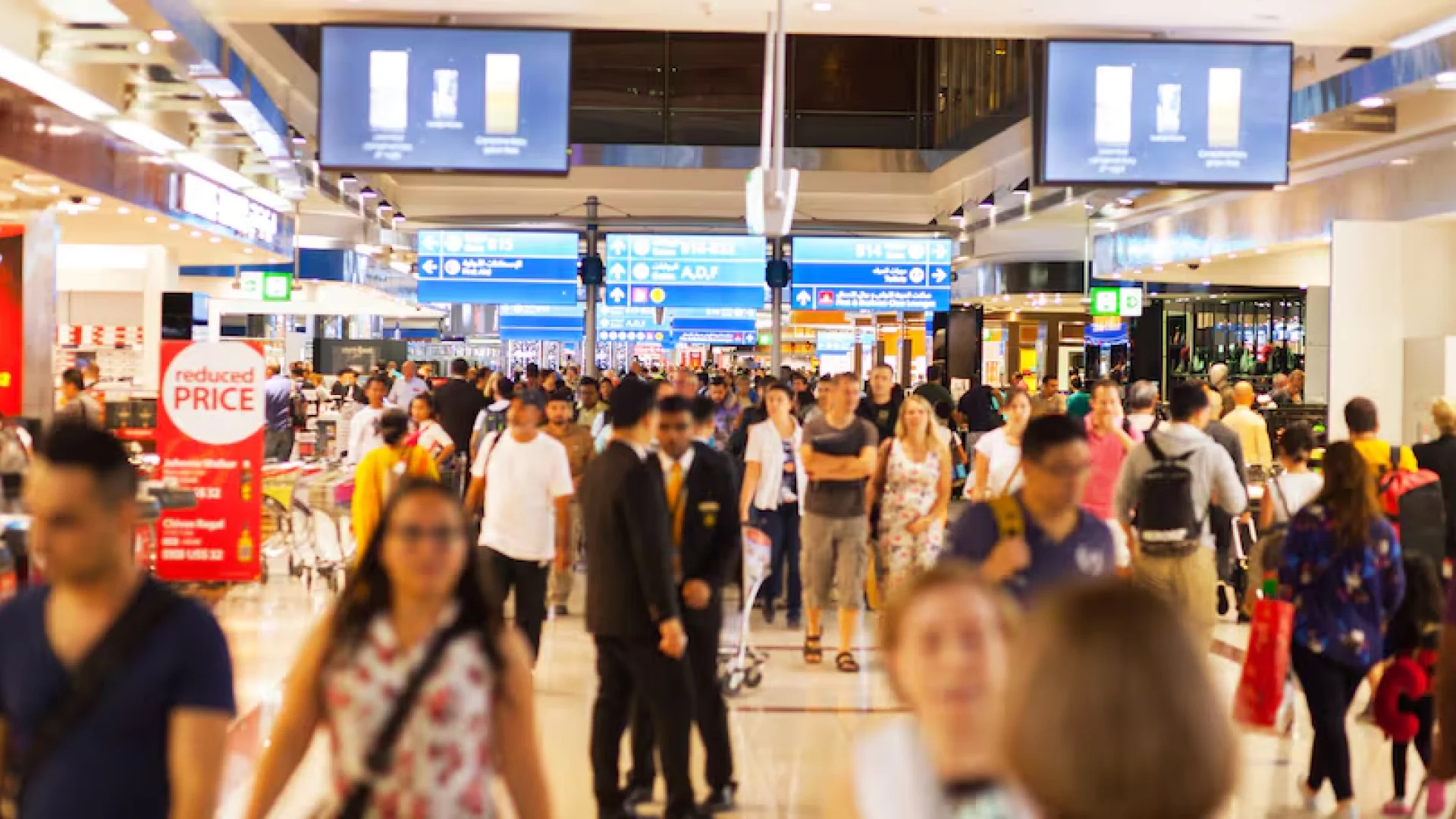

At Dubai International (DXB), summer doesn’t arrive quietly—it rolls in on four wheels and clicks across the floor in a thousand languages. As the holiday season begins, the airport is preparing for an intense rush, with around three million passengers expected to pass through in the coming days. Airlines and airport teams are ramping up staffing, operations and passenger support, while urging travellers to arrive early and lean on digital check-in tools to keep queues moving. It’s a familiar Gulf ritual: when the heat climbs, the departures hall becomes the city’s escape hatch.
The first suitcase hits the tile with a flat, confident thunk. Not loud—just decisive. Like the airport is clearing its throat before it starts talking fast.
A little boy in a too-big backpack presses his palms to the glass and whispers something to the planes. A woman behind him counts passports the way people count rosary beads. “One, two… don’t move,” she tells her kids, then softens: “We’re early. We’re good.”
Outside, Dubai shimmers in July heat. Inside Dubai International Airport—DXB—summer is a different kind of weather: fluorescent, air-conditioned, quick. The season’s great migration is beginning, and the terminals are bracing for a number that feels almost unreal until you watch it arrive in human form: around three million travellers expected in the coming days as the summer getaway rush kicks off.
On the big screens, destinations flicker like postcards: family hometowns, beach cities, cooler capitals. People move with that particular airport focus—half excitement, half logistics. You can hear it in the micro-dialogues that bounce between check-in rows:
“Do we have the visas?”
“Screenshot the booking.”
“Shoes off—no, not yet.”
DXB is used to crowds. It’s one of the world’s busiest global hubs, a place where Dubai is sometimes a starting point, sometimes a connection, sometimes a brief, jet-lagged memory between continents. But the summer school-break period turns the volume up. Families travel in clusters. Bags get heavier. Patience gets tested.
To keep the flow from turning into a standstill, the airport and airlines move into high-gear operations. That means more people on the ground, tighter coordination, and extra attention at the pinch points—the places where a two-minute delay can ripple into thirty.
At an information desk, an agent reads a boarding pass at a glance, points with precision, and sends a couple on their way before their worry has time to bloom. It’s small, almost invisible work. Multiply it by a million decisions and you begin to understand how a mega-airport survives peak season.
In a summer rush, the most practical advice is also the most valuable: arrive earlier than you think you need to. Road traffic, curbside drop-offs, check-in lines, and security queues all thicken at the same time. And when the terminal is full, walking from one end to the other can feel like crossing a small district.
DXB’s other pressure-release valve is digital. Online check-in, mobile boarding passes, and self-service bag drops don’t just feel modern—they shave time off the system where it matters most. The more passengers who handle the simple steps themselves, the more staff can focus on the complicated cases: families with special baggage, travellers needing assistance, tight connections, rebookings.
There’s a particular mood to Gulf summers. The days stretch bright and relentless, and the city learns to live indoors. Then the holidays arrive and the instinct is almost physical: go. Visit family. Find a different temperature. Swap hot wind for sea breeze, or at least for a hotel lobby that smells like cold citrus.
At the gate, I overhear a man negotiating his own expectations. “Two weeks,” he says, as if promising himself moderation. His friend grins. “You’ll extend it.” They laugh, but there’s sincerity underneath—everyone here is chasing a pause, a reset, a story they can tell themselves when they’re back.
Watch the departures hall long enough and you start to notice the choreography. The airport workers are the steady hands—directing, translating, calming. The travellers supply the drama: last-minute hugs, the sudden panic of a missing document, the relief when a boarding pass finally scans green.
And then—always—there’s that moment right before boarding when the world goes quiet in your head. Your phone is full. Your pockets are empty. Your home is behind a security line. A woman beside me exhales and says, simply, “Okay. We made it.”
That’s what the three million really means. Not a statistic—an accumulation of personal thresholds crossed. DXB is preparing for volume, but what it will actually process are lives in motion: reunions, recoveries, weddings, job starts, long-awaited breaks.
Big passenger numbers at DXB don’t automatically translate into property returns—but they do illuminate the fundamentals investors watch: Dubai’s global connectivity, its role as a transit and tourism hub, and the city’s capacity to handle peak demand without breaking its rhythm.
For buyers and investors, the practical takeaway is to focus on micro-location, access, and product quality: good layouts, efficient building management, realistic service charges, and proximity to transit—without paying a premium for noise. The holiday surge is a reminder that Dubai remains a place people move through, move to, and move back to. In real estate, that movement is demand.