
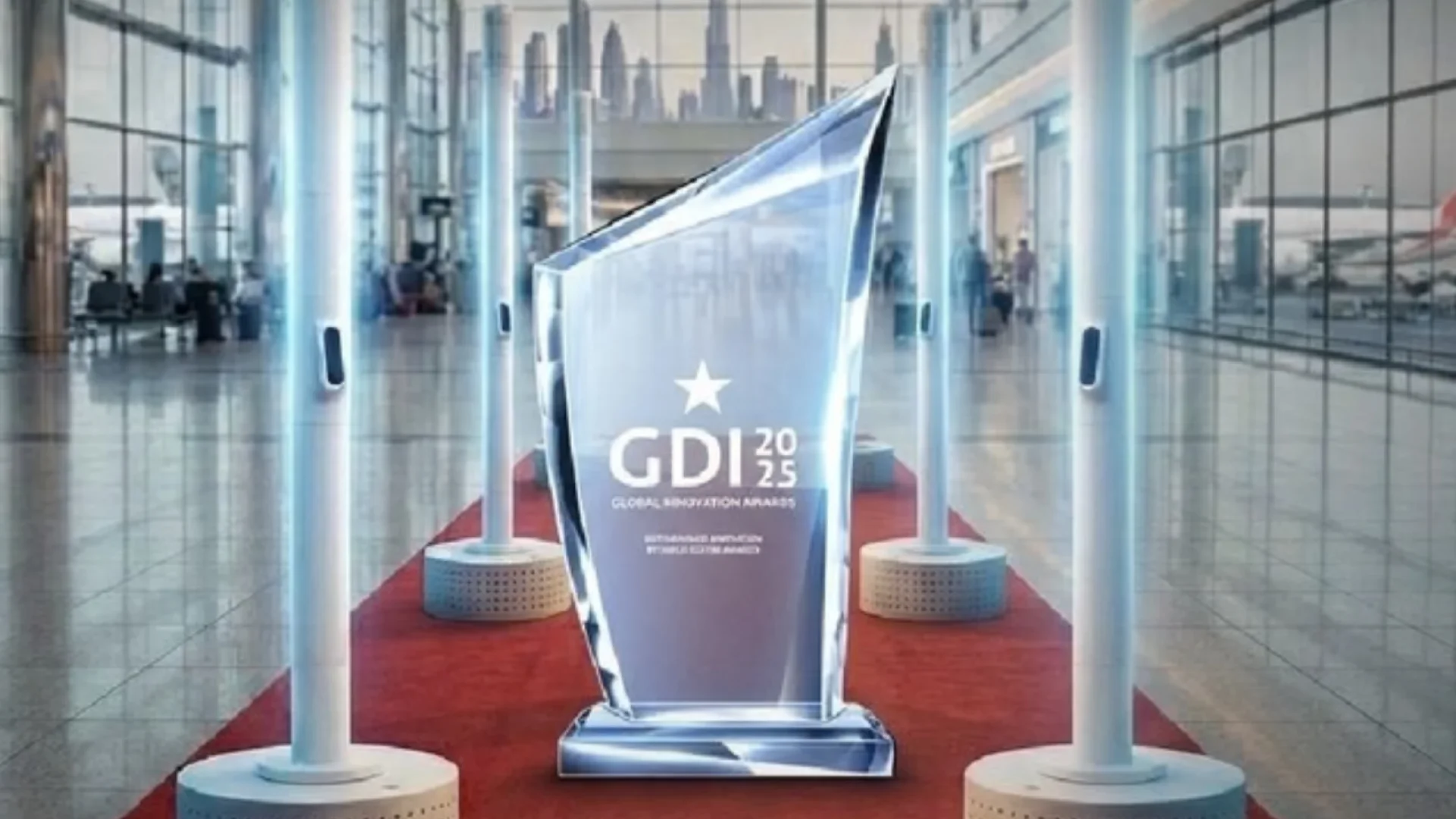
At Dubai’s airports, the most powerful upgrade isn’t always a new terminal—sometimes it’s a new rhythm. The award-winning “Red Carpet” smart corridor from Dubai Airports rethinks how people move through critical touchpoints, using intelligent operations and experience design to reduce friction and keep journeys flowing. Recognized with a global innovation award, the initiative highlights Dubai’s focus on seamless travel as volumes grow and connections tighten. The result is simple to feel on the ground: fewer bottlenecks, clearer movement, and a calmer, more confident passenger experience.
The suitcase wheels whisper first.
It’s that soft, steady hiss across polished floors—followed by the click of a carry-on handle locking into place, the distant beep of a boarding pass scanner, the low murmur of dozens of languages braided together in one moving crowd. You step into the terminal expecting the usual: stop, start, queue, shuffle, repeat. But then something feels… different. The space ahead isn’t a squeeze point. It’s a glide path.
A staff member catches your eye and gestures—small, confident, almost casual. “This way.” No drama. No velvet rope. Yet the effect is unmistakable: you’re being guided into a corridor that seems to think for you.
This is the idea behind Dubai Airports’ “Red Carpet” smart corridor—an innovation designed to smooth passenger journeys through one of the world’s busiest aviation hubs. And the world has noticed. The initiative has secured a global innovation award, putting a spotlight on a new kind of airport competitiveness: not just capacity, but choreography.
The name “Red Carpet” sounds cinematic. In reality, it’s closer to a perfectly timed stagehand—present, precise, and invisible unless something goes wrong. The corridor is built to reduce friction at the moments that matter most: when crowds swell, when connections are tight, when one small delay can ripple outward and turn a smooth transfer into a sprint.
In a place like Dubai, where the airport is not merely infrastructure but a global crossroads, those minutes are currency. The “Red Carpet” concept focuses on keeping people moving, aligning operational decision-making with the real, physical experience of a traveler.
A business traveler in a creased blazer walks briskly, phone in one hand, passport in the other. He slows—just for a second—looking for the familiar snarl of a line. It isn’t there. He exhales, almost surprised. “Finally,” he mutters, more to himself than anyone else.
Airports everywhere are facing the same contradiction: passengers want speed and comfort, but volumes are rising and security requirements remain non-negotiable. Add in tighter airline schedules and the growing expectation that travel should feel intuitive, and you get an urgent question: how do you increase throughput without making the terminal feel like a pressure cooker?
Dubai’s answer, in this case, isn’t a single shiny gadget. It’s a system-level intervention—an approach to flow that blends operational intelligence with experience design. The global innovation award attached to “Red Carpet” signals that the industry is increasingly valuing this kind of progress: the kind you feel in your shoulders when they drop, because you realize you’re not going to miss your connection.
Stand still for a moment in any major terminal and you’ll see it: an airport behaves like a city in fast-forward. There are rush hours, shortcuts, choke points, and sudden surges that can overwhelm a single checkpoint the way a traffic accident jams a highway.
“Red Carpet” is about managing that organism with more finesse. It’s designed to help distribute passenger movement more effectively, reduce bottlenecks, and support smoother transitions through high-impact areas. The genius of such systems is that they don’t need to feel high-tech to the passenger. They need to feel obvious—like the building itself is quietly helping you do what you came to do: get where you’re going.
A smart corridor is never just a corridor. It’s a set of coordinated choices—data-informed, operationally grounded, and translated into the real world through staffing, signage, and process design. While the traveler experiences a simpler route, the airport is juggling complex variables in the background: peaks and troughs of arrivals, connection banks, staffing levels, and the constant requirement to keep security robust.
It’s not about turning every traveler into a VIP. It’s about making the baseline experience feel less like a test of patience.
Ask anyone who travels frequently and they’ll tell you: the real fear isn’t turbulence. It’s uncertainty on the ground.
Will the line move? Will the gate change? Will the connection time evaporate? Airports can turn rational adults into clock-watching worriers in minutes. That’s why the “Red Carpet” idea resonates. It doesn’t merely shave time; it reduces doubt. And doubt is what makes a terminal feel hostile.
A couple stands near a junction, hesitating. They look up at the signs, then at each other. “Are we…?” the woman begins. A staff member steps in lightly. “Straight ahead. You’re good.” The couple nods and moves, faster now, shoulders less tense. Small interactions—tiny reductions in friction—add up to a different kind of airport memory.
Dubai has long been associated with superlatives: busiest, biggest, boldest. But the real competitive edge of a global hub is reliability. Airlines build schedules around it. Travelers choose itineraries because of it. Cargo and business ecosystems thrive on it.
By earning a global innovation award for “Red Carpet,” Dubai Airports reinforces a message: the future of aviation leadership is not just about expanding footprint, but refining movement. The more predictable the journey, the more valuable the hub becomes—especially when passenger numbers surge and margins for delay narrow.
The most successful innovations in airports are often the ones passengers don’t notice as innovations. They notice something else: that they weren’t stressed.
A woman pauses mid-walk, scanning the space as if she’s missing something. Then she smiles—because what’s missing is the usual chaos. No abrupt queue. No clogged pinch point. No anxious crowding. She resumes walking, and the terminal swallows her into a steady stream of motion.
That’s the “Red Carpet” promise: not glamour, but glide.
For real estate investors, a globally awarded passenger-flow upgrade at Dubai’s airports is not merely an aviation headline—it’s a location-quality signal with tangible implications across hospitality, logistics, office demand, and mixed-use development. Airports like DXB and DWC function as anchors of an “aerotropolis” model: clusters of assets whose performance is linked to connectivity, reliability, and traveler confidence. When the journey becomes smoother, the surrounding real estate ecosystem becomes more investable.
1) Hospitality upside near airports and transit corridors: Smoother transfers and a stronger hub reputation can support stopover demand, which benefits airport hotels, serviced apartments, and well-connected city hotels. Investors should watch submarkets with fast access to terminals, strong corporate travel patterns, and properties capable of capturing short-stay, high-turnover demand.
2) Logistics and industrial tailwinds: Operational excellence at a hub improves the attractiveness of nearby warehousing, last-mile distribution, and time-critical supply chains (e-commerce, pharma, aviation parts). This can translate into stronger leasing momentum for modern logistics parks, temperature-controlled facilities, and flexible light-industrial units—especially where road links and customs efficiency align.
3) Office and business park resilience: Corporate site selection increasingly values “frictionless travel” for executives, sales teams, and regional management. A recognized improvement in passenger flow enhances the broader business-readiness narrative, supporting demand for Grade-A offices, flexible workspace, and business parks positioned along key airport-to-CBD routes.
4) Pricing in infrastructure quality: In competitive real estate markets, assets are differentiated not only by the building but by the ecosystem: accessibility, predictability, and user experience. Improvements that reduce congestion risk can lower perceived operational friction and, over time, support occupancy stability and liquidity in adjacent submarkets.
5) Investment strategy takeaway: Investors looking at Dubai’s airport-adjacent districts should evaluate properties through an “operational convenience” lens—transfer times, multimodal connectivity, peak-hour resilience, and tenant profiles tied to travel volumes. Innovations like the “Red Carpet” smart corridor strengthen these fundamentals, reinforcing the long-term thesis for airport-centric hospitality, logistics, and mixed-use assets.