
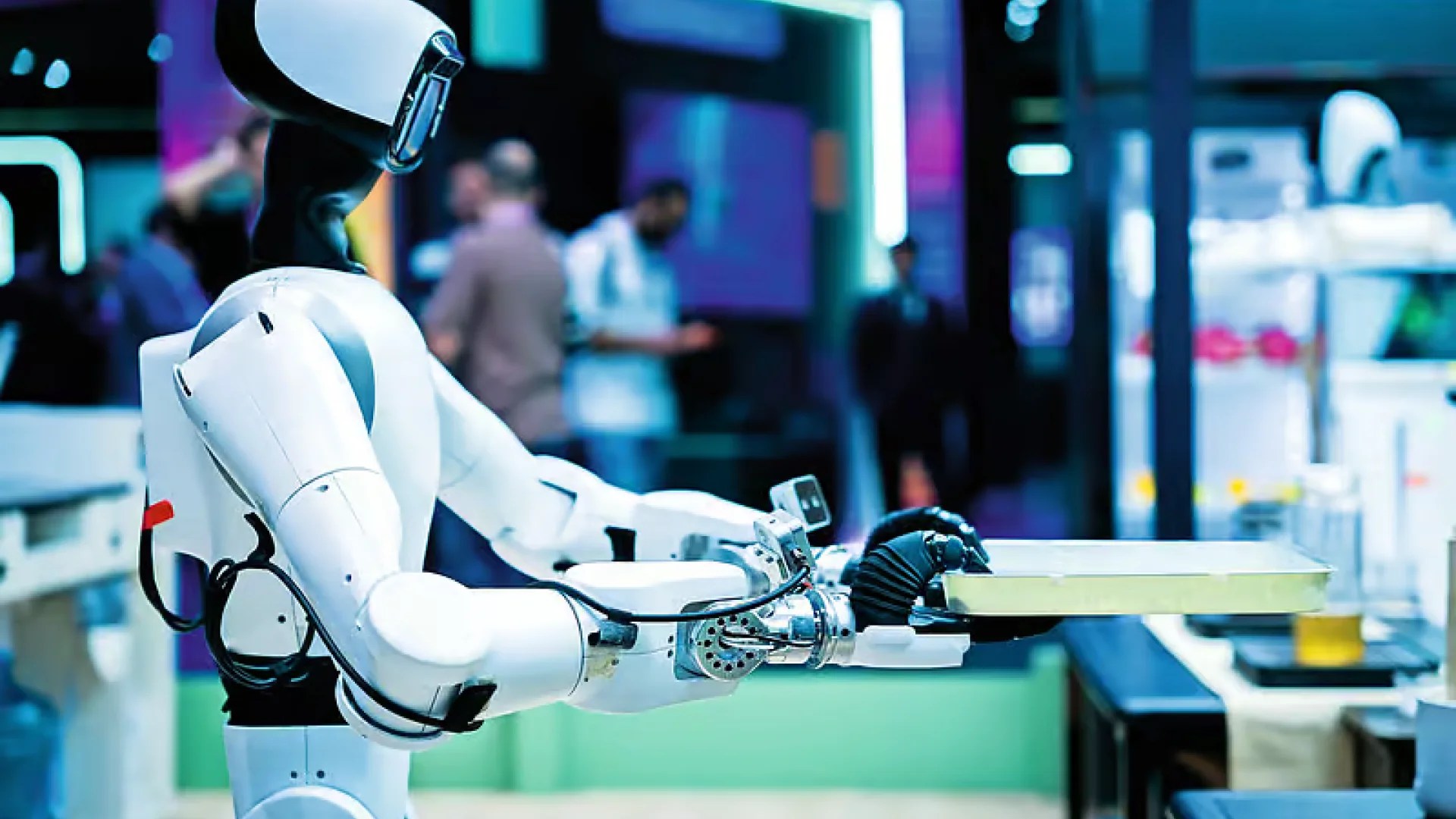

First a hum, then a glide: Dubai’s autonomous delivery push is no longer a concept but a living street scene. By pairing 5G, AI and a clear regulatory sandbox with sidewalk robots and early drone corridors, the city is turning the last mile into a precise, low‑carbon, always‑on service. Backing it is a mobility vision targeting a meaningful share of autonomous trips by 2030 and a tight alliance of regulators, tech firms and planners. The payoff: lower costs, fewer emissions, tighter delivery windows—and a city designed to make innovation ordinary.
You hear it before you see it. A soft whirr, like an aircon exhale. Then a waist-high white box noses along the curb, polite as a bellhop. A mother nudges a stroller aside. “Another one,” she says, amused. Up above, a dark fleck traces the sky—straight, steady. A delivery drone on a pre-cleared lane. This is Dubai, where the last mile doesn’t just drive. It rolls and it flies.
The choreography is careful. Geofenced streets. Safety operators on standby. QR codes that open gates as if by magic. A courier glances at his phone—“arriving in 3”—and steps back as the robot takes the lift up a podium ramp. Inside the lobby, the concierge waves like he’s greeting a new colleague. That’s the switch underway: services keeping their promise, changing only the body they arrive in.
Dubai has set the stage. A city grid wired for millisecond reactions. A strategy that puts a significant slice of mobility on autonomous rails by 2030. And public bodies that don’t just permit but co-create—drawing test maps, writing safety cases, opening data rooms. Startups and global players plug in, iterate, and learn. The result: autonomous delivery that’s shifting from pitch deck to pavement.
Why the urgency? Because last-mile logistics is friction incarnate—expensive, unpredictable, emission-heavy. Robots and drones promise the opposite: predictable cost curves, 24/7 availability, centimeter-precise routes, fewer parking snarls. Retailers unlock new peak hours in the midday heat. Residents choose 15-minute windows. Streets breathe easier when one less van double-parks outside a tower.
“Does it stop at zebra crossings?” a boy asks. The robot brakes, blinks, yields to the stroller, and moves on. Trust is built—or broken—in seconds. That’s why redundancy rules: virtual fences, deadman switches, and human takeover from a control room. Technology becomes polite. It asks to pass; it doesn’t barge through.
Money is doing the math. If autonomy shaves a material share off delivery costs, retail calculus changes. Hyperlocal orders make sense. Cold chains get tighter. Returns become less painful. And sustainability shifts from nice-to-have to KPI: fewer empty miles, lower tailpipe emissions, slimmer packaging thanks to shorter hops. Cities win the quiet moments that add up to livability.
There’s work ahead. Edge cases crowd the curb: construction detours, sudden rain, curious pets, GPS shadows. But the city’s muscle is repetition. Test, measure, expand. What runs on two streets this quarter can live in ten neighborhoods the next—if the data holds. Often it does: faster windows, fewer misses, little vandalism. The robot is neither a status symbol nor a target. It’s just… useful.
At dusk, the boulevard turns into a rehearsal stage. A drone slices the pink sky, gentle as a desk fan. The robot pauses at a concierge desk. A lid clicks open. Steam lifts from a box, fragrant and ordinary. “Enjoy,” the display winks. The future doesn’t make a grand entrance. It knocks, delivers, and moves on.
Autonomous delivery isn’t just a tech story—it’s a property play. If you invest, develop, or asset-manage in Dubai, plan as if the robot already lives in your building.
Operator checklists for owners:
Bottom line: Autonomous delivery makes buildings more liquid. Properties that are robot- and drone-ready lease faster, retain longer, and underwrite with fewer unknowns—because the future, quite literally, shows up at the door.