
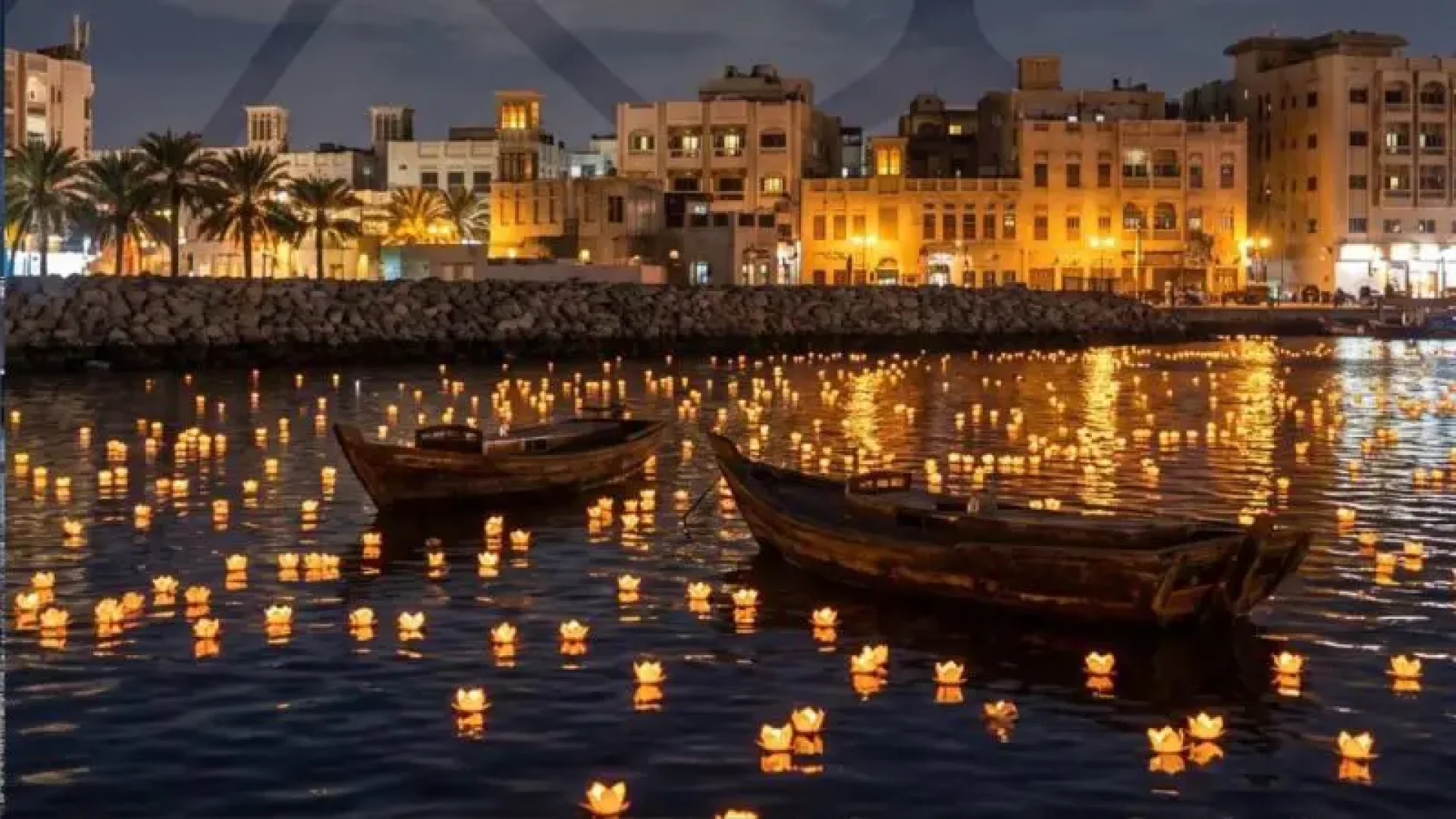

At dusk, Dubai Creek changes character: the water darkens, silhouettes sharpen, and every step on the promenade feels more deliberate. With the new Dubai Creek Lights project, Dubai Municipality is upgrading lighting along key stretches of the Creek to improve visibility, comfort and safety—while elevating the area’s nighttime look and feel. The initiative supports a more walkable, welcoming waterfront after dark and strengthens the Creek’s position as one of the city’s most iconic public spaces. For residents, visitors and businesses, it’s a practical improvement that can translate into longer evening activity and a more vibrant shoreline.
The last call to prayer fades into the warm air and the Creek does what it always does at night: it quiets down just enough for you to notice the gaps. Not in the skyline—Dubai doesn’t do gaps—but on the ground. A step you didn’t see. A railing that disappears into shadow. A corner where your pace instinctively slows.
“Careful here,” a boatman mutters as he hops from the abra to the dock, boots landing with a soft thud. The water takes the sound and carries it away. A family edges past, the kids still buzzing, the parents suddenly scanning the path.
This is the moment Dubai Municipality is aiming at with Dubai Creek Lights: not the postcard moment, but the lived one. The in-between. The places where a city either invites you forward—or quietly asks you to leave.
Dubai Creek isn’t just a waterfront. It’s a moving archive: of trade routes and old souks, of wooden dhows stacked with cargo, of commuters crossing water the same way their grandparents did. In daylight, the Creek is kinetic and obvious. At night, it becomes atmospheric—and, in parts, harder to read.
Dubai Municipality’s Dubai Creek Lights project brings a focused upgrade to illumination along the Creek, designed to improve visibility, strengthen safety and comfort, and enhance the nighttime identity of this landmark area. It’s not about turning the Creek into a stage. It’s about making it feel coherent after dark—walkable, legible, welcoming.
Good lighting changes behavior in the most ordinary ways. You linger. You choose the longer route. You stop to look at the water instead of hurrying past it. You let your phone stay in your pocket because you’re not using it as a flashlight or a shield.
On a waterfront like the Creek, those small choices add up to a different evening economy: more footsteps, more casual meet-ups, more “let’s grab tea” decisions that happen because the street doesn’t feel like it ends at sunset.
As the upgraded lighting defines edges and surfaces—promenade lines, access points, the rhythm of the shoreline—the Creek becomes easier to navigate. The city feels closer, not less.
Dubai Municipality has framed the project as an enhancement to the public realm, with direct impact on how people experience the Creek at night. The goals are straightforward, but the effect can be surprisingly emotional—because light is reassurance made visible.
You can feel it when it works: the way people stop walking in single file and spread out again; the way a couple pauses for a photo without stepping into darkness; the way the Creek looks less like a boundary and more like a corridor.
Lighting seems simple until you stand next to water. The surface reflects, doubles, distorts. Too bright and it glares; too dim and it defeats the purpose. The best setups don’t announce themselves—they guide you quietly, letting the place stay itself.
Along the Creek, that matters. This is heritage territory and everyday territory at once. The light needs to respect the texture of the area: the timber boats, the stone edges, the informal stalls, the steady flow of people who aren’t here for a “night attraction” but for life.
As the evening thickens, a woman beside me points at the ripples. “Look—now you can actually see the water moving.” It’s a simple sentence, but it captures what lighting can do: it returns detail to the night.
In a city that competes globally on quality of life, the night is part of the product. A safer, brighter Creek encourages walking and public-space use, which strengthens the social fabric of the area. It also reinforces Dubai Creek’s role as a connector—between neighborhoods, between histories, between the old city’s texture and the newer city’s pace.
When the edges are clearer, the whole place feels broader. The Creek doesn’t shrink at night. It expands.
Public-realm improvements—especially along landmark waterfronts—often ripple into property performance. Not overnight, and not by magic, but through measurable shifts in perception and usage: footfall, dwell time, tenant demand, and the premium people place on an area that feels lively and safe after sunset.
For investors tracking Dubai’s waterfront nodes, the practical question is simple: Where will people choose to spend their evenings? Projects like Dubai Creek Lights help shape that answer—one illuminated step at a time.