
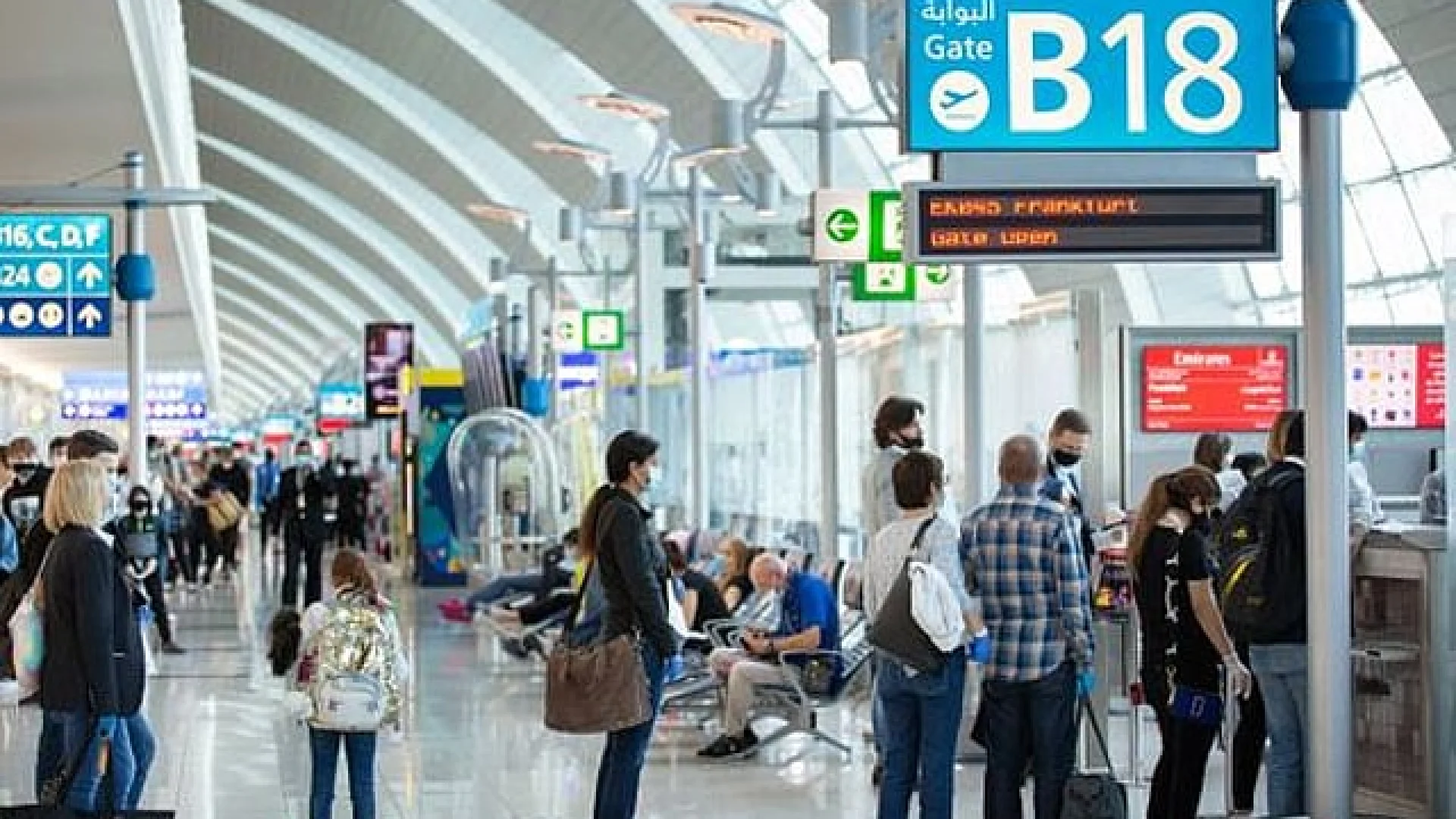

Dubai’s terminals are entering their loud, bright summer rhythm: Dubai Customs expects around 3 million travellers during the peak holiday period and is scaling up operations to keep passengers moving. Additional staffing, closer coordination with airport and airline partners, and more targeted screening and risk analysis are aimed at cutting waiting time without loosening controls. The message is simple—faster journeys for the majority, tougher interception for prohibited and restricted items for the few who try to hide in the crowd. In a city built on flow, the summer surge is the ultimate stress test—and the systems are being tuned for it.
The first thing you notice is the sound. Not one sound—many. Wheels ticking over tile seams. Boarding calls folding into each other. A zipper tugged too hard. A child’s sudden protest when a passport disappears into an adult’s pocket. And underneath it all, that steady airport hum that feels like a giant machine breathing.
“Keep your bag close,” a man murmurs to his daughter, steering her around a tower of suitcases that looks as if it might topple. She nods, eyes fixed on the belts where bags slide forward like obedient animals.
This is Dubai in summer, indoors. Outside, heat shimmers above the roads; inside, the city’s most relentless river begins to swell. Dubai Customs is preparing for a seasonal surge of roughly 3 million travellers, and you can sense what that number means long before you see it on a screen: it means lines that can grow in minutes, families arriving in waves, and a thousand tiny decisions every hour to keep the terminal from tightening into a knot.
In a summer airport, time behaves differently. Five extra minutes feels like a small disaster when you’re holding a boarding pass and listening to the final call echo down the hall. Dubai Customs’ summer plan is designed for that reality: add capacity, smooth the flow, and keep inspection standards firm.
On the floor, it looks like choreography. Additional officers guiding passengers into the right lanes. Quick checks that don’t feel rushed. A calm hand gesture that sends one traveller forward—another to the side. Most people only notice the moment their own passport is examined. They don’t see the pattern recognition behind it.
“Why him?” a woman whispers as a suitcase is pulled aside. Her friend shrugs. From the outside, selection can look random. In practice, the approach is built around risk analysis—routes, inconsistencies, alerts, experience, and the small signals that stand out in a sea of normal.
Dubai’s summer period typically concentrates travel: residents heading off for holidays, families visiting relatives, last business trips before schedules reset. With that volume, customs checkpoints become more than counters—they become pressure valves.
Dubai Customs is aiming for two goals that often fight each other: speed and security. The balance comes from being smarter about where time is spent. Low-risk passengers should move with minimal friction. Higher-risk cases should receive deeper attention. Done right, the majority experiences a smoother journey—and enforcement becomes more precise, not more disruptive.
There’s a parallel story in every peak travel season. While most passengers are thinking about beaches, reunions and hotel check-ins, a small minority tries to use the crowd as camouflage—carrying prohibited or restricted goods, or attempting smuggling tactics that rely on distraction and volume.
That’s why Dubai Customs highlights intensified efforts against smuggling during the summer rush. When the hall is full and the belts never stop, the temptation is to rush everything. But the people doing this work know a simple truth: the moment you trade attention for speed, you lose both.
Efficiency isn’t a slogan here. It has a physical sensation. You feel it when the line moves in small, regular steps instead of sudden stops. When signage and staff prevent confusion before it forms. When an officer looks up at the right time, asks one clear question, and gets one clear answer.
A father with two kids and a cart piled high exhales as he reaches the front. “We’re late,” he says, not angry—just drained. The officer glances at the documents, checks a screen, and gives a short nod that feels like permission to breathe again. The family rolls onward, the kids already talking about snacks, the crisis dissolving into the crowd.
The summer plan is about capacity, coordination and focus. Dubai Customs is boosting readiness through staffing and operational adjustments, and by working closely with airport and airline partners to keep passenger streams manageable. At the same time, it is sharpening screening and risk-based inspections to maintain control quality despite heavier volume.
For passengers, this often translates into something deceptively simple: fewer moments of confusion. Less standing still. Clearer direction. And when a bag is pulled aside, the sense that it’s happening for a reason.
Summer changes people’s faces. Tired eyes. Sunburnt foreheads. The tension of travel packed into one corridor. Some travellers get louder. Some get overly polite. Some try to look invisible. And the officers—trained to be both quick and observant—work in the thin space between courtesy and control.
A brief exchange near the lanes: “Second look,” one officer says to another. Two words, no theatre. A suitcase turns left instead of right. The crowd keeps moving. That’s the point. In peak season, the system doesn’t need to feel strict—it needs to stay stable.
Three million travellers is not just a big headline number. It’s a test of infrastructure, staffing, technology, and communication—of how smoothly a global hub can absorb demand without losing its shape. Dubai’s airport experience is part of the city’s identity. When it works, it feels effortless. When it doesn’t, the city’s promise of speed and connectivity feels suddenly fragile.
Dubai Customs’ readiness drive is essentially a promise to protect that identity during the most intense weeks: keep the flow fast for most people, and keep the net tight for the few who try to exploit the rush.
Passenger peaks are more than a travel story—they’re a pulse check on a city’s economic engine. For real estate investors, Dubai’s ability to handle millions of travellers efficiently strengthens a core proposition: Dubai remains a high-connectivity hub where mobility supports business, tourism, and residential demand.
For investors and owners, the actionable question is micro-location: which corridors benefit most from airport-driven mobility, business travel, and tourism spillover? In Dubai, the airport isn’t just infrastructure—it’s an accelerator. And property values tend to follow accelerators.