
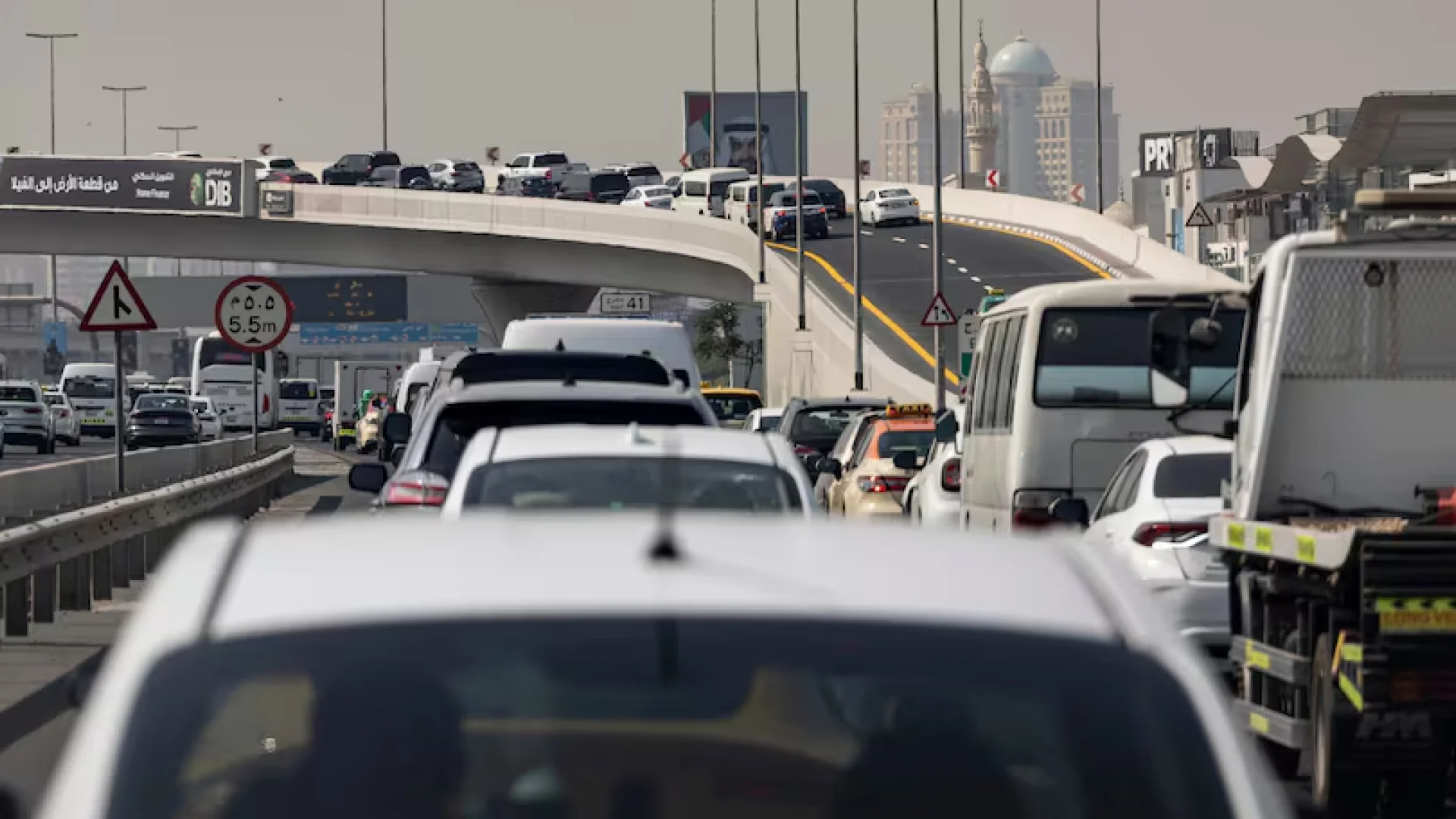

Dh18 billion is not just a headline figure in Dubai—it’s a physical promise, measured in junctions eased, districts connected, and daily routines made smoother. Sheikh Hamdan bin Mohammed has approved a suite of projects and initiatives designed to shape the emirate’s future, pushing forward strategic development priorities that touch mobility, urban planning and quality of life. The message is crisp: Dubai intends to grow faster, smarter and more liveable, with infrastructure that keeps up with the people arriving, the businesses expanding and the city’s ambitions. Stand by a busy road at dusk and you can almost hear it—the future, revving quietly, waiting for the green light.
The road radiates heat like a stovetop. Even the air looks tired—shimmering, wavering, refusing to sit still. A taxi idles at the curb, its engine humming low. Inside, the driver flicks his eyes between the mirror and the traffic stream, then says, almost conversationally: “Dubai doesn’t stop. But the roads… they need to breathe.”
That single word—breathe—fits the news now moving through the city. Sheikh Hamdan bin Mohammed bin Rashid Al Maktoum has approved projects and initiatives worth Dh18 billion, a package intended to shape Dubai’s future. It’s the kind of decision that doesn’t live on paper for long here. It shows up as new connections, upgraded corridors, reworked urban spaces—small changes that stack up until the city feels different under your feet.
Dubai’s growth has always been visual. You don’t need a report to know the city is expanding—you can see it in cranes that draw lines in the sky, in fresh asphalt that still smells faintly tarry, in neighborhoods that suddenly have a new entrance, a new bridge, a new shortcut people start using the very next day.
But momentum has a cost. When more residents arrive, when more visitors flood in, when more companies set up shop, the daily choreography tightens. A two-minute delay becomes a ten-minute jam. A quiet street becomes an artery. A “temporary” detour becomes a habit. Dubai’s answer, once again, is to plan big—then fund it.
According to reporting, the approved package spans multiple projects and initiatives aligned with Dubai’s strategic development goals. While the individual elements vary, the direction is clear: strengthen the city’s ability to move people and services efficiently, improve the way districts connect, and enhance overall liveability.
It sounds broad because it has to be. A fast-growing metropolis can’t be “fixed” with a single lever. Roads affect housing. Housing affects commute patterns. Commutes affect where schools flourish, where retail expands, where offices cluster. Dubai’s planners are tuning an orchestra mid-performance—and Dh18bn is the budget for a new movement.
Big infrastructure stories are often told with aerial photos. But the truth sits at street level. It’s in the moment someone chooses to take the metro because the last-mile connection finally makes sense. It’s in a parent’s relief when a school run stops being a daily gamble. It’s in the delivery rider who shaves minutes off a route and suddenly finishes a shift less exhausted.
Outside a building entrance, a security guard watches cars thread through a tight turn. “Before, this area was quiet,” he says, nodding toward a line of brake lights. “Now it’s always moving.” He pauses, then adds: “It’s good. But it needs order.”
Order is what city investment buys when it’s done well—not control, not rigidity, but a kind of flow. The ability for a city to absorb more life without feeling like it’s straining at the seams.
Dubai competes globally—on talent, on capital, on convenience. Infrastructure is not a background asset here; it’s a frontline strategy. Approving Dh18bn worth of projects is a signal to residents and investors alike: the city is preparing for the next chapter, not reacting to the last one.
There’s a confidence embedded in that. It tells businesses that logistics will keep improving. It tells families that the city is thinking about the daily realities of living here, not only the skyline postcard version. And it tells the market that Dubai intends to stay fast—without becoming frantic.
At dusk, the glass towers catch the sun and throw it back in bright, warm sheets. The sidewalks are still busy—tourists pausing for photos, office workers cutting across crossings, the quiet choreography of a city that never truly powers down. A couple stops near a junction and watches the lanes merge and separate like braided rope.
“It’s all planned,” one of them says, half impressed, half stunned.
Yes. Planned—and now, newly funded at scale. Dh18bn is Dubai saying: we will keep building, but we will also keep connecting. Keep expanding, but keep smoothing the edges. Keep chasing the future, but make it feel easier to live inside.
In Dubai, major infrastructure and urban development programs frequently translate into real estate momentum—because accessibility, commute times and neighborhood quality are direct drivers of demand. A Dh18bn approval is therefore meaningful not only as public investment, but as a forward indicator of where the city’s next value pockets could form.
For buyers, the practical takeaway is simple: read the city like a map, not just a brochure. The best-performing homes are often the ones that sit closest to future convenience—where the morning drive shortens, where amenities arrive sooner, where the neighborhood feels “finished” faster. In Dubai, infrastructure is not just support; it’s a value engine.