
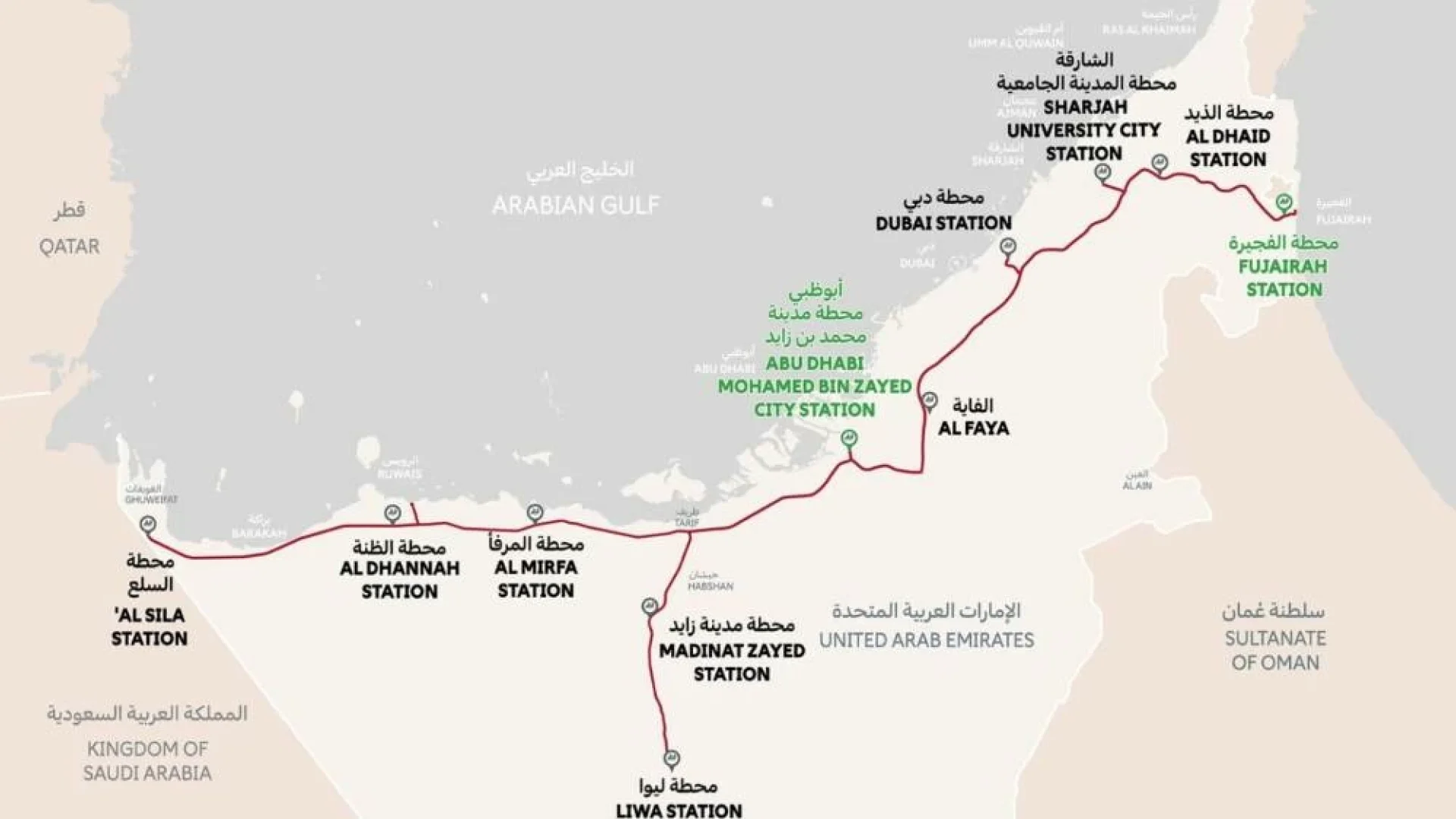

On September 30, Dubai’s new Etihad Rail passenger station throws open its doors—an everyday game-changer for commuters, weekender families, and the region’s logistics backbone. Set in the city’s south with quick access to major highways and last‑mile options, the hub is designed for effortless mode switching. Etihad Rail’s communicated benchmarks point to around 50-minute hops between the big cities as the corridor ties Abu Dhabi, Dubai, Sharjah and the east coast around Fujairah together in phases. App-based ticketing, QR access, barrier-free paths, and park‑and‑ride complete a launch that signals one thing clearly: rail is joining daily life.
Dawn pours through the glass like warm honey. Doors sigh open. Steel glints. Somewhere near the coffee cart, a barista shakes a last hiss of milk foam while a steward calls, “First train in five!” Two schoolkids press their noses to the window like it’s a speed museum. A father nudges a stroller; a grandmother flattens a cowlick. Dubai wakes early—and today it rides the rails.
Inside, the hall feels like a sail caught with a steady wind. Light, height, clarity. Brass wayfinding picks out the paths to platforms, service desks, and ticket machines. Space is generous. The mood is unhurried but sure-footed. If airports are sprints, this place is a glide. The station is made to make time feel kinder.
Dubai’s Etihad Rail passenger station is the city’s new front door to the UAE’s national line. The site sits in the south, plugged into major arterials and clearly signposted for buses, taxis, and ride-hailing. From the start, the hub is built for intermodality: arrive, transfer, roll on. Accessibility runs throughout—wide lifts, ramps, tactile paving, leveled boarding. It’s a place that treats movement as a right, not a challenge.
Etihad Rail connects the Emirates in stages, stitching Abu Dhabi, Dubai, Sharjah, and the east-coast port city of Fujairah into a fast corridor. Communicated travel-time targets sit around the 50-minute mark between the major city pairs, a strong edge over peak-hour driving. Trains are built for high cruising speeds with creature comforts on board: Wi‑Fi, outlets, clear luggage zones, quiet cars, and family areas.
The train noses in—near-silent, all promise. A boy counts the carriages out loud. A guard grins: “Everyone’s counting today.” A brief whistle, the hush of doors parting, the soft drum of suitcase wheels on the floor. “Window seat?” “Always.” Little exchanges stitch the morning together.
For first rides, keep the app close. It bundles schedules, live platform info, and peak-time notices. Pro tip: opening week is part travel, part celebration—arrive early, try an off‑peak slot, and keep your camera handy.
“If this really does Abu Dhabi in under an hour, I win back two calls I usually lose to traffic,” says a man in a navy suit, tapping his smartwatch. A student asks, “Power outlets?”—“Plenty,” the attendant replies. A family poses under the destination board; the mother laughs, “Today, we’re on time.” Small lines, big meaning: rail is about to be routine.
This is the overture. In the months ahead, the public looks to tighter headways, more stations along the corridor, and deeper integration with Dubai’s transit—from feeder buses to seamless interchanges. Integrated fares and unified accounts are also on many commuter wish lists. The rule is simple: the easier the switch from car to train to last mile, the bigger the impact on congestion, air, and everyone’s time budget.
As the inaugural train slides out, the station grows momentarily quiet. People lean back. Screens glow. The map of the Emirates draws a single, certain line. Outside, the city sheets past in silver, sand, and white. Inside, a new ritual settles into place: work, read, watch—and arrive on time.
New tracks redraw maps—and balance sheets. The global pattern is familiar: high‑quality rail lifts addressable demand and stickiness near stations. London’s Crossrail/Elizabeth Line nudged many micro‑markets up with stronger liquidity and shorter days on market; Tokyo’s rail‑anchored nodes keep peripheral hubs resilient on rents. Translating to Dubai and the UAE corridor yields a few clear themes:
For investors, the plays are practical: secure plots and units along feeder axes early; tune existing assets for rail readiness (acoustics, wayfinding, bike/e‑scooter parking, parcel logistics); and structure operator partnerships for convenience retail. Buy‑to‑let strategies can underwrite modest rent lift once frequencies normalize and perception hardens. Developers should flex ground‑floor typologies—morning commuters, midday neighborhood needs, evening convenience—one lease, modular zones.
Risk doesn’t vanish: construction phases bring noise, timetables ramp in stages, and not every “near station” claim holds water. Due diligence means timing true walking minutes to entrances, checking sightlines to station fronts, sizing park‑and‑ride capacity, mapping bus interfaces, and engaging early on signage rights. In the end, value accrues to those who design the entire journey—from living room to seat—without friction.