
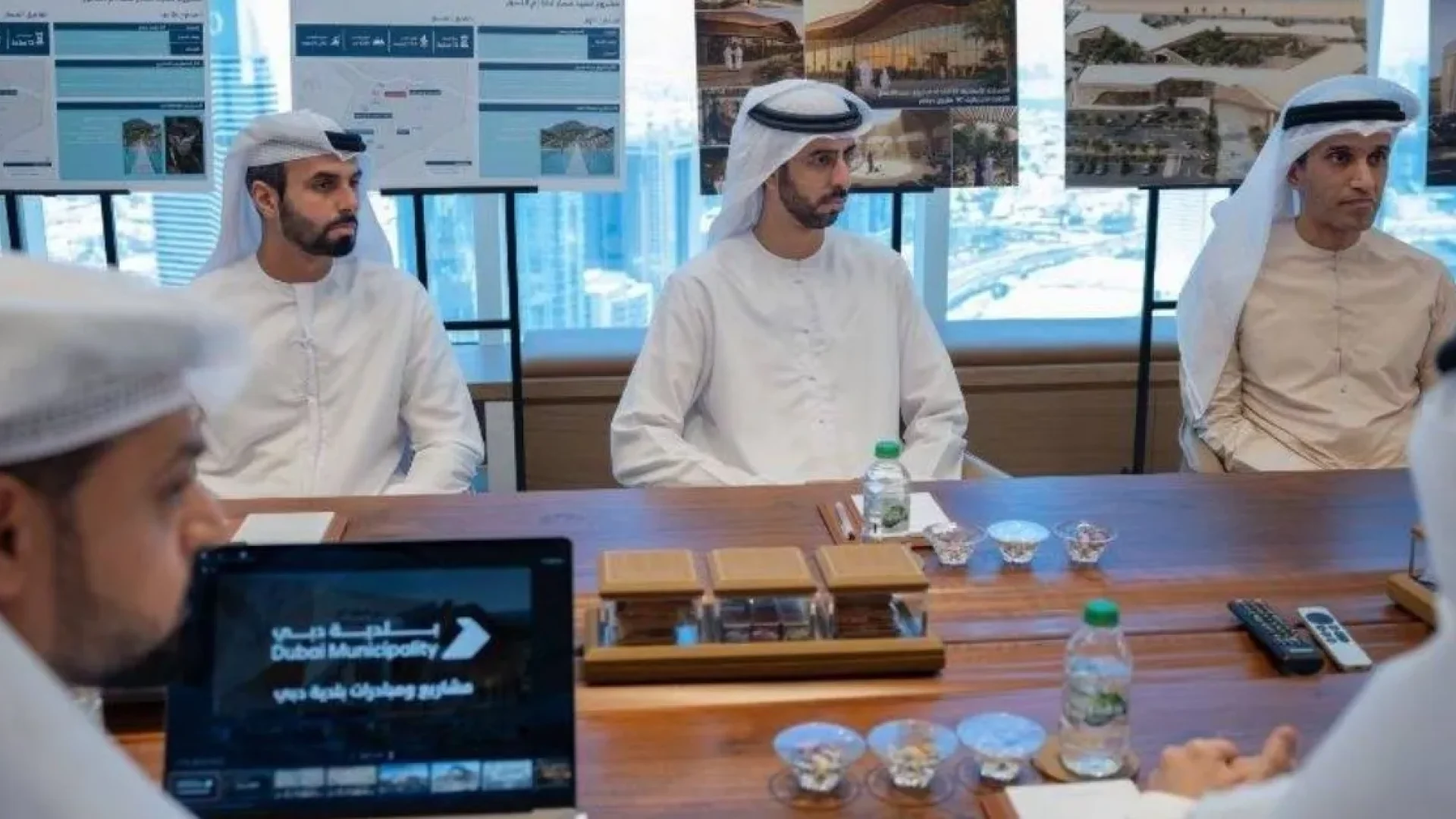

Dubai is moving its AI ambition from screens into streetscapes with plans for what it calls the world’s first AI-designed park. The concept uses artificial intelligence to generate and refine design options—helping planners optimize paths, shaded areas, amenities and movement patterns before anything is built. In a city where heat, footfall and experience design matter, the promise is simple: greener public space, planned faster and tuned more precisely to how people actually use it. It’s a headline-friendly “first,” but also a practical experiment in making urban nature feel better on the ground.
The sun is dropping, and Dubai changes its mood in minutes. Glass towers lose their glare. Pavements cool from scorching to merely warm. Families step out like the city has exhaled. Somewhere, a child’s sandals slap against a playground surface—tap, tap, tap—and a father calls out, half warning, half laughing: “Not too fast!”
Now imagine this: the next park they visit isn’t only sketched by human hands. It’s proposed, tested, and iterated by artificial intelligence—an engine that can draft a thousand versions of a walkway before the first curb is poured. Dubai has announced plans to develop what it describes as the world’s first AI-designed park. Not an app. Not a concept video. A park. Real trees, real benches, real shade—planned with algorithms in the background.
Parks are emotional places. They’re where people celebrate birthdays on picnic blankets, where teenagers hover at the edges of basketball courts, where runners count laps and grandparents count pigeons. But parks are also systems—of heat, light, flow, maintenance, safety, and time-of-day rhythms. Dubai’s bet is that AI can help design that system with more precision.
The idea is straightforward: artificial intelligence can be used to support planners by generating design options and optimizing them against real constraints. Sun paths. Peak-hour foot traffic. Bottlenecks near entrances. The difference between a bench that sits empty at noon and one that becomes the most wanted seat at 7:15 p.m.
Instead of relying purely on intuition and slower rounds of revisions, AI can simulate. Adjust. Recalculate. Propose again. And again. The human team doesn’t disappear—architects and city planners still choose, judge, and shape the final outcome. But the toolbox expands.
Dubai has made a habit of turning emerging tech into city-scale statements. The “first” matters here, yes—but so does the use case. A park is a surprisingly powerful stage for AI because it’s where the city meets the body: your skin feels the shade, your lungs take the air, your feet decide whether a path makes sense.
In a climate where comfort can determine whether public spaces thrive or sit quiet, small design decisions add up quickly. A slightly wider path can prevent weekend congestion. A better-placed canopy can keep a playground alive beyond the early morning. A well-zoned layout can let joggers run without weaving through prams and picnic circles.
Think of the park as a set of scenes that repeat every day, with different actors at different hours. Early morning: walkers and runners. Late morning: parents with toddlers, strollers, snacks. Midday: a lull, the sun dominating the script. Evening: the big crowd—friends, families, couples, sports groups, the slow swirl of people who came out just to breathe.
AI can help designers match the physical plan to those patterns. It can test how movement spreads from entrances. It can forecast where people cluster and where they avoid. It can help place amenities so they don’t create unintended choke points. And crucially, it can help choreograph shade—Dubai’s most valuable outdoor currency.
None of this guarantees magic. A park can still fail if it’s poorly maintained, badly connected, or built without care. But it can reduce blind spots. It can turn “We think this will work” into “We’ve tested ten versions, and this one performs best against the goals.”
The strange thing about great planning is that it disappears. Nobody wants to stroll through a park and feel like they’re inside a tech demo. They want birdsong, soft light, kids laughing, the satisfying crunch of gravel or the spring of a running track. They want the park to be easy—easy to enter, easy to navigate, easy to linger in.
If Dubai’s AI-designed park succeeds, the triumph will be quiet. A visitor won’t say, “This algorithm is impressive.” They’ll say, “Let’s stay a bit longer.” Or they’ll make it simpler: “This spot is nice.”
There’s also a symbolic angle. In a world where AI often feels abstract—floating in clouds, powering chatbots, sitting behind dashboards—using it to design a public park is a statement that technology can serve everyday wellbeing. That smart cities aren’t just about speed; they’re also about comfort.
Dubai’s announcement positions the project as a global first, but the bigger question is what happens after the ribbon cutting. Will AI become a repeatable part of how the city designs public spaces? Will future parks, promenades and plazas be tested in simulation before they’re built? If so, the “first” is less a trophy and more a turning point: a shift toward data-assisted design as normal practice.
And if the park becomes genuinely beloved—used daily, talked about with affection, visited not because it’s new but because it’s good—then the city will have proven something harder than innovation. It will have proven care.
High-quality parks are not just lifestyle amenities; they’re market signals. They change how a neighborhood is perceived, how people move through it, and how long they choose to stay. In many global cities, proximity to well-maintained green space correlates with stronger residential demand and, often, pricing resilience—especially for family-oriented housing and long-stay rental segments.
For investors, the practical lens is geographic and operational: How close are the nearest residential and hospitality clusters? Which pedestrian corridors connect to the park? What’s the governance plan for upkeep? A park is only as valuable as its ongoing condition. If Dubai pairs AI-led design with consistent maintenance, the impact won’t stay inside the park’s fences—it will ripple into nearby demand, branding, and pricing power.