
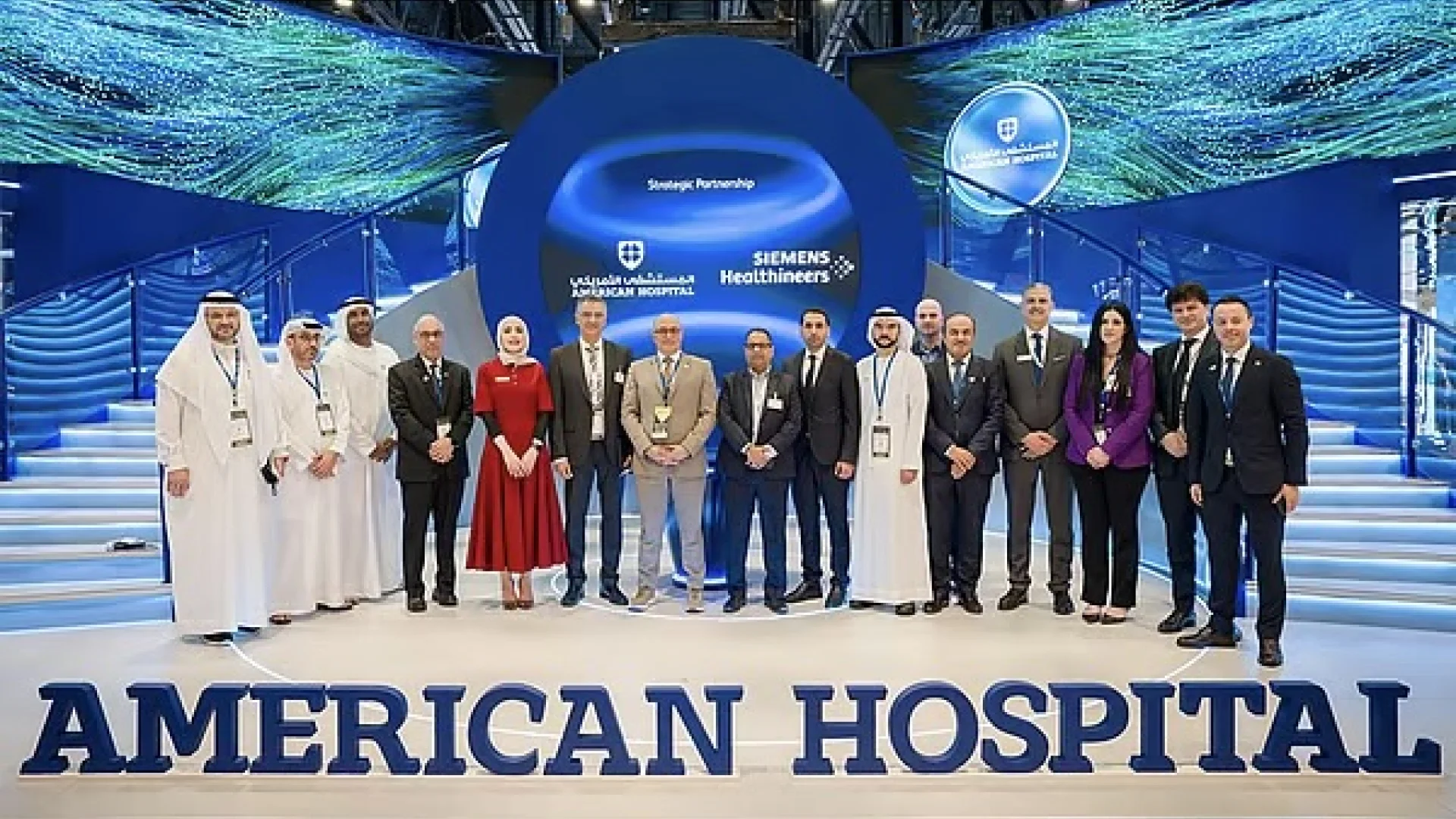
The room feels like a cockpit: screens, sterile light, a hush broken by short commands and the soft click of precision tools. American Hospital Dubai has unveiled the region’s first hybrid cardiac catheterization lab—bringing real-time imaging and surgical-grade capability into one space to streamline complex, minimally invasive procedures. At the same time, the hospital is expanding advanced cancer care with more sophisticated diagnostics and increasingly personalised, targeted treatment pathways. The message is bigger than medicine: Dubai is building next-generation healthcare as a pillar of its global-city promise.
The light hits first.
Not the kind that warms your skin—this is crisp, surgical light, poured from the ceiling in clean sheets. It makes metal look softer and human eyes look sharper. In the centre of the room, a table waits under hovering mechanical arms. Around it, people move with the quiet confidence of those who have rehearsed a thousand times and still treat every moment as new.
“Hold there,” someone says, voice low.
“Two millimetres,” comes the reply.
On a wall-sized screen, a river appears—contrast dye slipping through vessels, branching like streets on a night map. It’s intimate and astonishing at once: a city of blood flow, lit up in real time.
This is American Hospital Dubai’s newest statement in steel and glass: the region’s first hybrid cardiac catheterization lab. A place designed to collapse distance—between diagnosis and treatment, between imaging and incision, between “we should” and “we are doing it now.”
In many hospitals, complex cardiac and vascular cases can feel like a relay race. A patient moves from one space to another: imaging suite, cath lab, operating theatre. Each handover is careful. Each transfer is time. Each new room brings new set-ups, new checklists, new minutes that suddenly feel heavy.
A hybrid cath lab is built to change that pacing. It combines high-end imaging with operating-room standards in one integrated environment. The goal isn’t spectacle. It’s continuity—so a minimally invasive procedure can be performed with advanced guidance, and if the case demands it, the team can pivot toward surgical intervention without losing momentum.
In practical terms, it means fewer breaks in the chain of care. In human terms, it can mean something simpler: fewer unknowns.
Hybrid can sound like compromise. In this room, it means amplification. Multiple specialties can operate together in the same space, supported by imaging that doesn’t merely document—it guides.
Watch a team in a hybrid lab and you notice the choreography. There’s no wasted movement. No dramatic declarations. Just short sentences—“Now.” “Here.” “Confirm.”—and the occasional exhale that tells you something difficult just became manageable.
Elsewhere in the hospital, the story shifts from arteries to oncology—but the theme remains the same: precision, integration, speed.
American Hospital Dubai is also advancing its cancer diagnostics and treatment, building out pathways that lean into modern oncology’s core idea: cancer is not one disease, and treatment cannot be one-size-fits-all. The direction of travel is clear—toward more sophisticated diagnostic workups, more targeted therapies, and more personalised care planning that considers the tumour’s profile as well as the patient’s life around it.
Walk past the oncology unit and you see the quiet infrastructure of hope: infusion chairs, neatly labelled supplies, staff who speak in calm rhythms. A nurse pushes a cart and murmurs to a colleague, “He did well last time.” It’s not a headline. It’s everything.
Advanced cancer care isn’t only about new machines. It’s about reducing the bluntness of treatment—hitting the right target, sparing what can be spared, adjusting the plan when the body speaks back. It’s also about coordination: specialists aligning decisions, planning next steps, and keeping the patient from becoming a traveller between departments.
Dubai has spent years refining what it wants to be to the world: a place where infrastructure isn’t just present, it’s premium; where time is respected; where big promises are backed by working systems. Healthcare is now a central chapter in that identity.
A first-of-its-kind hybrid cath lab is more than a technical upgrade. It’s a signal to residents and international patients alike that high-complexity care is being built locally, not borrowed. That the city isn’t only importing expertise—it’s creating an ecosystem where expertise wants to stay.
And there is a knock-on effect. When hospitals invest at this level, they attract specialised clinicians, researchers, technologists, and medical support talent. They also raise expectations. People begin to measure neighbourhoods not only by proximity to the beach or a business district, but by the quiet reassurance of world-class care nearby.
Back in the hybrid lab, the screen shifts to a final verification image. A short pause. Then someone says, simply: “Good.”
No applause. No victory lap. Just a controlled release of tension, the kind you feel when a complex plan holds together under pressure.
That might be the real surprise of next-generation medicine: the more advanced it becomes, the less it needs to perform. The best technology doesn’t demand attention. It removes friction. It shortens pathways. It gives teams room to make the right call—quickly, collaboratively, with the tools already in place.
For Dubai, a city often associated with the visible—towers, spectacle, scale—this is a different kind of landmark. Not taller. Not louder. Just smarter. A room designed so that fear has fewer seconds to grow.
Most people will never step into a hybrid cath lab. They’ll see corridors, reception desks, a doctor’s calm face. But they may feel the difference in the timeline of care: fewer delays, clearer decisions, a stronger sense that contingency plans are already built in.
In the end, innovation becomes meaningful when it turns into normality—when “the best option” is simply what happens, without drama.
High-end healthcare infrastructure—like a first-in-the-region hybrid cath lab paired with advanced oncology—doesn’t stay confined to hospital walls. In Dubai, it acts as a powerful form of soft infrastructure that can influence where people choose to live, invest, and build businesses. For real estate investors, it’s a sign of urban maturity and long-term demand stability.
1) Residential demand from specialised talent: Cutting-edge hospitals attract high-income professionals—consultants, surgeons, imaging specialists, oncology teams, biomedical engineers, administrators. These groups often prioritise quality housing, reliable commuting, and lifestyle amenities. That can strengthen leasing demand and resilience in nearby residential submarkets, especially for well-managed buildings and family-friendly communities.
2) Medical travel and short-stay accommodation: As Dubai deepens its capacity for complex procedures and advanced cancer care, the ecosystem around patient journeys expands—family members, carers, follow-up visits, visiting clinicians. This supports demand for serviced apartments, branded residences with hospitality-style operations, and high-quality short lets—particularly in locations with strong transport links and a calm, safe street environment.
3) Pricing power through “liveability assurance”: Education and mobility have long been value drivers; healthcare is increasingly a third pillar. For globally mobile buyers—executives, entrepreneurs, retirees, second-home owners—proximity to top-tier care can be a deciding factor. Over time, that can underpin price premiums in well-served districts and reduce downside risk during market cycles.
4) Growth of healthcare real estate as an asset class: Beyond homes, investors can watch for opportunities in medical-office buildings, diagnostic centres, day-surgery facilities, rehabilitation clinics, and med-tech logistics. These assets can offer different risk/return profiles than retail or standard offices, often with sticky tenancy when anchored by reputable operators—provided zoning, parking, and access are well designed.
5) Micro-location matters more than headlines: Proximity is not universally positive. Some tenants want immediate access; others want distance from traffic and 24/7 activity. Investors should evaluate noise, ambulance routes, parking pressure, and the building’s suitability for either long-term family living or short-term, service-led occupancy.
Bottom line: American Hospital Dubai’s hybrid cath lab and enhanced oncology capacity strengthen Dubai’s appeal as a place to live—and recover—with confidence. For investors, that translates into stronger fundamentals around healthcare-adjacent housing, serviced living, and specialised medical commercial assets.