
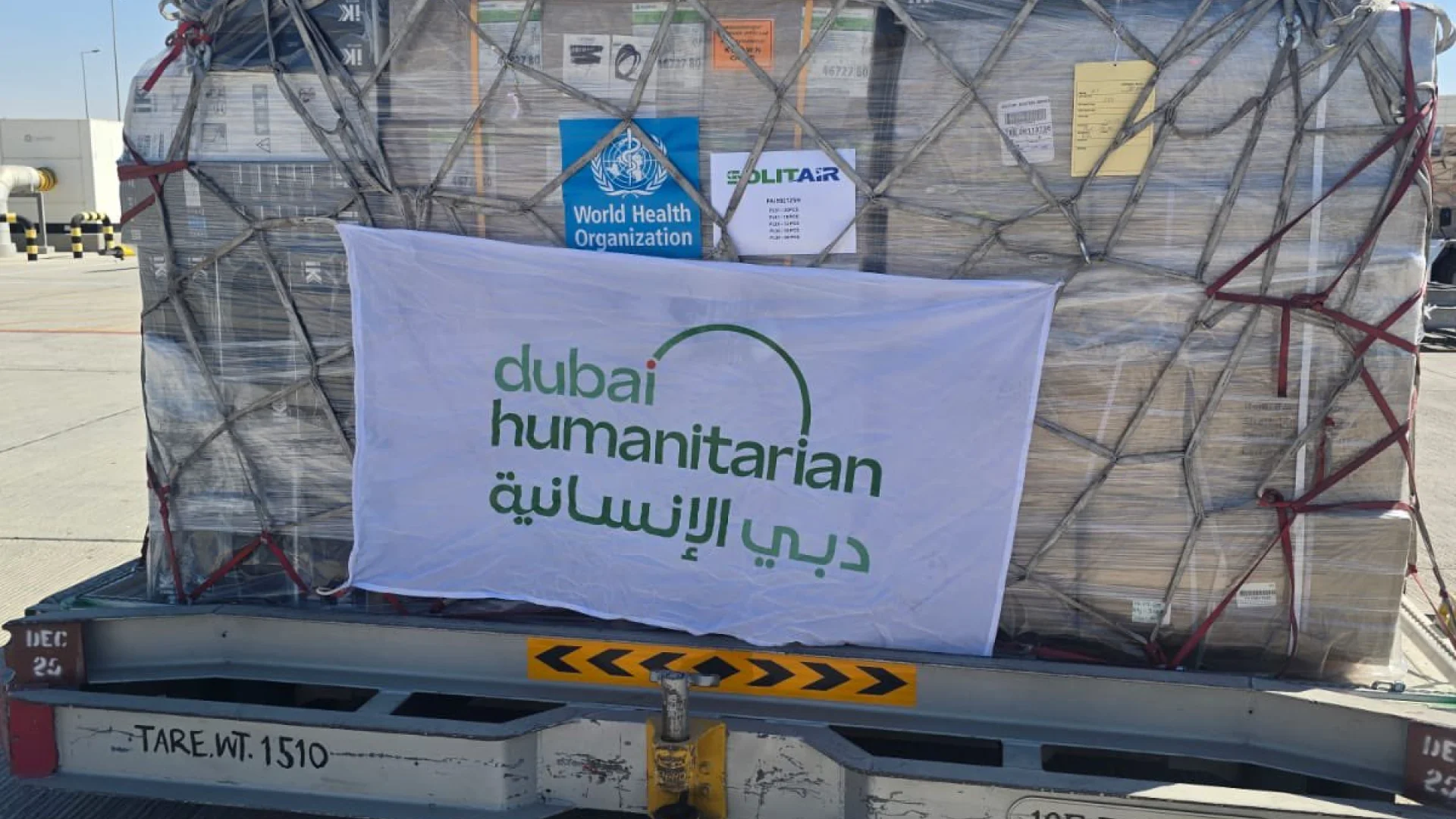

On the tarmac, every shrink-wrapped pallet feels like a lifeline: Dubai has set humanitarian airlifts in motion to deliver medical supplies to communities battling Ebola. The flights carry essential equipment and materials designed to plug urgent gaps, protect frontline teams and keep treatment efforts moving. Powered by Dubai’s humanitarian logistics capabilities, the operation aims to get the right cargo to the right place fast—when timing can change outcomes.
The first thing you notice is the heat rising off the concrete—an invisible shimmer that makes the runway look like it’s breathing. Forklifts glide in tight, practiced arcs. Straps snap. A cargo door yawns open like a mouth ready to swallow urgency. “Keep that upright,” someone calls, steady but firm, as a crate marked for medical use is nudged into place. No fanfare. Just work. The kind that matters.
Dubai has begun humanitarian airlifts to support the Ebola response, sending shipments of medical supplies to affected areas where clinics and response teams need reliable, immediate reinforcement. In crises like this, aid isn’t an abstract promise—it’s boxes, seal tape, barcodes, and the relentless choreography of logistics. The supplies on these flights are intended to strengthen treatment and prevention efforts and help frontline workers keep operating under pressure.
Standing near the loading line, you can feel how the atmosphere changes when the manifest is finalized. Conversations get shorter. Gestures get sharper. A supervisor runs a finger down a checklist, then looks up: “All accounted for?” A quick nod. The answer lands with a quiet weight. Because in the field, “accounted for” can mean protected staff, stocked stations, and a response that doesn’t stall.
Officially, it’s “medical supplies.” Visually, it’s a stack of anonymous cartons. But look closer and it reads like a practical language of care: equipment meant to support health services, materials that help prevent transmission, tools that keep teams safer as they work long hours in high-stakes conditions.
This is where Dubai’s role comes into focus. The city isn’t only a place that moves passengers and luxury goods; it’s a global connector built for speed, scale, and coordination. In a health emergency, those same capabilities become something else entirely: a way to move protection across borders, to turn distance into a shorter problem.
One handler wipes sweat from his forehead and looks up at the aircraft, half to himself: “Once it’s up, it’s out of our hands.” Then he adds, after a beat, “But it’s in theirs.” The sentence hangs there—simple, human. The work here ends so the work there can continue.
Humanitarian airlifts are never just about aviation. They’re about synchronizing dozens of small decisions so that one big decision—deliver help fast—actually happens. Routes must be coordinated, cargo secured, timelines protected. The supply chain has to be sturdy enough to handle uncertainty: changing needs on the ground, shifting operational realities, the constant pressure of “as soon as possible.”
Dubai’s humanitarian response mechanisms are designed for that tempo. They rely on established processes and the ability to mobilize quickly—qualities that become critical when outbreaks demand speed, not speeches. The airlifts, in that sense, are both practical and symbolic: a visible line in the sky that says the world is paying attention—and acting.
When the aircraft finally begins to taxi, the scene tightens to a few essential sounds: engine roar, radio chatter, the fading clink of equipment being returned to storage. Then the plane lifts, clean and decisive, and the runway becomes quiet again. The empty space where the pallets stood feels oddly reassuring. It means the cargo is moving. It means time has been spent in the right direction.
Operations like these spotlight a core investment theme in Dubai: infrastructure-led resilience. For occupiers and investors in logistics, healthcare supply chains, life sciences and adjacent services, proximity to high-capacity air freight corridors can translate into real commercial advantage.