
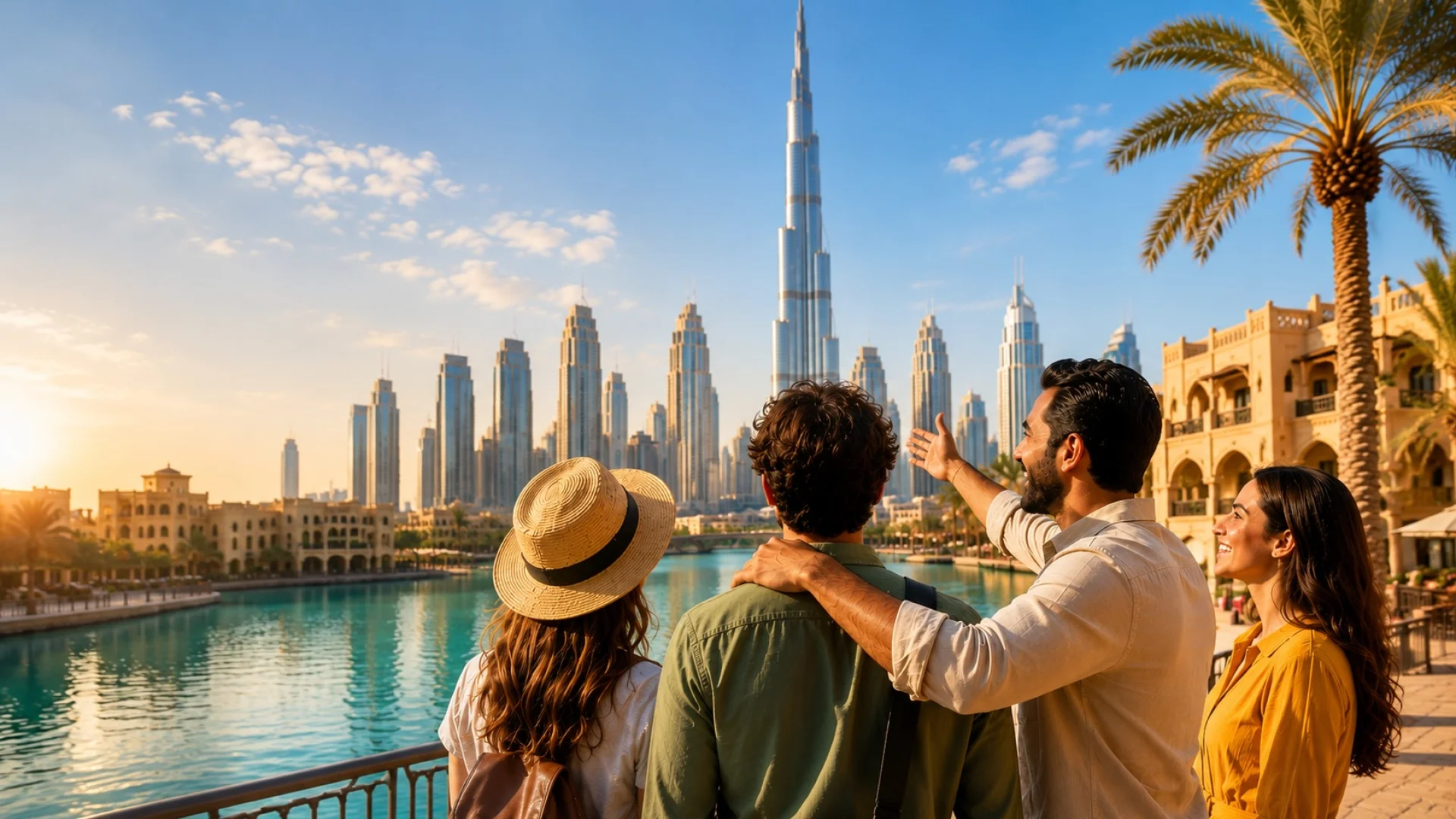

In a city that measures time in take-offs and landings, Dubai is turning the simple act of welcoming someone into a digital gesture. “Dubai Invite” (also referred to as “UAE Invite”) allows UAE residents to nominate visitors for a visit visa, anchoring travel plans to real relationships and a clearer, trackable workflow. Instead of starting with paperwork, the journey begins with a host—someone who lives here, knows the guest, and can initiate the process online. For families, friends, and business travellers, it’s a small change that feels like a big easing of distance.
The notification lands at the worst possible time—mid-traffic, midday glare, heat shimmering off the asphalt like a mirage. “Dad: Any news?” You glance up at the skyline, all steel and sunlight, and you feel that familiar pinch: the city is spectacular, but the people you miss are oceans away.
Dubai has always been a place of arrivals. Now it’s getting more intentional about who arrives, and how. With “Dubai Invite” (often mentioned as “UAE Invite”), residents can nominate visitors for a visit visa through a digital pathway designed to be more direct, more structured, and—quietly—more human.
At its heart, Dubai Invite is a resident-led nomination mechanism for visit visas. If you live in the UAE, you can start an invitation for someone you want to host—family, friends, or a business guest—by submitting the required details online. The system links the visitor’s request to a UAE-based host, creating a clearer relationship trail inside the process.
It’s not a handwritten letter with a wax seal. It’s better suited to Dubai: fast, digital, and built around identity data that can be checked, tracked, and processed in an organised way.
You’re at a café table that’s too small for your laptop and your life. A paper cup of karak sweats onto the saucer. Around you: soft Arabic in the background, the clink of cutlery, a quick “bro, two minutes” on a phone call. You open the portal. You type a name. You ask for a passport scan. Your guest sends it back in seconds.
“That’s it?” they text.
You pause. It is a lot—names, numbers, dates. But it’s also a kind of modern embrace: a way of saying, Come. I’m here. I’ll host you.
Dubai doesn’t just manage tourism; it manages flow. Millions of residents from around the world live here, and visits—parents flying in, friends stopping over, partners coming for meetings—are a constant rhythm in the city’s calendar.
A resident-driven nomination model fits that reality. By letting residents initiate an invite, the process can become more coherent: the visitor’s data is tied to a host, the purpose of travel is clearer, and the workflow is designed to be handled digitally rather than through scattered steps.
In the UAE, “home” often exists in two places at once: the apartment you return to after work, and the family group chat that never sleeps. Dubai Invite speaks to that split life.
Travel planning usually begins with uncertainty: Will the documents be enough? How long will it take? Who do we contact? Dubai Invite shifts that first step from guessing to initiating.
It’s the difference between telling your mother, “Let’s see,” and telling her, “Send me your passport details—I’ll start it now.” It doesn’t eliminate the seriousness of visas, but it makes the beginning less intimidating and more actionable.
Visa processes vary by nationality and individual circumstances, but nomination systems like Dubai Invite generally revolve around consistent essentials: identity, timing, and traceability. Expect to provide core details about both host and visitor, and to upload documents as required during the flow.
On paper, it’s administration. In real life, it’s a bridge—built out of forms, yes, but leading to hugs at Arrivals.
Hospitality here has always been part theatre, part tradition: the offer of coffee, the extra chair, the effortless “welcome.” A digital invitation sounds clinical until you realise what it represents. It’s a resident becoming an official starting point in someone else’s journey.
And in a city that thrives on global connections, that matters. The easier it is to turn “I miss you” into “book your flight,” the more Dubai feels like a true crossroads—one where people don’t just pass through, but reunite.
In Dubai, a “visit” is often the first chapter of a bigger story. The friend who comes for a wedding ends up touring neighbourhoods. The parent who arrives for two weeks asks, on day three, “What would a two-bedroom cost here?” The business guest extends the stay and wants a serviced apartment next time.
That’s why smoother visitor pathways can ripple into property decisions. More people on the ground means more viewings, faster conviction, and fewer deals stalled by distance.
For developers, landlords, and brokers, the takeaway is practical: anything that reduces friction in arrival can increase confidence in buying, renting, or relocating. Dubai sells itself best in person—through light, scale, and that unmistakable feeling when the elevator doors open to a view you didn’t know could exist.