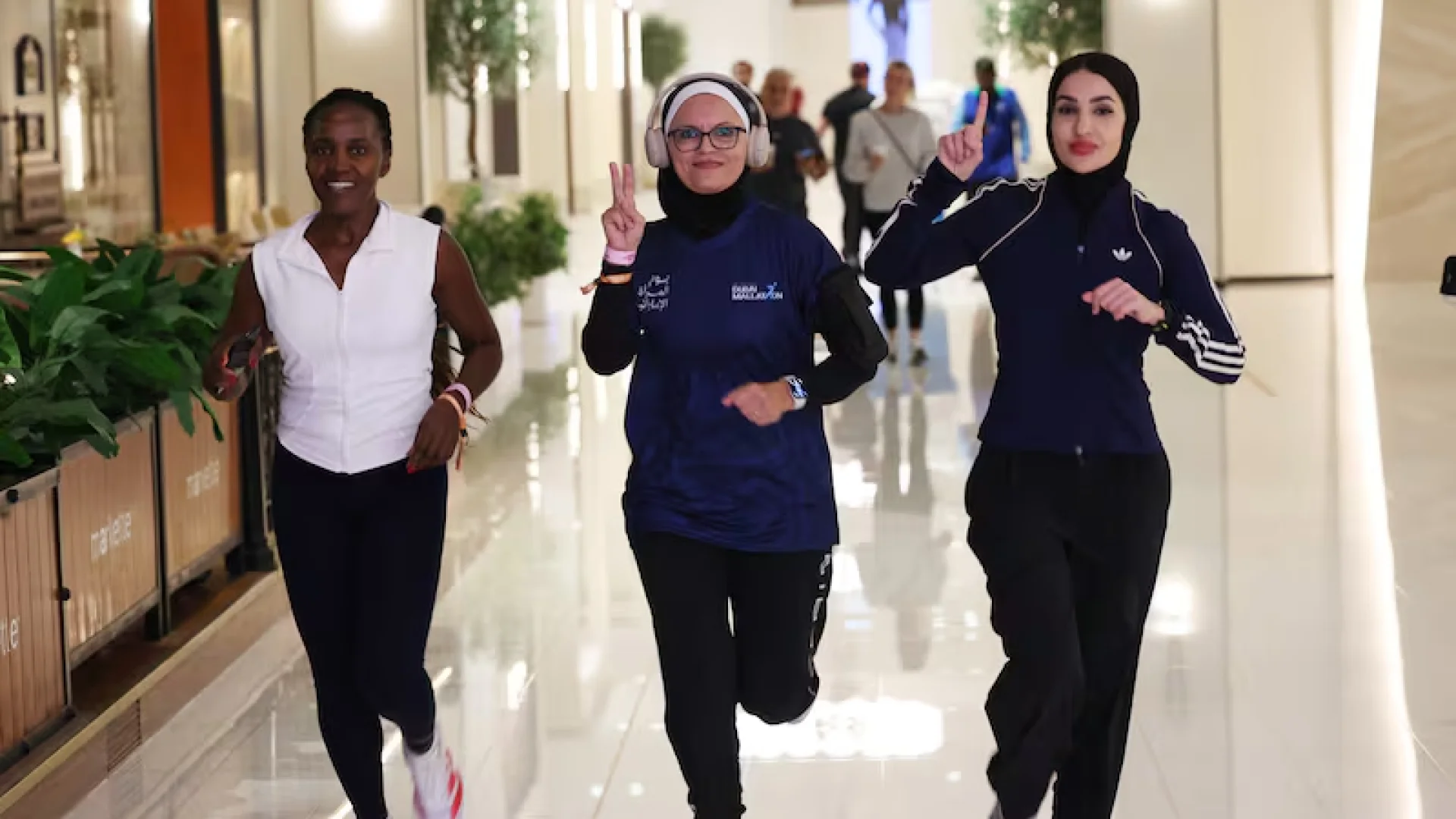
Sneakers squeaked across polished stone as Dubai Mall turned into a vast, air‑conditioned track for the Dubai Mallathon 2026 — and a record 160,000 people showed up. Families, office teams, tourists and seasoned step‑counters paced shoulder to shoulder, turning a summer’s day into a moving river of energy. The city’s biggest indoor community fitness happening proved how Dubai keeps its momentum even in peak heat: inside, inclusive and irresistibly social. For retailers and restaurateurs, it was a banner day for footfall; for participants, a joyful tally of steps, smiles and shared high‑fives.
The marble floor looked like ice under stadium‑bright lights. A boy in neon trainers tugged his mother’s sleeve. “Ready?” he whispered. She nodded and tightened the strap of a fitness watch. All around them, the concourse thrummed — a low, excited murmur, the rustle of branded bibs, the hiss of coffee machines. Then came that first swell of movement, gentle at first, then steady as a tide: thousands finding their rhythm in the cool, velvety air of the city’s grandest indoor arena — the mall.
Dubai Mallathon 2026 didn’t need a starting gun. It had a soundtrack: soft pop drifting from a storefront, footsteps drumming like rain, the occasional cheer near a checkpoint. “Left lane, keep walking!” a volunteer laughed, holding up a foam finger as if pointing the way to summer salvation. On the mezzanine, grandparents leaned against glass balustrades, waving at grandkids below. A pair of colleagues in crisp polos argued — kindly — about pace. “Ten thousand by lunch,” one vowed. “We’ll hit it before coffee,” said the other.
The format is brilliant in its simplicity. Participants follow mapped routes that snake through atriums, past cascading water features, through long, gleaming galleries, and back again — all in air‑conditioned comfort. Fitness stations pop up like friendly checkpoints: stretch here, hydrate there, snap a group selfie over there. There are times to beat, personal targets to chase, and a steady drumbeat of encouragement from volunteers and emcees posted at key turns. No one quite sprints. They glide. This is walking as a social sport, a rhythm shared with strangers who become teammates for a few laps.
You notice the micro‑communities. The stroller brigade who pace diligently, one lullaby at a time. The smartwatch tacticians comparing heart rates with a conspiratorial grin. The visiting family who treat every fountain and sculpture like a landmark on a pilgrimage. A teenager — earbuds in, head high — moves past a row of cafés, the scent of fresh pastries turning the lap into a test of discipline.
The headline is big and deserved: 160,000 participants. The kind of number that makes the atriums feel like arenas, the corridors like living arteries. It’s a record for this summer happening and a show of how the city’s fitness culture thrives indoors when the sun cranks up the dial. People came from across the UAE and beyond, drawn by the promise of movement without the burn of the midday sun. Schools brought teams. Companies came in coordinated colors. Solo walkers drifted into spontaneous packs. “I met three new friends by the aquarium,” one participant laughed, badge askew, cheeks pink from effort, not heat.
For Dubai, it’s also a study in smart seasonality. The Mallathon turns peak heat into prime time, keeping residents active and visitors enchanted while channeling energy into a place designed to absorb it: a retail and leisure leviathan with miles of polished tread.
At the edge of a soaring atrium, a volunteer handed out chilled towels. “You’re glowing,” she told a mother pushing a stroller. “Glowing means I’m alive,” came the reply, followed by a laugh that bounced off the glass. Near a sculptural waterfall, a trio of friends practiced their most theatrical high‑five for the camera. Farther on, a security guard paused, smiled and gave a thumbs‑up — the universal sign for keep going.
Between laps, people learned small tricks. Drink before you’re thirsty. Swing your arms. Take shorter, faster steps on the polished floor. Turn window‑shopping into a reward. The atmosphere made discipline feel like play — part treasure hunt, part parade.
Walkers didn’t just bring energy; they brought curiosity. A line formed at a smoothie bar, bright cups lined like confetti. Trainers squeaked into a sports store where staff adjusted laces with the speed and pride of pit‑crew mechanics. A bookshop cashier raised an eyebrow as a cluster of step‑chasers wandered in, still counting, still chatting, one eye on covers, another on their digits. Coffee shops became miniature clubhouses; you could chart the laps by the cycles of caffeine.
It’s what smart malls do best: turn square meters into experiences and turn experiences into repeat visits. An event like this amplifies that cycle. The concourse becomes a community field. The retail mix becomes supporting cast. The mall feels less like a fortress against the weather and more like a civic square in silk and stone.
Ask anyone who’s lived a Dubai summer: the city gets creative. Indoor ice rinks, indoor parks, indoor art. The Mallathon belongs to that lineage — a practical answer with a festive heart. It’s about moving with the weather, not against it. Step by step, you forget you’re indoors. You’re just there, in motion, carried by a shared beat, the kind that makes a little kid declare, “I can do one more lap,” and a grandfather reply, “I’ll match you.”
Because it’s accessible. Free or low‑cost entry points. Welcoming routes. Volunteers who clap for finishers like friends at a school gate. Because it’s photogenic. Reflections on stone, ceilings that shimmer, the ripple of a waterfall framing a line of determined walkers. Because it’s social. Steps become stories. “Remember the day the mall turned into a marathon?” It’s the kind of sentence that keeps people coming back, season after season.
“I thought I’d do two laps,” said a visitor from Europe, laughing as she adjusted her cap. “Five later, here we are.” A teenager in a club T‑shirt shrugged, all cool. “It’s like our turf now.” A barista wiped a counter and watched the flow. “They come in waves,” he grinned. “We pull shots to a rhythm.”
By late afternoon, the light in the atriums softened. The steps didn’t. People were still moving, steady as a metronome. There’s joy in that steadiness, in the ordinary magic of one foot, then the other, then again. Like any great city moment, the Mallathon left a residue — not just on the step counters, but in mood. You could feel it in the lifts, in the taxi queue, in the Metro link. Tired, yes. But the good kind.
Over recent years, Dubai has doubled down on making fitness part of civic life, with initiatives that turn boulevards, beaches and, yes, malls into friendly arenas. The Mallathon is one more stitch in that fabric — a way to move together, meet your neighbors, and collect memories under a roof that feels like a cathedral to everyday life.
Events that mobilize tens of thousands create measurable ripples. Retailers report busy tills and faster sell‑through on athleisure and hydration products. Food and beverage operators talk about cadence — steady rushes that align with lap times. Even services feel the lift: phone stores see headset sales tick up; pharmacies move cooling sprays and blister plasters; salons get post‑walk bookings. Footfall converts when the mood is right, and this mood was golden.
For investors and property watchers, Mallathon days are a living case study in what high‑performing mixed‑use assets can do in challenging climate windows. When 160,000 people choose to spend their prime weekend hours under one roof, you learn three things about the value of curated, climate‑resilient space.
For REITs and private portfolios, the signal is clear: activations that turn retail into public realm are a value engine. They compress seasonality and lift blended rents by helping tenants outperform. Landlords who co‑invest in programming — staging, volunteers, wayfinding, hydration points — aren’t simply hosting events; they’re underwriting tenant success.
If you’re hunting for opportunity, look to assets with built‑in audience capture: direct transit links, shaded or climate‑controlled promenades, generous circulation and flexible event pads. Track key indicators around events like these — hourly footfall, dwell time, conversion on adjacent categories, and post‑event re‑visitation — and you’ll see why experiential calendars now feature prominently in investment memos.
And in the residential lens? Proximity to lifestyle anchors shows up in premiums. Even modest apartments market better when you can truthfully promise: walkable to world‑class shopping, culture and indoor fitness. For short‑stay investors, weekends like Mallathon shift occupancy and ADR upward. For end‑users, they reinforce a simple truth: in a climate that demands creativity, the best neighborhoods don’t just endure summer — they perform in it.