
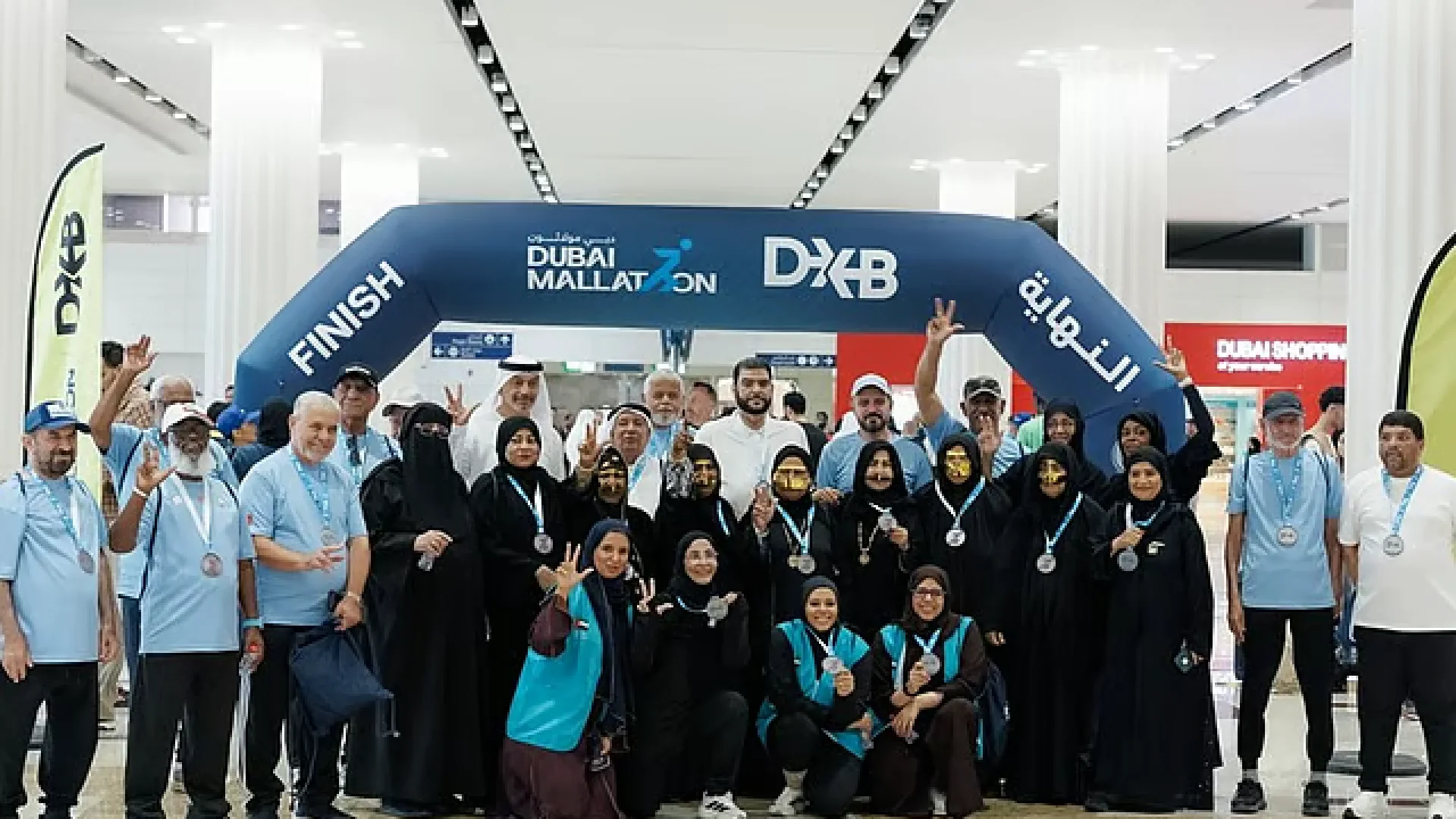

At Dubai International Airport, the soundtrack briefly changes: fewer suitcase wheels, more steady footsteps. For the first time, Dubai’s Mallathon has landed at DXB, transforming the terminal into an air-conditioned walking and running route amid check-in counters, retail lights and departure boards. The idea is simple but powerful—make movement easy in summer, in places people already visit. With this airport edition, Dubai expands the Mallathon concept and underlines a citywide push to bake fitness into everyday life.
The airport is supposed to feel like urgency—boarding calls, quick glances at the clock, the staccato rattle of carry-ons over tile seams. But this morning at Dubai International (DXB), another rhythm threads through the terminal: soft, repeating footfalls. Tap. Tap. Tap. Not a sprint to the gate. Not a last-minute dash. A deliberate pace, like the building itself has exhaled.
“One more loop?” a father asks, half bargaining, half hopeful. His daughter’s ponytail whips as she turns, already smiling. “Okay,” she says, as if running inside an airport is the most normal thing in the world.
For a few hours, it is.
Dubai’s Mallathon—an initiative built around the most practical summer truth in the UAE—has made its first stop at DXB. When outdoor heat turns a simple walk into a test of will, the city leans into its air-conditioned universe: malls, indoor promenades, and now a global transit hub. The concept is refreshingly uncomplicated: bring people into a comfortable, climate-controlled space and invite them to walk, jog, move.
There’s something quietly cinematic about it. The terminal’s glossy floors become a running lane. Shopfronts glow like a nighttime street scene. Directional signs—usually commanding, transactional—turn into mile markers you didn’t know you needed.
A woman in business attire runs with the focused calm of someone who’s turned a calendar into a discipline. Her smartwatch flickers, counting what the departure board doesn’t: heartbeats, steps, minutes reclaimed. Nearby, an older couple walks hand in hand, unhurried, their conversation swallowed by the soft hum of air-conditioning and distant announcements.
A young man lifts one earbud and laughs to his friend: “This is crazy. I’ve never come to the airport this early—by choice.”
That line captures the charm of the DXB edition. Airports are built for movement, but usually the anxious kind. Here, movement is the point, not the by-product.
Dubai doesn’t need to convince people that fitness matters; it needs to make fitness possible when the weather refuses to cooperate. The Mallathon model meets residents where they already are—places with parking, lighting, security, restrooms, water nearby, and a sense of safety for families. No intimidating gym mirrors. No complex sign-ups. Just an open invitation to put one foot in front of the other.
Adding DXB is a statement of scale. If a place designed for passports and connections can briefly reshape itself around wellness, the message is clear: health is not a side quest. It’s a public-space priority.
Near a counter, an airport staffer watches a cluster of walkers pass, then grins. “You’re all early today,” he calls out, playful, like he’s greeting regulars at a café.
A runner answers without breaking stride: “Not early—just healthier.”
It’s a tiny exchange, but it lands. Because what’s happening here isn’t only a route. It’s permission. Permission to use a hyper-functional place in a more personal way.
DXB usually makes you feel small—the high ceilings, the endless corridors, the world condensed into a grid of gates. Yet with people looping the terminal on purpose, the space shifts. It becomes less like infrastructure and more like an indoor public square. The retail lights don’t just sell; they illuminate. The signage doesn’t just direct; it frames a journey.
And the air-conditioning—normally background noise—turns into something almost comforting, the steady “weather” of a summer morning you can actually enjoy.
The first-time DXB Mallathon stop also widens the story of Dubai’s indoor urbanism: the city isn’t only building towers and roads, it’s building patterns of life—habits that can survive July.
For property watchers and investors, Mallathon’s airport debut is a neat indicator of where demand, design, and value are heading in Dubai: toward climate-resilient, experience-rich places that keep people active and present year-round.
In short: when movement becomes frictionless—even inside an airport—quality of life rises. And in Dubai, quality of life is not just a feeling; it’s a measurable value driver.