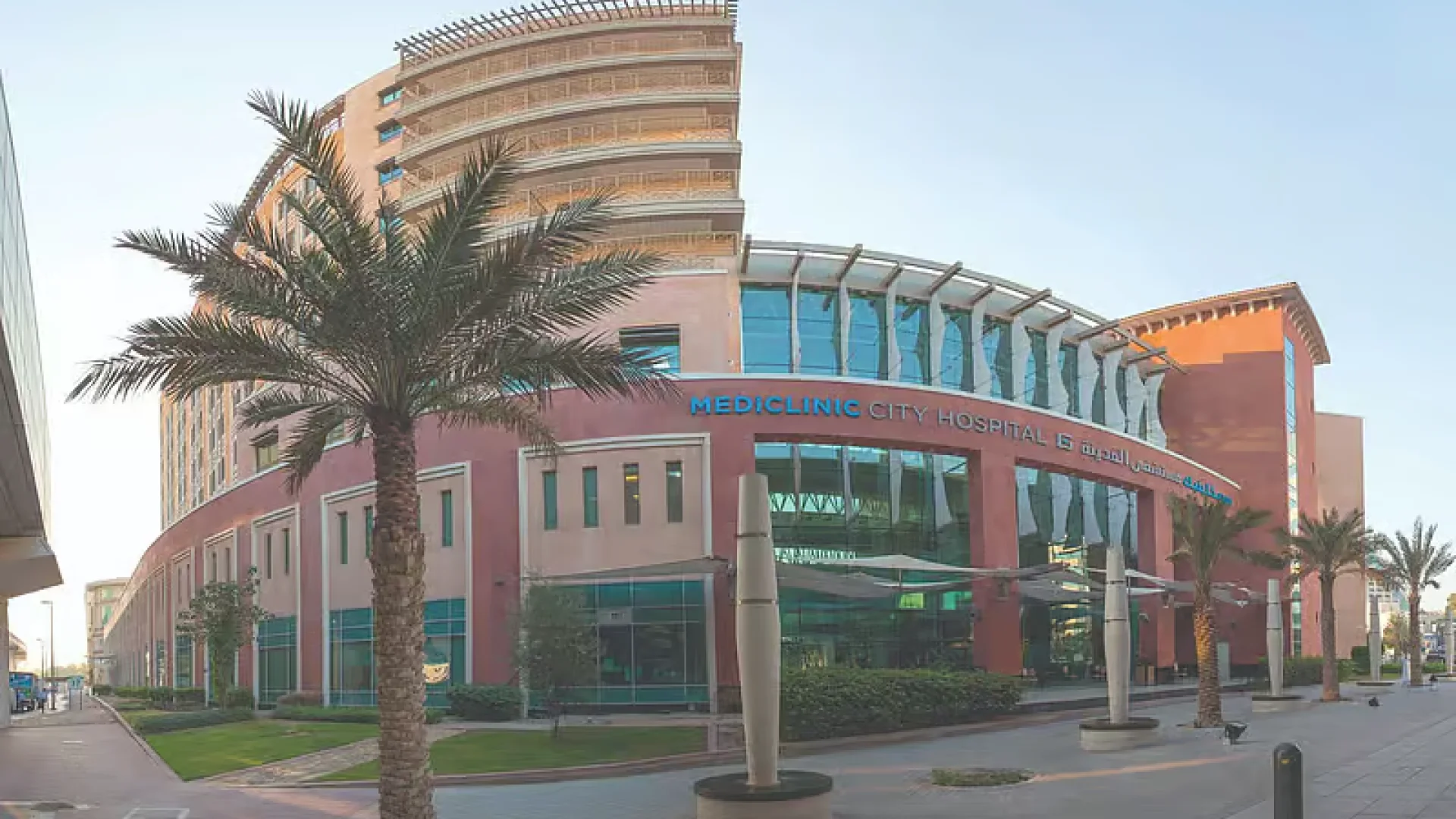
A milestone measured in more than numbers, Mediclinic City Hospital in Dubai has reached 100 kidney transplants—each one a handover from years of dialysis to the possibility of ordinary life. The achievement reflects a tightly choreographed system where surgeons, nephrologists, labs, coordinators and nurses move in near-perfect timing, and where post-transplant care is as critical as the operation itself. In a region where kidney disease is a growing challenge, the program’s momentum signals deeper clinical capacity and rising patient confidence. It’s also a story of families waiting for a call, of fear kept quiet, and of a city’s healthcare ecosystem learning to do the hardest things well.
The corridor has that particular hospital hush—clean, bright, almost weightless. A coffee cup steams on a counter someone wiped twice. Behind a sliding door, a monitor sings its steady electronic note, a metronome for the morning. “You’re doing great,” a nurse says, not loudly, not theatrically—just enough to hold the room together.
In Dubai, inside Mediclinic City Hospital, milestone moments don’t arrive with fireworks. They arrive with blood results. With a first strong urine output. With a patient who sits up and says, half-surprised, “I don’t feel… foggy.” They arrive with a number that looks simple and round on a headline—but carries an entire universe of waiting rooms and late-night phone calls: 100 kidney transplants.
One hundred. It’s a tidy figure. Yet nothing about transplantation is tidy. It is logistics and biology, courage and procedure, patience and panic—compressed into a few hours where everything has to go right.
Every transplant begins long before the operating theatre. It begins with a life reorganised around dialysis: appointments that swallow afternoons, fatigue that doesn’t lift with sleep, holidays planned around machines and schedules. For many patients with end-stage kidney disease, dialysis is both a lifeline and a leash. It keeps them going—but it also sets the rhythm of their weeks.
Then comes the possibility of a different rhythm. A match. A call. A short sentence that changes the temperature of an entire household: “We may have a kidney.” Families move fast, but their minds move faster. What if it doesn’t work? What if the body rejects it? What if we celebrate too early?
That’s why “100” matters. Not as a trophy, but as a marker of repetition—of systems tested again and again, of a team doing complex work often enough to turn chaos into protocol, and fear into a plan.
People tend to imagine transplantation as a single heroic act: the surgeon, the scalpel, the save. In reality, the hero is the chain. Coordinators aligning timelines. Labs cross-checking compatibility. Anaesthesia teams balancing risks in real time. Nephrologists shaping immunosuppression strategies that will follow the patient for life. Nurses translating medical language into something a tired family can actually hold onto at 2am.
You see it in small moments. A doctor draws a simple sketch—kidney, vessels, flow—on a sheet of paper. “This is where we connect,” he says, tapping the page. “And this is why your medication matters.” The patient nods, eyes fixed, as if the drawing is a map out of a long night.
Mediclinic City Hospital’s 100-transplant milestone speaks to that ecosystem maturing. It suggests that the hospital isn’t only capable of performing the procedure, but of supporting what comes after: the monitoring, the adjustments, the rapid response to complications, the long horizon of follow-up that defines transplant success.
The kidneys are quiet organs until they’re not. They filter, balance, stabilise—so discreetly most people never think about them. When they fail, the body becomes a place where problems stack: fluid, blood pressure, anaemia, bone health, heart strain. Patients learn a new vocabulary and a new kind of discipline. They measure water in sips. They plan days around treatment chairs.
A successful transplant can rewrite that daily script. For many, it offers better quality of life than long-term dialysis and, often, stronger long-term outcomes. But it also opens a new chapter with its own rules: strict medication schedules, infection awareness, regular labs, the constant need to keep the immune system calm enough to accept what it might otherwise fight.
In the ward, someone jokes softly, trying to lighten the air. “So—no more hospital food?” The nurse smiles. “Not so fast. We still need you to behave.” It’s a micro-dialogue, almost nothing, and yet it carries the essence of post-transplant life: freedom, with conditions.
Transplant medicine is built on timing. When an organ becomes available, the hospital shifts gears immediately. Phones buzz. Checklists open. Labs confirm. The operating theatre is prepared. Medications are planned down to the minute. There’s no room for improvisation—only for practiced coordination.
And still, the human part never leaves the room. A patient stares at the ceiling, counting breaths. A family member asks the same question twice because the first answer didn’t land. “Will it work?” The only honest reply is both simple and heavy: “We’ll do everything to give it the best chance.”
The most dramatic moment isn’t always the incision. It’s the wait afterward—the first signs that the new kidney is waking up. A nurse checks numbers with the kind of attention usually reserved for weather forecasts before a storm. A doctor pauses over a chart, then looks up with a small nod. No speeches. Just a shift in the air.
Some patients feel relief like a wave. Others hold it back, superstitious about joy. “I’ll believe it when I’m home,” one patient murmurs. It’s not negativity; it’s self-protection. Hope can be fragile when you’ve lived too long with uncertainty.
Dubai is known for its speed and scale, for skylines that look like ambition made visible. But healthcare progress is measured differently. It is measured in consistency, outcomes, governance, and the ability to manage risk. A 100-kidney-transplant program signals experience—and in transplantation, experience is a safety feature.
It also points to a larger trajectory: Dubai’s continuing development as a specialised healthcare destination, supported by infrastructure, talent, and systems capable of complex care. For patients, that can mean access closer to home, or the confidence to travel for treatment knowing the ecosystem is in place.
Later, the city will roar again—traffic, meetings, the relentless brightness of glass towers. But somewhere, a patient will take a careful first walk down a corridor, one hand on the rail, the other guarding a new tenderness at the abdomen. The steps are slow. The meaning is enormous.
A transplant milestone is also an infrastructure signal. Advanced programs draw specialised talent, encourage medical travel, and create steady, year-round footfall around hospital districts. For real estate investors and developers, that often translates into resilient micro-markets—especially where healthcare anchors are paired with transit, retail, and hospitality.
Investor lens: When analysing a healthcare node, look beyond the hospital building—track the surrounding ecosystem (specialists, labs, rehab, hospitality capacity, transport links). A program that reaches 100 transplants suggests operational maturity, which can correlate with long-term stability in the surrounding property market.