
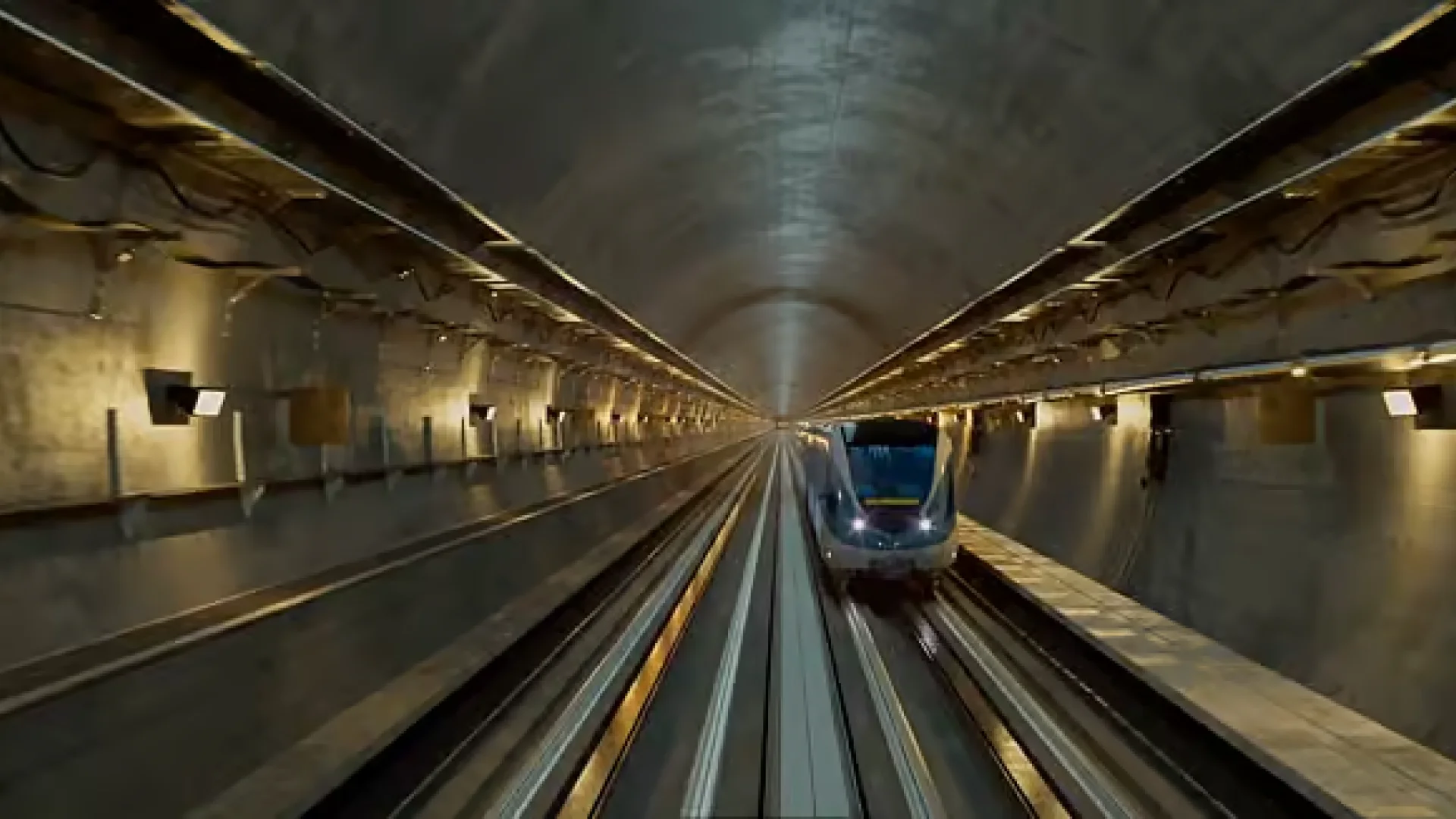
Dubai is adding a new streak of ambition to its map: Sheikh Mohammed bin Rashid Al Maktoum has announced the Dubai Metro Gold Line, a project valued at around Dh34 billion. The new line is set to reinforce the wider Metro network, reshape connectivity, and help the city absorb growth with faster, more predictable movement. In Dubai, rail isn’t just transport—it’s urban choreography, and every new station has the potential to redraw where people live, work, and invest. The Gold Line announcement is therefore both a mobility headline and a development signal.
The station feels like a cooled oasis—glass, steel, and a low hum of motion. Outside, the morning heat gathers on the road like a held breath. Inside, the Metro’s air-conditioned calm turns the city into something you can navigate with certainty: a platform number, a door chime, a clean arrival time.
A man in a crisp shirt taps his Nol card and glances up at the map as if it might have changed overnight. In a way, it has. The news travels fast in Dubai, especially when it arrives on rails: Sheikh Mohammed bin Rashid Al Maktoum has announced the Dubai Metro Gold Line—an expansion project valued at around Dh34 billion.
“Gold Line” doesn’t sound like a technical label. It sounds like something you can picture. Like a bright thread pulled through the city’s fabric, stitching together places that today feel slightly too far apart, slightly too dependent on a steering wheel and a traffic update.
Dubai’s Metro has always been more than a commute option. It’s a moving cross-section of the city—executives with laptops, students half-asleep, tourists gripping shopping bags, shift workers counting minutes. It’s where Dubai feels most shared. A new line doesn’t just add track; it adds choice.
Say “Dh34 billion” out loud and the number lands with a thud—heavy, deliberate, unmistakably strategic. In a city built on momentum, big infrastructure budgets are the clearest form of intent. This isn’t merely about reducing congestion; it’s about keeping growth smooth enough that the city doesn’t lose time to itself.
The Gold Line is intended to strengthen the Metro network and improve connectivity across key areas. Precise routing, station locations, interchange points, and delivery phases will define how the project is experienced day-to-day. But the announcement alone already does what Dubai announcements often do: it nudges the market to imagine new centers of gravity.
Transport plans are usually drawn in straight lines. Life isn’t. Life is the mother who needs a reliable school run without buffering an extra thirty minutes “just in case.” It’s the young professional trying to live somewhere that doesn’t swallow half a salary in ride-hails. It’s the retail manager closing late, looking for a safe, predictable way home. It’s the friend who always says, “I’ll come if parking isn’t a nightmare.”
“If there’s a station near us, it changes everything,” a commuter says into his phone, voice low, almost protective of the hope in the sentence. In Dubai, minutes matter. So does certainty.
Cities can grow in two ways: outward with roads, or inward with networks. Roads are flexible, but they saturate. Rail is rigid, but it scales. Dubai’s bet—again and again—has been that a well-built network can turn distance into something manageable, even in a city famous for its scale.
The Metro is also a planning tool. Where stations appear, footfall follows. Where footfall follows, retail becomes viable. Where retail becomes viable, mixed-use starts to make sense. The story repeats, but it never feels identical, because each neighborhood absorbs connectivity differently.
Ride the Metro long enough and you learn its small soundtrack: the soft warning tone before doors close, the rush of air, the brief silence as the train glides, then the city returning in fragments—billboards, flyovers, towers that seem to rotate as you pass them.
Out on Sheikh Zayed Road, cars stack up like beads on a string. Up here, the train keeps its own rhythm. It’s a quiet kind of power—getting somewhere without negotiating every lane change.
Dubai doesn’t build transit in a vacuum. Every major mobility decision interacts with housing supply, job clusters, tourism flows, and the daily geography of where people can realistically live. A new Metro line can make one neighborhood feel suddenly closer—closer to work, closer to friends, closer to opportunity. And that sense of closeness has measurable consequences.
It also changes the city’s psychology. When rail becomes the default for more trips, the car stops being the only key that unlocks Dubai. The city begins to feel more walkable—not everywhere, not instantly, but in pockets that expand outward from stations.
There’s always a moment after news like this when the city pauses—briefly—and then continues. People still rush for trains. Meetings still start on the hour. But the idea is planted. Somewhere, planners start sketching. Developers start scanning. Investors start asking the oldest question in urban real estate: Where will the stations be?
And someday, a few years from now, someone will stand under a new sign—Gold Line, Platform 2—and it will feel strangely obvious, as if it had always been there.
For investors, a Dh34-billion Metro expansion is not just transport infrastructure—it’s a potential re-pricing mechanism for locations. The Gold Line announcement signals that Dubai intends to keep shifting trips from roads to rail, which typically increases the value of areas that become more accessible, more predictable, and more attractive to tenants.
1) Transit proximity premium: In many markets, including Dubai’s established Metro corridors, walkable access to stations can support higher rents, lower vacancy, and faster leasing—especially in mid-market residential where commuting time is a key purchase decision. Once station sites are confirmed, expect sharper differentiation between “near Metro” and “needs a car” micro-locations.
2) Interchanges create mini-CBD effects: The biggest uplift often occurs around interchange nodes, not just any station. Interchanges concentrate footfall and services, making them magnets for:
3) Timing strategy: Real estate markets often react in phases—(a) announcement, (b) route & station confirmation, (c) construction visibility, (d) opening and operational maturity. The strongest “pricing jump” frequently happens at confirmation, when uncertainty collapses and buyers can measure walking radii and interchange value.
4) Due diligence that matters: “Near a station” is not a sufficient investment thesis. Investors should evaluate: actual pedestrian routes (crossings, shade, barriers), station entrances, feeder-bus plans, parking/park-and-ride provisions, construction disruption risk, and competing supply pipelines in the same catchment.
5) Longer-term urban upside: If the Gold Line supports denser, more transit-oriented growth, it can gradually expand the set of neighborhoods that appeal to car-light lifestyles—an increasingly important factor for younger professionals, new residents, and corporate tenants seeking reliable commuting options.
Bottom line: The Gold Line is likely to produce winners at the micro level, not just the city level. Once the detailed map emerges, investors who pair station-area analysis with realistic absorption and rental assumptions may find opportunities in the next generation of Dubai’s transit-shaped districts.