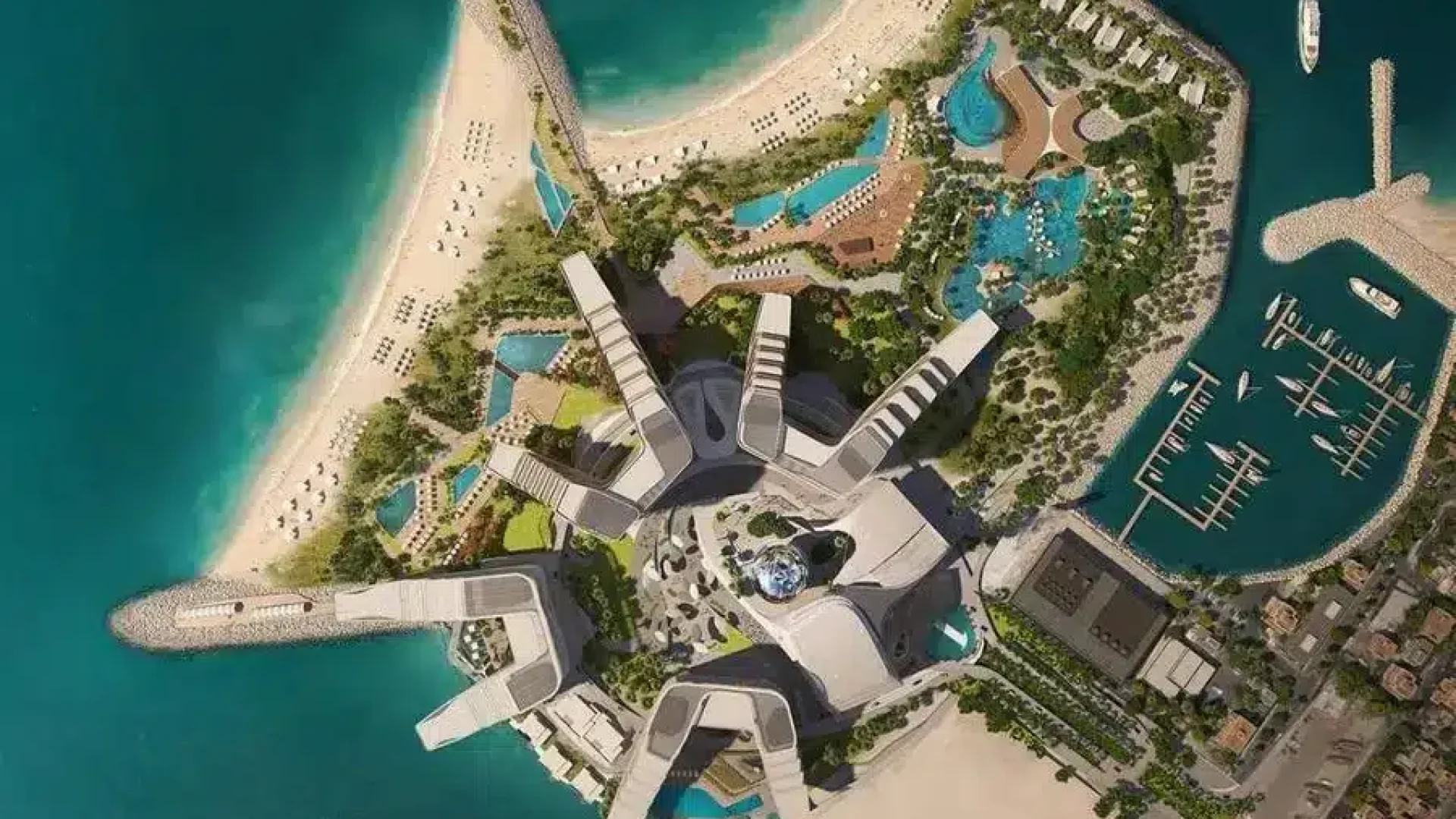
Out on the waterline north of Dubai, where reclaimed land is still more idea than address, a familiar Las Vegas name is being written into the sand. Reports indicate an MGM-branded integrated resort at The Island development in Umm Al Quwain is targeting a 2027 opening, with multiple hotels and a heavy emphasis on entertainment, dining and events. The project lands at a moment when the UAE’s broader “gaming” conversation is evolving—making every rumor, rendering and timeline feel like a market signal. For tourism, it’s another magnet; for property, it’s a potential re-rating of an entire coastal corridor before the first guest even checks in.
The sea looks calm, but the shoreline is busy with intention. A crane turns slowly, like the hand of a clock. Somewhere, a supervisor calls out a number. The air is a mix of salt and diesel, and for a second you can picture what they’re building before you can properly see it: lights, music, arrivals—an island that wants to be a headline.
That’s the charge behind the latest date circling the region’s real estate and hospitality circles. According to reports, an MGM-branded resort planned for The Island development in Umm Al Quwain—a man-made island destination within easy reach of Dubai—aims to open in 2027. Not a single hotel. Not a lone tower. An integrated resort concept designed to keep you on-site, hour after hour, spending your weekend inside a carefully scripted world.
In the Gulf, scale is never accidental; it’s part of the message. The MGM name arrives with a certain cinematic weight—big marquees, big nights, big crowds moving through lobbies as if they’re already late for something exciting. Translate that energy into the UAE’s taste for polish and spectacle, and you start to understand why this project is being watched so closely.
What’s being discussed is not just accommodation, but a full entertainment ecosystem: hotels, restaurants, event venues, leisure spaces. The kind of destination where the question isn’t “What should we do today?” but “Which version of today do we want?”
In conversations, it doesn’t take long before the room gets quieter and the vocabulary changes. Someone leans in: “Do you think there will be… you know.” Another person answers without saying the word: a raised eyebrow, a small shrug, the kind of half-smile that means it’s possible.
The MGM brand inevitably triggers casino associations—yet the reality in the UAE is shaped by regulation, licensing, and what’s permitted where. Even without confirmed details, the broader context matters: the region’s approach to “gaming” has been evolving, and integrated resorts are exactly the kind of asset class that sits at the center of that debate. For markets, perception can move as quickly as policy.
For many travelers, Umm Al Quwain has been the quieter name on the map—more weekend escape than global bucket list. That’s why this story has a particular electricity. A major international hospitality and entertainment brand planting its flag here isn’t just a development decision; it’s a statement about how the UAE’s tourism geography can expand.
And yes, it’s an island—because in this part of the world, new destinations are sometimes made rather than found. “Land reclamation” sounds technical until you stand there and realize you’re watching a future address being assembled from water and ambition.
Picture the arrival. A car glides over a causeway. Water on both sides. The resort rises ahead, reflective glass catching the sun like a mirror held up to the sky. A couple pauses at the entrance. “So what is this place?” she asks. He reads the signage, then laughs: “Apparently, it’s everything.”
That’s the business model: make it frictionless to stay. Breakfast that turns into pool time, pool time that turns into lunch, lunch that turns into browsing, browsing that turns into an event, and suddenly it’s midnight and you haven’t left the property once. For operators, it’s about dwell time. For destinations, it’s about creating a reason to come—and a reason to return.
In the Gulf, dates are rarely just dates. A 2027 target sits neatly in the middle of many strategic cycles: tourism growth plans, aviation capacity forecasts, hotel pipelines, infrastructure upgrades. It becomes a coordination point—something other projects can orbit.
For the resort itself, that runway is also about choreography. The world’s best integrated resorts aren’t just constructed; they’re curated. Music volume, lighting temperature, the width of a corridor, the way a lobby reveals a view—these are decisions made long before opening day. And in a market like the UAE, the margin between “good” and “legendary” is often found in those invisible details.
Dubai has spent decades turning experiences into infrastructure: shopping as a destination, dining as a scene, beaches as brands. An MGM resort near Dubai extends that logic, potentially pushing the entertainment frontier north along the coast.
That matters because it can redistribute demand. A new marquee attraction outside the traditional hubs changes weekend travel patterns. It creates fresh clusters of hospitality, retail, and services. And it invites a new kind of real estate question: which nearby neighborhoods become the practical base, the staff hub, the affordable alternative, the next “up-and-coming”?
Integrated resorts can act like economic tide lines—pulling value toward them over several years, not just at launch. If the MGM-branded project at The Island proceeds on the reported timeline, investors and developers will likely focus on the pre-opening uplift: when infrastructure becomes visible, marketing starts, and the destination narrative takes hold.
On the shoreline today, it’s still cranes and sand and measured lines. But the story people are already telling is brighter: an island where the night has a soundtrack, where a global brand adds weight to a new destination, and where 2027 is less a date than a countdown.