
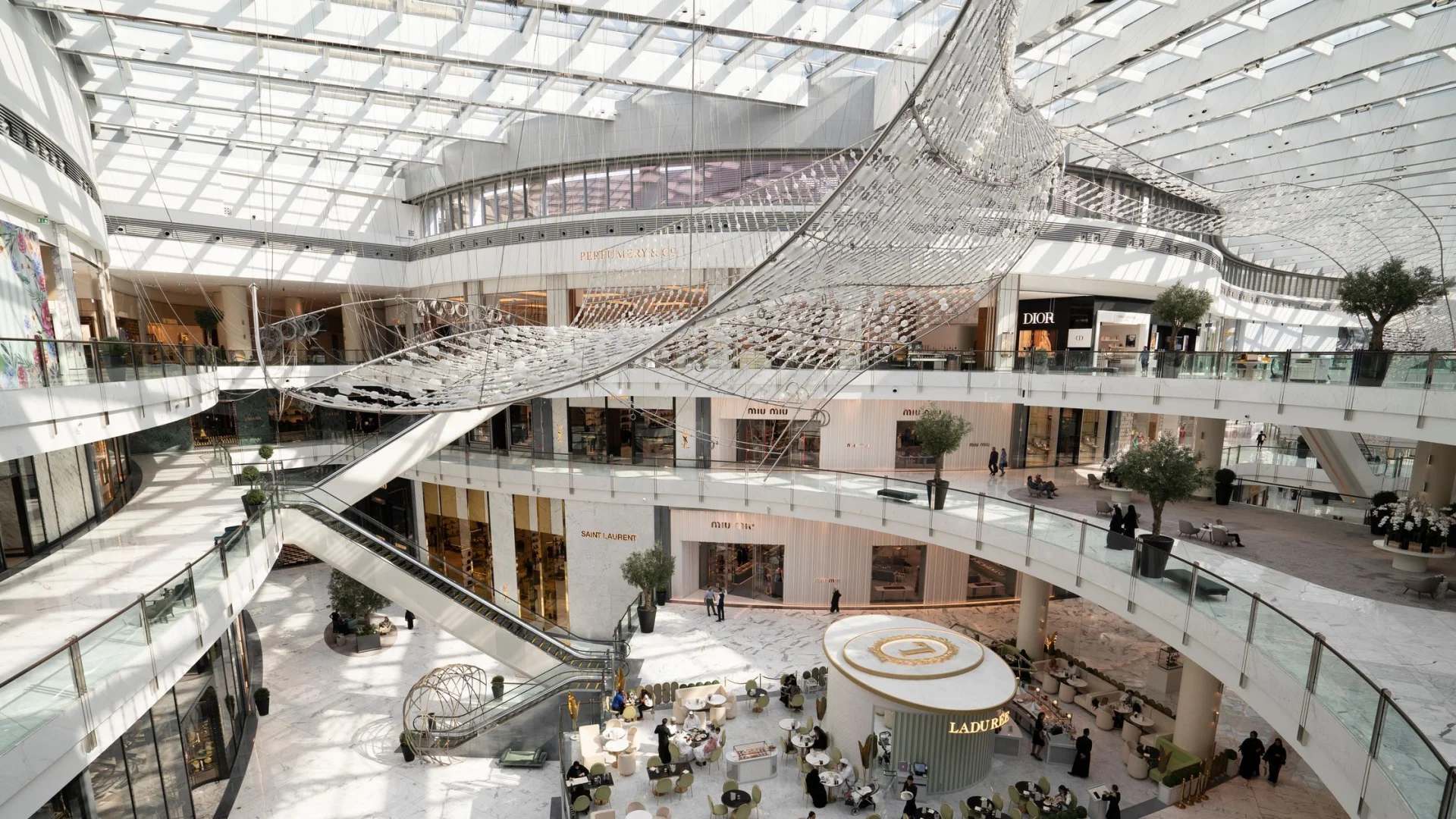

Behind hoardings and dust sheets, Dubai is quietly rehearsing its next retail act: nine new malls and retail hubs slated to open across the city’s expanding districts. Many of them are designed less as mega-day trips and more as “five-minutes-away” community centers—anchored by groceries, cafés, fitness and everyday services—while a few aim for destination status with entertainment and flagship brands. The timing is no accident: as new residential neighborhoods mature, retail is moving closer to where people actually live and work. The result is a more networked Dubai—one where shopping becomes a daily rhythm, not a weekend expedition.
The first thing you notice is the sound.
Not music—yet. Just the steady hush of air-conditioning being tested, the tap-tap of boots on fresh tile, a brief metallic clink as a ladder shifts. A security guard lifts his chin toward a corridor still wrapped in protective film. “Soon,” he says, as if the word is a key that opens everything in Dubai.
Behind those temporary walls, the city is building new habits. Not just new stores.
Dubai is preparing to welcome nine new malls and retail hubs—a burst of openings that reads, at first glance, like a simple headline about more places to shop. But stand in one of these half-finished passageways and it feels bigger than retail. It feels like city planning in real time: a deliberate shift from the era of the single, giant magnet mall to a web of smaller, closer, daily-life centers—plus a select few that still want to be weekend destinations.
Dubai has always understood the mall as a kind of climate-controlled theater: bright, expansive, engineered for spectacle. For years, the biggest names were also the biggest places—where tourists went, where families spent whole afternoons, where you could forget the heat and lose track of time.
That doesn’t disappear. But it’s being complemented by something more intimate: community malls and retail hubs that behave like neighborhood living rooms. The kind of place you visit because you need groceries—and then stay because the coffee smells like roasted comfort and the seating is shaded just right.
“We just want something close,” a resident says, balancing a takeaway cup while watching workers install a glass balustrade. “Not everything has to be a whole trip.”
The nine upcoming openings are not all “malls” in the classic sense. Some are compact, service-heavy hubs. Others aim for larger footprints, longer dwell times, and more entertainment. But together they reflect a single idea: retail follows rooftops. As new residential districts fill in and business clusters evolve, retail is moving closer—designed to catch you on your commute, after school pickup, on an evening walk.
It’s easy to underestimate how powerful “close” is in a city defined by movement. When retail is five to ten minutes away instead of twenty-five, it changes the texture of a neighborhood. You don’t plan it. You drift into it. It becomes part of your day rather than the reason for your day.
There’s a moment on every Dubai site where the future shows itself in a small detail.
A strip of warm lighting clicks on above a storefront. Someone peels back a corner of plastic and the brass edge of signage flashes. A barista-in-training tests the machine—steam hisses like a curtain rising. Two men in hard hats stand in the middle of what will be a dining terrace and argue about the angle of a planter. “People will sit here,” one insists, pointing to an invisible crowd.
That’s the point, really. These new centers aren’t only about tenants; they’re about staying. About building places that earn your time.
Dubai’s growth is increasingly about the in-between: the neighborhoods that used to feel “far” until they suddenly didn’t. Communities expand, schools and clinics arrive, roads improve—and then comes the retail piece that makes the area feel finished.
Developers love to talk about catchment areas and footfall. Residents talk about something else: convenience, spontaneity, and not sitting in traffic for basics. In that sense, the nine new malls and hubs are a response to a very human request: let daily life be easier.
And it’s not just about errands. It’s about identity. A good local retail hub gives a neighborhood a center of gravity—somewhere to meet without planning. Somewhere teenagers can go without a chauffeur. Somewhere parents can say, “Let’s just grab dinner,” and mean it.
Dubai’s most successful newer retail formats follow a rhythm that feels almost like a well-edited day. Morning coffee. Midday convenience. Afternoon kids’ energy. Evening dining. Weekends with a little extra sparkle.
There’s also a quieter competition happening: not between malls, but between moments. Your ten-minute window between meetings. Your post-school stop. Your late-night grocery run. The hubs that win are the ones that feel frictionless—easy parking, clear signage, shaded walkways, good lighting, a sense of safety and warmth.
Across Dubai’s growth corridors, the emphasis is on areas seeing fresh residential supply, densifying communities, and mixed-use planning. Instead of concentrating everything in a few famous zones, the city’s retail map is being redrawn as a network—many smaller “centers” rather than a single dominant one.
You can see it in the way the projects sit in their surroundings: apartments rising nearby, schools already operating, medical centers opening, new landscaping taking root. Retail here is not an afterthought. It’s infrastructure—part of what makes a district livable.
“When does it open?” a man asks, phone pressed to his ear, eyes on the covered entrance.
The site supervisor smiles without committing to a date. “Soon. Always soon.”
They both laugh. In Dubai, “soon” is a promise and a race—because when the doors finally slide open, people show up. They always do.
Nine new malls and retail hubs are not just a consumer story. They’re a city story. They signal a Dubai that wants daily life to feel smoother—less about long drives and more about walkable, local rituals. They also show retail evolving into a lifestyle layer: shopping stitched together with dining, wellness, services, and entertainment.
And perhaps the most surprising thing is this: in a city famous for superlatives, the newest idea is often the simplest one—bring the essentials closer, and people will build their days around them.
In Dubai, a new retail hub can function like a neighborhood upgrade switch. When groceries, cafés, clinics and everyday services appear within a short drive—or even a walk—demand patterns often tighten. For buyers and investors, the key is not the headline “new mall,” but the quality of the hub and its fit with the surrounding community.
On-the-ground checklist: Visit the area at different times (morning, late evening, weekend). Check pedestrian routes, shade, crossings, parking flow, and lighting. Ask about the final tenant mix, the grocer brand, and whether entertainment is planned. In Dubai, the distance between “retail on paper” and “retail that feels alive” can be measured in one simple thing: do people linger, or do they leave?