
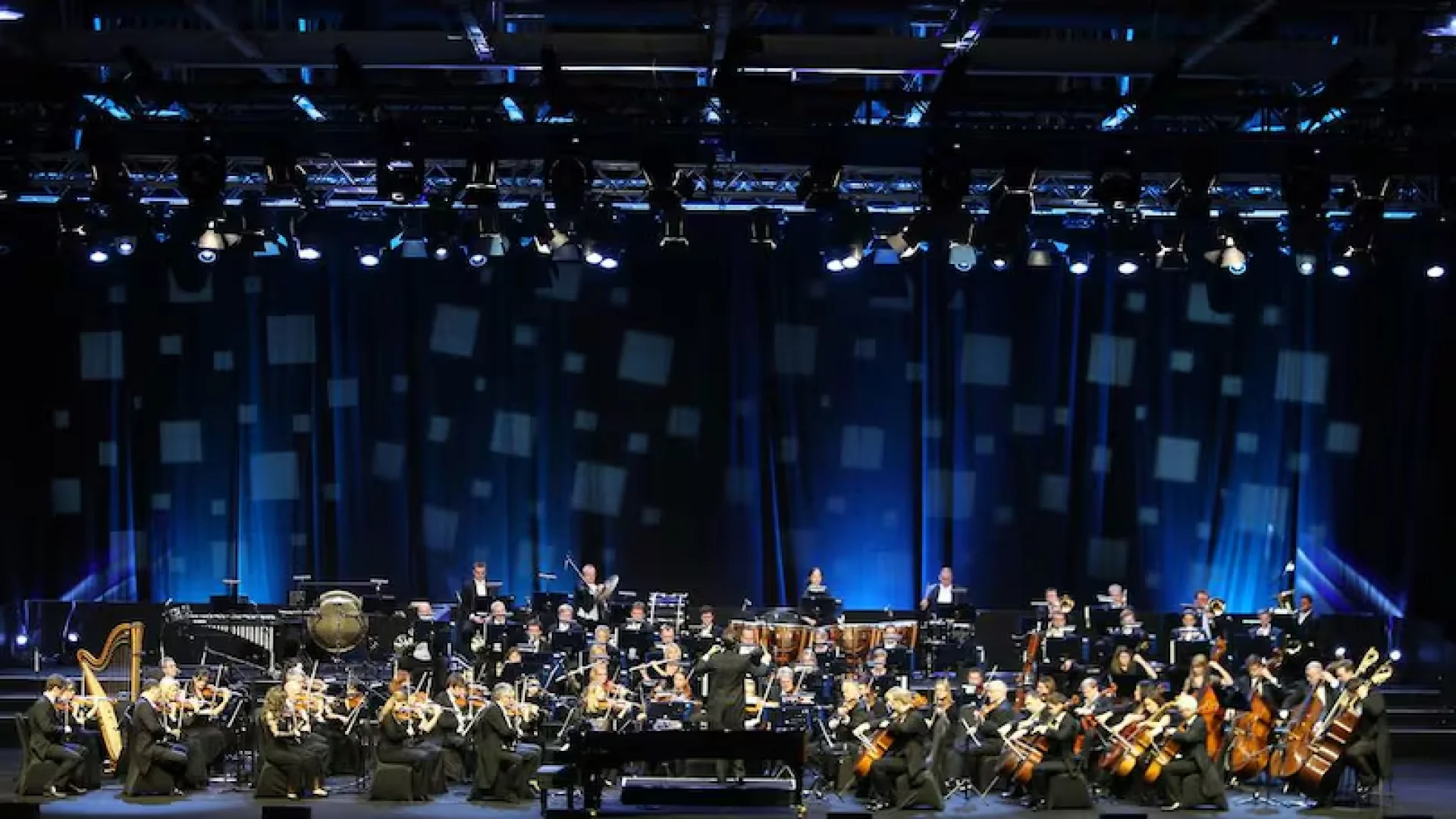

Dubai has given its musical future an institutional home. Established by law, the Dubai Orchestra Foundation is intended to support the development of a professional orchestra and strengthen the emirate’s position on the international cultural stage. The initiative reaches beyond concerts: it points to investment in talent, education, artistic partnerships and a lasting cultural identity for a city already known worldwide for architecture, business and technology.
The first note has not yet been played. Still, something has already changed in Dubai. Before musicians tune their instruments and before an audience takes its seat, the emirate has created the structure that can make a lasting orchestra possible.
Dubai has established the Dubai Orchestra Foundation by law. Its purpose is to support the creation and development of a professional orchestra and to turn the emirate’s cultural ambitions into a permanent institution. It is a significant shift in tone. Dubai is not simply hosting culture; it is building cultural capacity.
Picture the scene in the years ahead: music stands aligned, strings tightened, brass catching the light. A conductor raises a hand. The room falls silent. In that silence lies the importance of the announcement. A city famous for speed and spectacle is making room for an art form built on patience, discipline and collective listening.
The foundation is expected to provide the framework for an orchestra that reaches beyond occasional performances. That means developing a professional ensemble, encouraging musical talent and creating opportunities for collaboration with artists and institutions from around the world. In a city shaped by international communities, music becomes a natural meeting point.
The initiative also fits into Dubai’s broader cultural direction. Museums, festivals, creative industries and international events have become increasingly visible parts of the emirate’s identity. An orchestra adds something especially powerful to that picture. Buildings can dominate a skyline. Music occupies a different kind of space. It enters the body, stays in the memory and can make strangers feel briefly connected.
“Why an orchestra?” a visitor might ask. The answer is partly artistic, but it is also civic. An orchestra is a lesson in cooperation. Every section has its own character, yet every player must listen. No instrument can carry the entire performance alone. That principle feels particularly at home in Dubai, a metropolis assembled from many languages, backgrounds and traditions.
The new foundation can help Dubai establish itself as a serious destination for music. Its future activities could include performances with leading soloists, guest conductors, festivals, educational programmes and partnerships with international orchestras and cultural organisations. Over time, an orchestra based in Dubai could also represent the emirate abroad.
For residents, the most important change may be continuity. Cultural life is not created by one spectacular opening night. It develops through repetition: a season people follow, a hall they return to, musicians they come to know and young listeners who discover that a concert can be an experience rather than an obligation.
Education will be central to that ambition. A successful orchestra needs more than celebrated conductors and guest soloists. It needs a pipeline of trained musicians and curious audiences. Workshops, school programmes and encounters with professional players could help create that foundation. Somewhere in Dubai, a young musician may already be practising a difficult passage, repeating the same few bars until they begin to flow.
Dubai is used to visible transformation. Towers rise, districts expand and new transport links reshape the city. An orchestra develops differently. It needs time to recruit musicians, build an ensemble, develop a repertoire and discover its own sound.
That is why the legal establishment of the foundation matters. It creates a framework that can survive beyond a single project or event. Long-term cultural institutions need planning, stable partnerships and the ability to invest in artistic development over many seasons.
The decision also signals that culture is not being treated as decoration. Music is becoming part of the way Dubai defines itself. The city’s global image may have been built through commerce, innovation and ambitious architecture, but cultural influence requires a deeper kind of presence. It grows when people return, participate and feel that a place has something meaningful to say.
The foundation’s success will not be measured only by famous names or opening-night headlines. It will depend on whether it creates genuine access. Can people from different communities share the same auditorium? Can new audiences discover orchestral music? Can local talent find a path from classroom to stage? Can the institution become part of everyday life?
The journey begins with a legal foundation and may lead to a full concert hall. The lights dim. A final whisper disappears. The conductor lifts the baton. At that moment, Dubai will not need to explain its cultural ambition. It will be audible.
The orchestra foundation may also have implications for Dubai’s property landscape. Cultural institutions can increase the appeal of a location by generating regular footfall, improving the quality of public life and encouraging complementary uses such as restaurants, hotels, retail and creative workspaces. A concert venue can become an anchor for an entire cultural district.
For investors, the key opportunity lies not in one performance but in the wider urban ecosystem. Areas where culture, public space, transport and hospitality meet can become stronger destinations and support long-term demand for residential and commercial property. The foundation is not itself a real estate project, yet it could contribute to the cultural infrastructure that gives neighbourhoods identity, visibility and lasting value.