
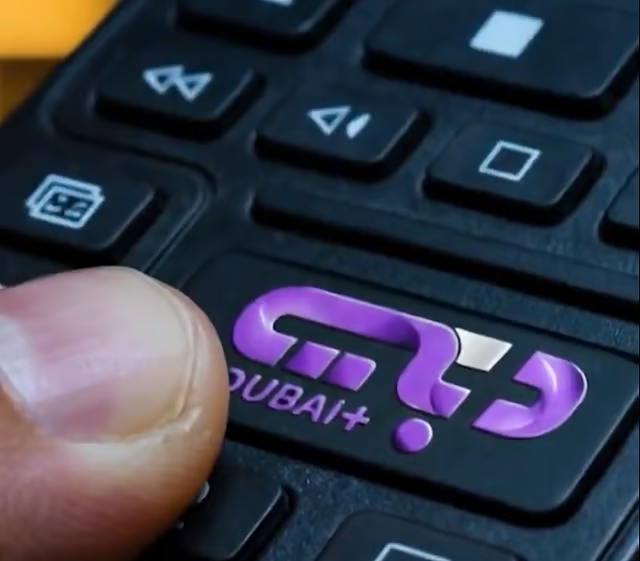
Dubai has switched on a fresh screen for its own story: “Dubai+” is a new streaming platform bringing together locally made shows, documentaries and entertainment under one roof. The idea is simple but strategic—make Dubai’s culture, people and everyday energy easier to discover, binge and share worldwide. It’s a boost for creators and a sharper global narrative for the city, positioning Dubai not only as a place to visit, but as a place that produces culture in real time.
The city is at its most cinematic just after sunset. Glass towers hold the last orange light like embers. Cars slide past in silent, expensive arcs. Somewhere in a café, ice clinks against a glass and a couple leans over a phone—thumb hovering, then tapping, as if opening a door.
On the screen: “Dubai+” A new icon. A new feed. A new way to watch Dubai talk about itself.
“What is it — another channel?” someone asks, half-joking, half-curious. The answer lands with a grin: “Not a channel. A whole city, streaming.”
Dubai has launched “Dubai, What?”, a new streaming platform designed to gather and spotlight content made in and about the emirate—think locally produced shows, documentary storytelling, and entertainment with a lifestyle edge. Instead of scattering city content across multiple accounts and platforms, the idea is to curate it in one place: easier to find, easier to follow, easier to share with an audience far beyond the UAE.
Streaming, in 2026, isn’t just distribution. It’s identity. Cities don’t only compete with other cities anymore; they compete with the infinite scroll. And Dubai—always alert to how attention moves—has decided to package its voice with the same confidence it builds its skyline.
“Dubai+” positions itself as a window into the city’s rhythms: culture and conversation, food and everyday life, the faces behind trends, the places that become backdrops to people’s personal milestones. The tone is meant to feel close—less brochure, more behind-the-scenes. Less postcard, more pulse.
Picture a host stepping into a tiny kitchen where spice and steam fog the lens. A filmmaker trailing an artist through a warehouse gallery space, footsteps echoing on concrete. A quick chat that starts playful and suddenly turns real. Dubai doesn’t lack spectacle—but the platform’s promise is texture.
Dubai has spent years investing in the infrastructure of storytelling—media zones, production ecosystems, creative talent pipelines, digital-first initiatives. You can feel it in the way the city is wired: studios and soundstages, co-working floors filled with editors and brand strategists, cafés where meetings happen faster than the coffee cools.
A dedicated streaming platform is a logical next step. It gives creators a clearer runway and gives Dubai a tighter narrative loop: content is made, released, watched, discussed, and amplified—then refined again. In a world where attention behaves like weather, a city that can forecast its own trends has an advantage.
Dubai’s global image has always been big—bold architecture, ambitious projects, luxury, speed. But there’s another Dubai that visitors often discover only after a few days: neighborhoods with quiet rituals, late-night tea, community markets, art studios, backstreet bakeries, morning run clubs, and the constant, multilingual hum of people building new lives.
“Dubai+” can turn that second Dubai into episodes—small, watchable moments that travel. And that matters, because today’s decisions are emotional before they’re logical. People don’t move somewhere because a spreadsheet tells them to. They move because they can picture themselves there.
The strongest city content isn’t a skyline shot. It’s a sentence overheard. A laugh in a corridor. A taxi driver pointing with his chin and saying, “New district—come, I show you.” If the platform leans into those details—if it lets Dubai be polished and human—it becomes more than a library. It becomes a mood.
For viewers, the win is clarity: Dubai content in one place, curated rather than accidental. For creators, it’s visibility and momentum—another outlet that can justify budgets, sharpen formats, and build recognizable talent. For Dubai as a destination brand, it’s a continuous, always-on narrative machine: the city doesn’t wait to be covered; it covers itself, daily, in high definition.
And that, in the attention economy, is power. Because when people watch a place regularly, the place starts to feel familiar. And familiarity is the first step toward action: booking a trip, attending an event, launching a business—or signing a lease.
A new streaming platform can sound like pure media news—but for real estate investors it reads as a signal of Dubai’s broader economic direction: deeper commitment to the creative economy, stronger place-branding, and more globally exportable lifestyle narratives. Those forces can shape demand across residential, office, retail and hospitality.
1) Creative-industry expansion supports commercial demand. When a city centralizes and promotes local content, production typically follows: more shoots, more post-production, more small studios, more flexible office teams. That can strengthen leasing in media-adjacent clusters and mixed-use districts—particularly assets offering adaptable floorplates, short fit-out cycles, and reliable connectivity.
2) Neighborhood storytelling can lift micro-location premiums. Platforms that highlight districts, venues and local rituals can create a “screen effect,” where specific areas gain recognition and desirability. For investors, this sharpens the case for residential stock in lifestyle-forward neighborhoods—places with walkability, food scenes, culture nodes and strong transport access. When a district becomes part of a narrative, it can attract tenants and buyers who value belonging as much as square footage.
3) Hospitality and serviced living benefit from content-driven travel. Curated city content acts like a perpetual invitation. Even modest uplift in short-break tourism, event travel and experience-led itineraries can support hotel performance and serviced apartment occupancy—especially in well-positioned assets near attractions, transit and entertainment corridors.
4) “Future-ready” perception helps capital flows. Dubai’s proposition to global investors increasingly blends lifestyle with infrastructure: digital services, smart-city ambition, efficient logistics, and a cosmopolitan labor market. A proprietary streaming platform reinforces that modern, media-savvy image—supporting the narrative that Dubai can attract talent and founders. In property terms, that favors buildings with smart features, premium tenant experience, and ESG-aligned upgrades.
5) Practical investor takeaway: follow the demand chain. The opportunity isn’t “streaming” itself; it’s the ecosystem behind it—creative jobs, branding momentum, tourism uplift and tenant preferences. Strategies to watch include: residential in high-amenity districts, flexible offices for media/marketing firms, light-industrial/studio-ready units, and hospitality products with operator strength and adaptable concepts.
“Dubai+” is ultimately a new way for Dubai to export its atmosphere. And when a city exports atmosphere well, it often imports people, businesses—and long-term property demand.