
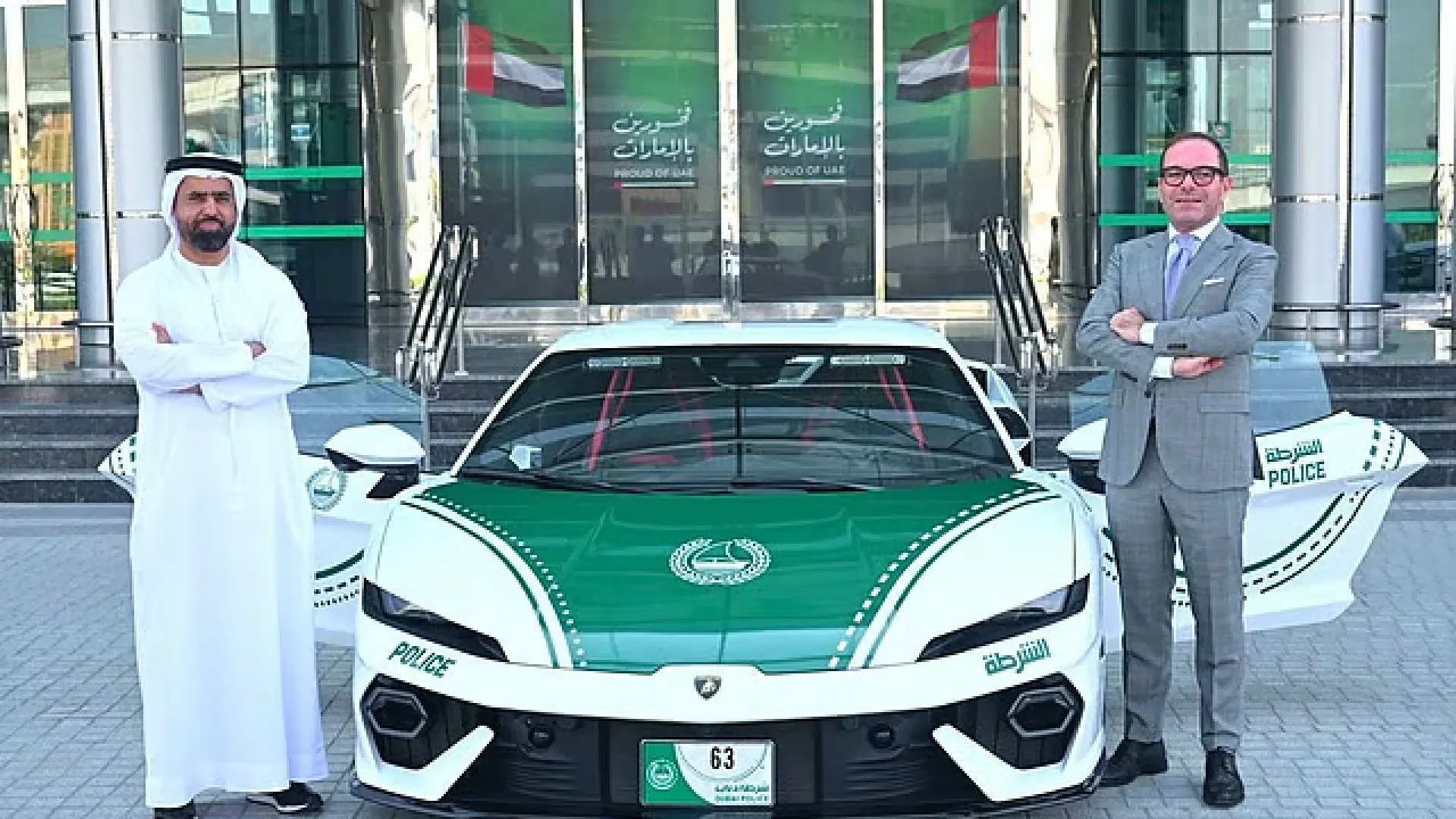
A new flash of green and white is moving through Dubai: the Dubai Police have added a 920-horsepower Lamborghini Temerario to their luxury patrol fleet. The hybrid supercar combines a twin-turbo V8 with electric motors and is designed to make a visible impression at tourist destinations and major events. It continues Dubai’s distinctive tradition of turning high-performance vehicles into symbols of security, modernity and global appeal.
First comes the sound. A low, powerful growl rolls across the pavement, and conversations pause as heads turn. Then the Lamborghini appears: sharp, low and gleaming, dressed in the green-and-white colors of Dubai Police. It looks like a scene from a film. It is, in fact, a patrol car.
The new Lamborghini Temerario has joined Dubai’s celebrated luxury patrol fleet, bringing up to 920 horsepower to a police lineup already famous around the world. Its arrival is not intended to make every traffic stop faster. The car has a different role. It is a moving symbol, a conversation starter and a highly visible presence in the places where Dubai welcomes the world.
“Can we take a picture?” asks a visitor near the roadside. The answer is almost unnecessary. Phones are already raised, capturing the angular bodywork, the police markings and the flashing equipment fitted to the vehicle. Within seconds, the scene becomes social-media content – and the car becomes part of Dubai’s urban theatre.
The Temerario represents Lamborghini’s new electrified performance generation. Its powertrain combines a twin-turbocharged V8 engine with three electric motors, producing a combined output of up to 920 horsepower. The electric assistance is not merely a badge of environmental progress. It also delivers instant response and helps shape the car’s intense acceleration.
On a racetrack, that power would be measured in lap times. In Dubai, it serves a broader purpose. The vehicle can patrol prominent locations, support public events and create a highly recognizable police presence. It is designed to be seen – along the waterfront, near major landmarks and in busy visitor districts where an ordinary patrol car might disappear into the background.
Dubai Police has built an international reputation for its extraordinary fleet. Over the years, luxury and performance models have appeared alongside conventional patrol vehicles. The message is unmistakable: this is a city that wants its public institutions to reflect its ambition, its wealth and its appetite for innovation.
Yet the cars are more than expensive ornaments. They create an approachable point of contact. Children stand beside them with wide eyes. Visitors ask officers about the technology. A quick photograph can become a short conversation about safety, traffic rules or life in the city. The supercar opens the door.
That is the clever part of the Temerario’s role. Dubai is a place where branding is built into the streetscape. Towers, beaches, shopping districts and mega-events all compete for attention. The police car joins that visual language, adding security to the city’s story of luxury and technological confidence.
When the Lamborghini arrives at a landmark, the atmosphere changes. People stop. Cameras appear. A crowd forms without an announcement. The vehicle draws attention first to itself, then to the officers and the institution behind it. Visibility becomes a form of public engagement.
For residents, the effect may be familiar. For international visitors, it is often startling. A police vehicle is expected to be practical and anonymous. Dubai’s Temerario is neither. It is a carefully staged reminder that safety here is presented alongside innovation, hospitality and spectacle.
The connection to real estate is subtle but important. Dubai’s property market depends not only on buildings, but also on the experience of the city around them. Safety, international recognition, tourism and a strong sense of place all influence how investors and future residents evaluate a location.
A single Lamborghini will not determine property prices. But it reinforces the wider image of Dubai’s prime districts: highly visible, well-managed and designed for a global audience. In waterfront neighborhoods, luxury retail zones and event destinations, that image supports the ecosystem surrounding premium hotels, branded residences and high-end commercial space.
As the Temerario glides away, the crowd slowly disperses. The phones come down. The sound fades between the towers. For a few moments, however, Dubai has turned a patrol into a performance – and a supercar into a statement about the city itself.