
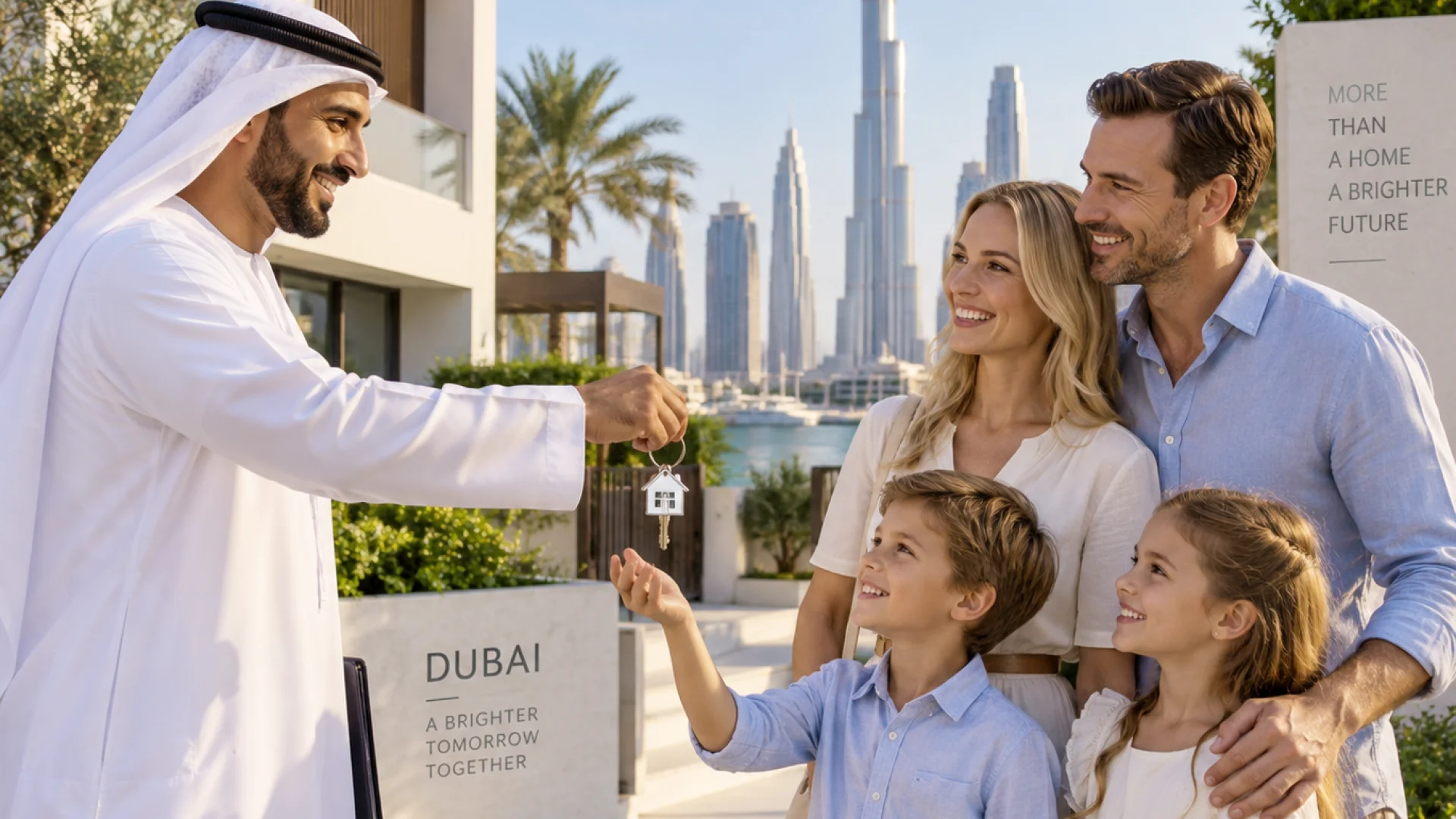

Dubai’s towers are not the only structures rising. The emirate is also building a new generation of local real estate professionals through a programme designed to prepare Emirati citizens for brokerage and related property careers. Combining training, market knowledge, practical exposure and professional certification, the initiative aims to strengthen Emirati participation in one of Dubai’s most dynamic economic sectors.
The lift doors open onto a wall of glass. Below, Dubai is already moving: cars streaming along Sheikh Zayed Road, cranes turning above new developments, sunlight flashing across towers. Inside, a different kind of construction is taking place. Young Emiratis are learning how a property becomes a transaction, how a viewing becomes a conversation and how a conversation becomes a decision.
The Dubai Land Department has launched a programme designed to prepare Emirati citizens for careers in real estate brokerage and related fields. The initiative gives participants a structured introduction to the property market, combining education with practical understanding of the work carried out by brokers and other real estate professionals.
At first glance, brokerage can look effortless. A polished apartment. A panoramic view. A few photographs and a signature. The reality is more detailed. A broker must understand regulations, check documents, interpret market conditions, answer difficult questions and keep several parties moving in the same direction.
“Is this the right home for me?” asks the buyer. “Can I trust the valuation?” asks the investor. “What happens next?” asks the owner. The professional who can answer those questions clearly is doing far more than showing a property. They are guiding people through one of the largest financial decisions of their lives.
The programme focuses on the practical and professional foundations of real estate work. Participants are introduced to market dynamics, transaction procedures, customer service, communication, legal requirements and the standards expected from licensed professionals.
The approach matters because real estate is learned partly through movement. A participant may begin the day reviewing an online listing, spend the afternoon visiting an apartment and end the evening explaining a contract to a client. Each step requires accuracy. Each interaction affects trust.
Dubai’s property market is also unusually international. A single transaction may involve a local owner, an overseas investor, a bank, a developer and a tenant from another country. Local knowledge and cultural fluency can make the difference between a confusing exchange and a confident decision. Emirati professionals bring both to the table.
The programme forms part of a broader effort to increase Emirati participation in private-sector industries. Real estate offers a particularly broad platform. Beyond brokerage, the sector includes development, property management, valuation, investment, financing, customer experience and technology.
For a young Emirati, the first role may be in sales or leasing. Later, that experience can lead towards consultancy, asset management, project development or strategic planning. The property market is not one job. It is an ecosystem, with different doors opening at different stages.
That ecosystem is demanding. A property can be available in the morning and reserved by lunch. A viewing can be cancelled minutes before it begins. A financing approval can change the entire timetable. The broker has to remain composed, informed and responsive. The work rewards people who listen carefully and build relationships patiently.
In that sense, the programme is not simply about filling vacancies. It is about building professional confidence. Participants gain a clearer view of what the industry expects and what they can contribute. Employers gain access to local talent that understands the market from within.
As Dubai’s property sector expands, professional standards become increasingly important. Buyers and investors expect clearer information, reliable procedures and advisers who understand both opportunity and risk. Training can help make the industry more consistent, especially as transactions become more complex and digital platforms accelerate the pace of business.
The initiative also sends a symbolic message. Dubai’s real estate story is usually told through its landmarks: new districts, waterfront residences and record-breaking towers. This programme highlights the people behind the market. A city’s property economy depends not only on concrete and glass, but also on knowledge, communication and trust.
Imagine a first client meeting. The broker opens the file, checks the details and listens before offering an answer. No dramatic skyline is required. Yet this small scene may say as much about the future of Dubai real estate as any new tower. It shows a market becoming more professional, more locally connected and more prepared for its next stage.
For Emirati citizens, the programme creates a clearer route into a sector that has traditionally relied heavily on international professionals. For real estate firms, it can become a channel to recruit locally rooted employees with a strong understanding of the UAE market. For clients, a broader pool of trained professionals may mean more choice and more focused advice.
The benefits will depend on how effectively training is connected to real work. Classroom knowledge must meet real listings, real contracts and real customer expectations. Mentoring, market exposure and clear professional pathways will therefore be important as participants move from study into employment.
There is also a wider economic dimension. A stronger local skills base supports the resilience of the property industry. It helps companies retain knowledge, develop future managers and build relationships with communities in the UAE. In a market shaped by international capital, local expertise can be a powerful competitive advantage.
For investors, the programme is best understood as a long-term market signal rather than a short-term price catalyst. A better trained and more locally integrated brokerage sector can improve the quality of information exchanged between buyers, sellers and advisers. Over time, that may support greater confidence in transactions and more transparent customer journeys.
The initiative may also create opportunities beyond brokerage. Training providers, property technology companies, compliance specialists, customer-service platforms and real estate consultancies could all benefit from a growing demand for professional development and market infrastructure.
Investors watching Dubai should therefore look beyond the next project launch. The deeper story is the development of the people and systems that make a property market function. Towers attract attention. Skilled professionals create continuity.
Back at street level, the city continues to build at its familiar pace. But somewhere above the traffic, a new broker is studying a floor plan, preparing questions and learning how to hand over more than a set of keys. The next chapter of Dubai real estate may begin there.