
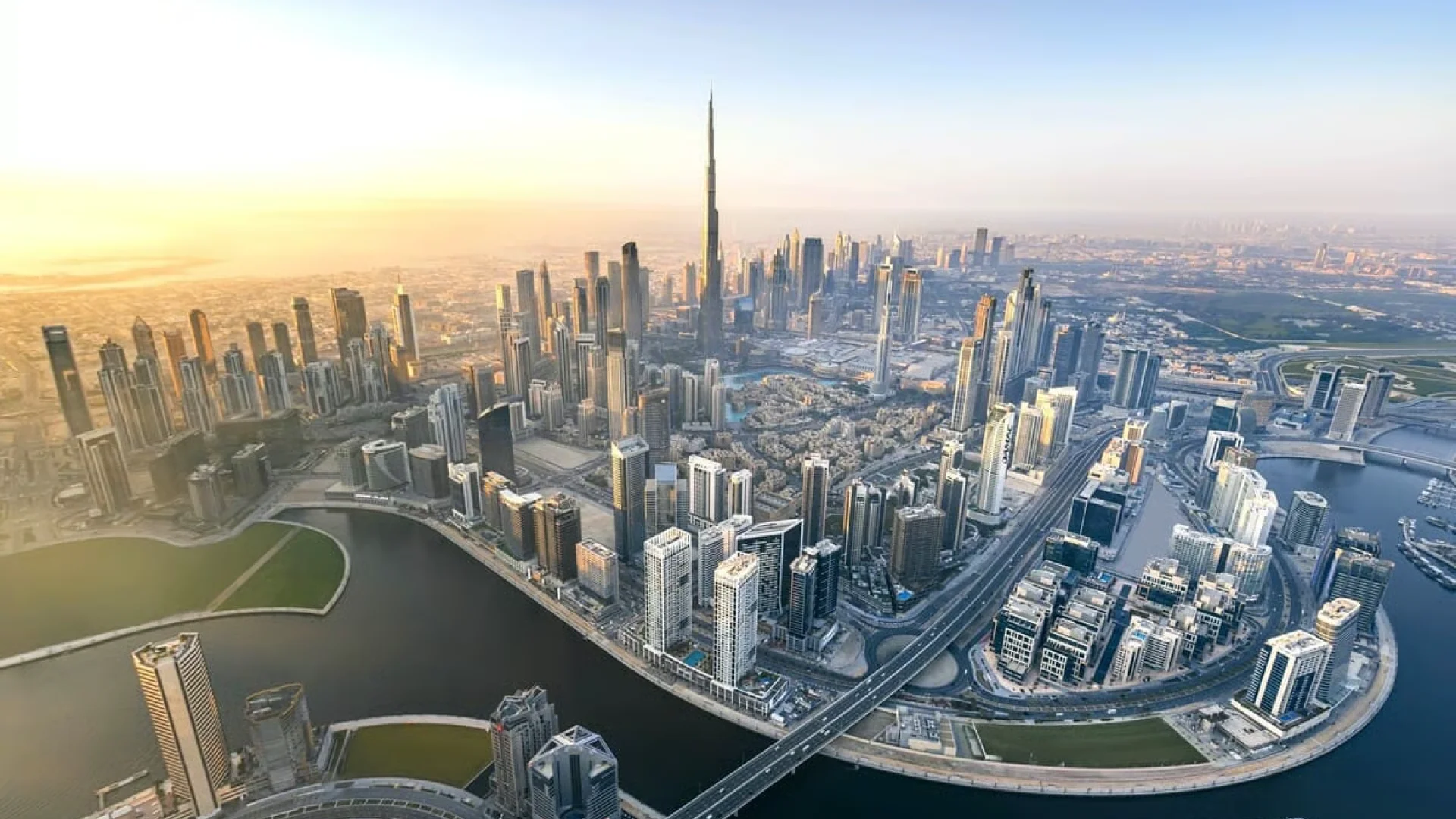

Dubai’s property market opened 2026 with a roar: around Dh176.7 billion in sales in Q1 alone, powered by resilient off-plan buying and prices that refuse to soften. New launches continue to pull crowds into sales galleries, where payment plans and handover dates are discussed like weekend plans. The mood isn’t frantic—it’s confident, almost methodical, as end-users and investors alike chase well-located projects and future-ready communities. In the heat outside and the cool showrooms inside, you can feel the same thing: momentum that has become routine.
The glass doors sigh open and a wave of cold air hits your face—sharp, perfumed, expensive. Inside the sales gallery, Dubai is laid out in miniature: towers no taller than your hand, a ribbon of blue “water,” palm-sized trees planted in perfect rows. A couple leans in close, shoulders touching. “So this is the view?” she asks, pointing at a tiny balcony. The agent doesn’t hesitate. “Lagoon-facing,” he says, already swiping through floor plans. “And here’s the payment schedule.”
Outside, the city moves like it always does—fast, glossy, certain. Cranes hang in the sky like punctuation marks. Cars stream past construction fences. Somewhere a jackhammer rattles, then fades behind tinted windows. And hovering over all of it is a number that feels less like a statistic and more like a pulse: Dh176.7 billion. That’s the value of Dubai property sales in Q1 2026, a quarter defined by one stubborn fact: off-plan demand remains strong, and prices are holding firm.
Dubai’s property conversations don’t happen in whispers. They happen in bright rooms, over glossy brochures, in quick back-and-forths that sound like choreography.
“If I reserve today, what do I pay now?”
“This amount,” the agent replies, tapping the screen, “then staged installments during construction.”
“And handover?”
“As scheduled—here.”
Off-plan—buying before a home is finished—has long been Dubai’s adrenaline shot. But what’s striking this quarter is how normal it looks. Not reckless. Not breathless. It’s become almost managerial: buyers comparing layouts, weighing service charges, checking community amenities, asking about schools and access roads like they’re already planning the move.
There’s a particular kind of optimism in buying something you can’t yet touch. In Dubai, that optimism has been refined into a system: launches, reservation windows, curated showrooms, cinematic renderings. For many buyers, the logic is simple—get in earlier, secure today’s pricing, ride the project’s journey from promise to keys.
A man in sneakers and a crisp shirt circles the scale model like it’s a chessboard. “I’d rather lock the price now,” he says, half to the agent, half to himself. He isn’t chasing drama. He’s chasing a timeline: launch price, construction progress, handover, then either move in or rent out. In a city where neighborhoods can transform in a few years, time is an asset.
“Is there room to negotiate?” the woman asks, still staring at the model city like it might blink. The agent’s smile tightens, just slightly—the polite sign of a market with leverage.
“Prices are stable,” he says. “Demand is very active.”
Stability, in this context, doesn’t mean calm seas. It means the floor feels solid. Buyers don’t expect sudden discounts to rescue them if they wait. Developers don’t need to shout. The message is quietly relentless: if you want the unit, move when the window is open.
Big numbers can feel abstract until you watch them turn into roads, schools, cafés, and entire blocks of lighted windows. In Dubai, sales volume isn’t just a market metric; it’s a kind of urban fuel. It pushes infrastructure forward. It accelerates build cycles. It creates the confidence that makes the next launch possible.
A taxi driver nods toward a cluster of cranes. “They always build,” he says, as if describing weather. Then he adds the more important line: “And people always buy.” That second sentence is Q1 2026 in plain language. Construction is supply. Buying is belief.
The showroom crowd looks different than it did years ago. More laptops. More spreadsheets. More questions about net yields and rental demand. Buyers still fall in love with views—sunset over water sells itself—but the romance is increasingly paired with calculation.
Some are end-users planning a life: a second bedroom for a future child, a balcony big enough for family dinners, a commute that doesn’t steal the morning. Others are investors treating Dubai as a portfolio pillar—diversification, currency considerations, liquidity, and a belief that the city’s growth story still has chapters left.
And those chapters are written project by project. In Dubai, you don’t just buy a home; you buy into a timeline: a master plan, a community narrative, a future set of amenities that may not exist yet—but are sold with total confidence.
Dubai runs on a distinct beat. First comes the reveal—renderings, drone videos, brand partnerships, a name that sounds like a promise. Then the reservation phase, sometimes fast enough to feel like a sprint. After that, the long middle: construction updates, progress photos, the slow satisfaction of watching floors stack up against the sky.
“They’re already on level twelve,” someone says in an elevator nearby, like it’s the day’s headline. The building becomes a shared storyline. And when handover comes, it’s not just keys—it’s the moment the investment becomes physical.
Q1 2026 suggests that this rhythm remains intact. The market isn’t pausing. It’s pacing itself—confidently.
For real estate investors, the Q1 2026 picture—high transaction value, resilient off-plan appetite, and firm pricing—points to a market with depth, but also one that rewards precision. When prices don’t wobble, outperformance comes less from “cheap entry” and more from choosing the right asset in the right micro-location.
In practical terms, investors should underwrite deals based on net cashflow (after fees), handover timing, and the depth of end-user demand in the target community—not just launch-day excitement. Q1 2026 shows Dubai can sustain demand at scale; the edge now lies in disciplined selection inside a strong market.