
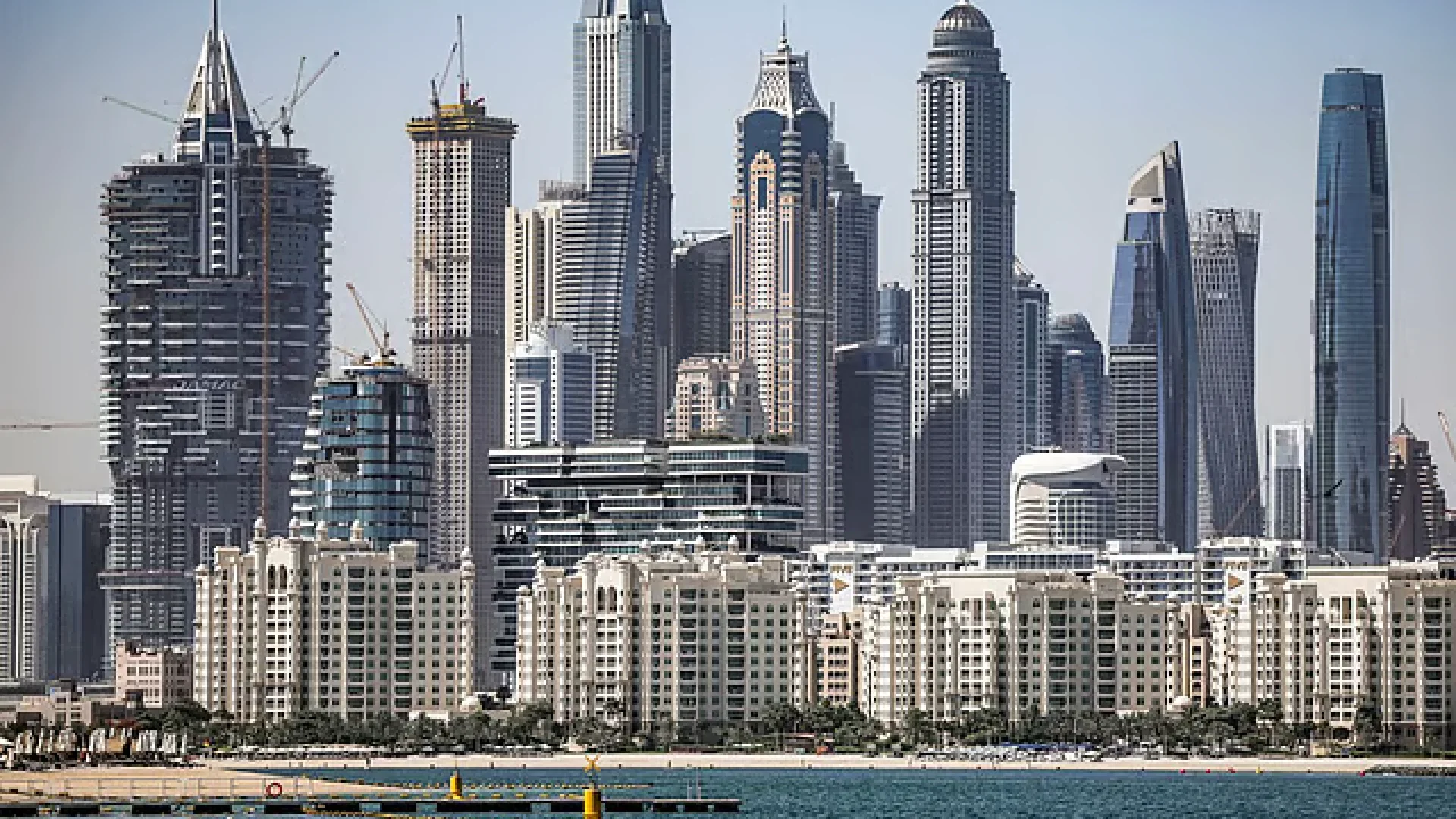

Walk along Dubai’s waterfront promenades and you can feel the market before you even see the numbers: confidence in the air, speed in every decision, and a sense that the city’s best addresses are being repriced in real time. Gulf News reports that values in multiple top communities have climbed to nearly double their 2021 levels, with premium neighbourhoods leading the charge. The momentum is powered by strong end-user and investor demand, a red-hot luxury segment, and the simple fact that the most desirable views and established communities cannot be replicated overnight. In today’s Dubai, prime property isn’t just bought—it’s pursued.
The first thing you notice isn’t the skyline. It’s the sound.
Ice in a glass. A soft thud of trainers on the promenade. The faint, steady hum of air-conditioning behind floor-to-ceiling windows. Down by the water, a couple pauses to take a photo of the morning light sliding across the marina—then the man checks his phone, frowns, and mutters, “That was 2021 pricing.”
In Dubai, that phrase has become a timestamp. A before-and-after. Because in many of the city’s most sought-after communities, the market didn’t just rise—it recalibrated. According to Gulf News, property values in several top neighbourhoods have surged to nearly double their 2021 levels. Not a gentle climb. More like a fast lift with the doors barely closing.
Dubai always had momentum, but lately it feels tangible—like heat radiating off pavement. The lobby doors of a high-rise slide open and shut with metronome rhythm. A concierge greets residents by name. A moving truck idles at the curb, then another. People are arriving, upgrading, relocating, nesting. And the best-located homes—waterfront views, iconic skylines, established community life—are being treated like scarce collectibles.
That scarcity is one of the core reasons prices jump hardest at the top. You can build new towers, extend new roads, launch new master plans. But you can’t manufacture “first row” overnight. You can’t duplicate a mature waterfront community with years of retail, schools, walkability, and familiarity already baked in. Prime, once taken, stays taken.
Gulf News highlights a striking headline: in Dubai’s top communities, property values have in some cases nearly doubled since 2021. The gains are most visible where demand concentrates—premium neighbourhoods, high-quality developments, and lifestyle-led addresses that pull in both end-users and global investors.
There’s a particular kind of buyer energy in these places. It’s less “let me think about it” and more “what’s left?” A sales agent opens a balcony door. Warm air rushes in. The view is clean, uninterrupted—water, boats, a ribbon of skyline. “This layout is nearly gone,” she says, as if she’s talking about concert tickets. Someone laughs, half-disbelieving. Then a phone comes out. A message is typed. A deposit is discussed. The apartment, suddenly, becomes a decision rather than a possibility.
2021 sits like a hinge in Dubai’s recent property story. After that, the city’s appeal broadened and deepened: a place to do business, yes, but also a place to live well—securely, comfortably, internationally. The buyer pool grew more global, more mobile, and in many cases, more cash-rich. At the same time, Dubai’s luxury segment found a new gear, setting record benchmarks that ripple outward into surrounding price bands.
The market drivers described in the report can be felt on the ground:
It’s not that every corner of Dubai moves the same way. It doesn’t. The story is about where the acceleration is strongest: in top-tier communities where the product is hard to replace and the buyer base is deep.
In these neighbourhoods, value isn’t just a number per square foot. It’s how quickly you can get to the beach. Whether your morning walk is shaded. The convenience of a downstairs café that knows your order. The way a building’s management handles the details you don’t want to think about.
That’s why price growth here can look dramatic. Buyers aren’t only buying walls—they’re buying time, routine, a sense of arrival. They’re buying a life that runs smoothly. And when a city becomes a global stage for that kind of lifestyle, the best seats get more expensive.
Dubai is a market that rewards preparedness. People who bought in 2021 often describe it with a small, quiet smile: the kind that comes from timing you didn’t fully appreciate until later. People who waited sometimes tell a different story—more viewings, fewer options, higher entry points in the same communities.
At an open house, I watch a couple stand in silence at the window. The agent speaks softly, not to pressure them, but because the view seems to demand it. “This line has been the most requested,” she says. The woman nods slowly. The man asks, “And if we come back next week?” The agent tilts her head—just enough to say what she doesn’t want to promise. In a heated micro-market, next week can be a different market.
When a report says values have nearly doubled since 2021 in top communities, it’s tempting to read it as hype. But the lived experience in these areas—transaction pace, buyer urgency, the pull of lifestyle-led addresses—makes the statistic feel plausible. This is a repricing of what “prime Dubai” means in the global real estate conversation.
And while all markets breathe—speed up, cool down, find new balance—the signal is clear: the most desirable communities have been leading the story, and they have moved fast.
1) Think in micro-locations. In Dubai, two units in the same tower can behave like different assets. Floor height, view corridor, sun exposure, proximity to retail, and even traffic access can materially affect resale and rental demand.
2) Separate yield from capital growth. Prime communities can deliver powerful appreciation, while headline rental yields may compress at the very top of the market. Model both outcomes and decide what you’re optimising for.
3) Plan your exit before you enter. Your strategy—resale, long-term leasing, or short-term/holiday letting where permitted—should guide unit selection (layout, parking, furnishing potential, building rules).
4) Watch supply timing. New launches can expand choice, but established prime communities often hold value because many buyers prefer completed infrastructure and a “lived-in” neighbourhood feel.
5) Quality beats perfect timing. In top communities, the key edge is buying the right product: a liquid layout, a building with strong management, and a location advantage that will still matter five years from now.