
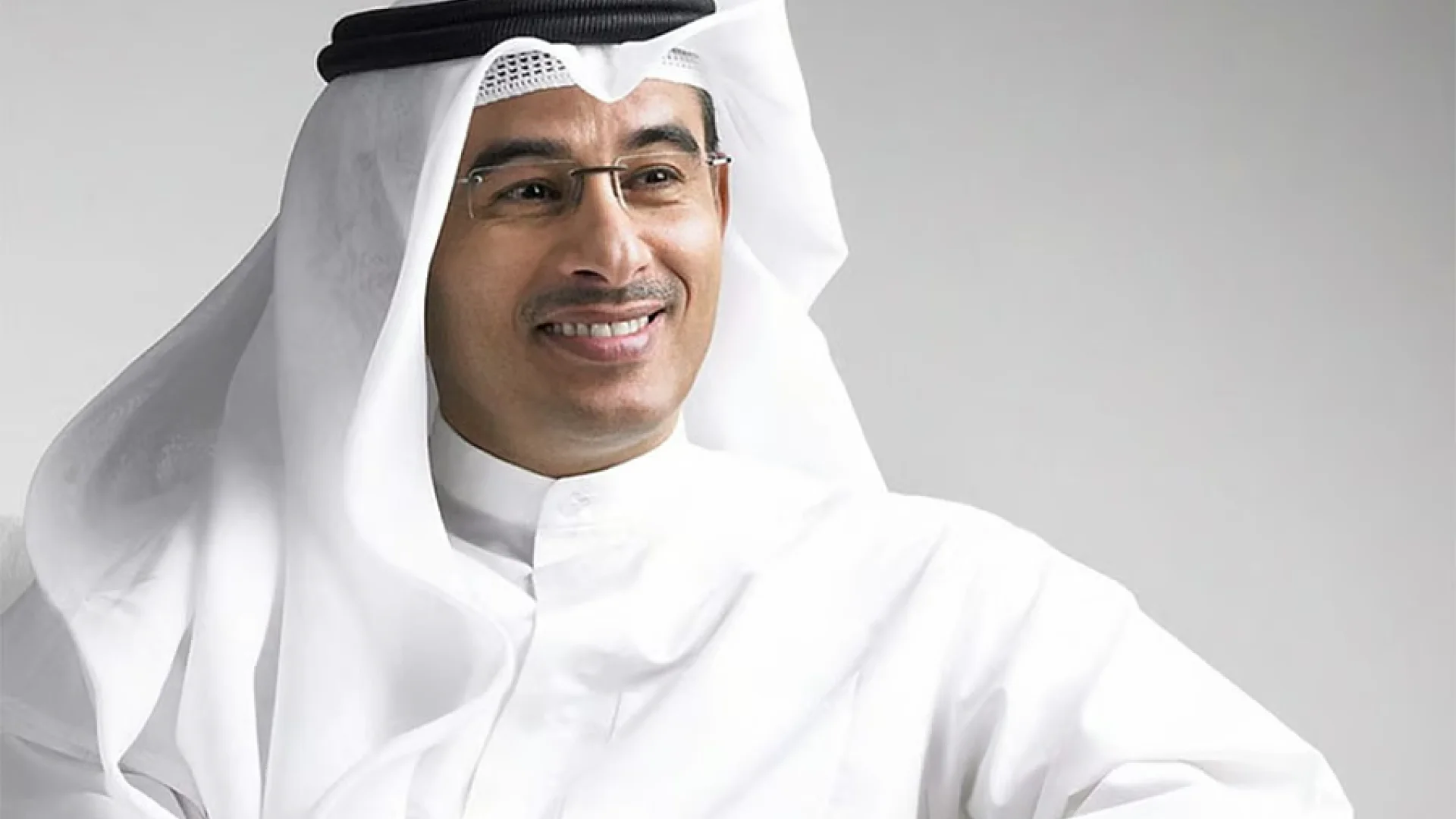
The skyline still sparkles, but the conversations in the showrooms sound different: security, scenarios, exit plans. Dubai’s legendary developer Mohamed Alabbar assesses the situation following Iranian missile attacks in the region — a moment when investors take a closer look at how stable demand, capital inflows and political conditions truly are. While Dubai has benefited for years from population growth, wealth migration and a boom in luxury real estate, geopolitical risks, insurance considerations and questions of liquidity are suddenly moving to the forefront. The message remains: Dubai intends to stay open, but investors are asking new questions before they sign.
It is one of those evenings when Dubai feels as if someone has switched the world to “high definition.” The air is warm, the water of Dubai Creek shimmers black like ink, and glass façades cast streaks of light onto the asphalt. In a lobby, a model of the next line of skyscrapers stands behind plexiglass. Miniature palm trees. Tiny pools. Perfect, as if life itself were a rendering.
“And here, you see, the view over the Marina,” says a salesperson, voice practiced, index finger moving in rhythm with the spotlights. A couple nods, smiles — and then asks the question that rarely came this directly before: “And what if…?” The sentence hangs unfinished in the air-conditioned room. What if the region heats up further? What if flight routes change, insurers recalculate, investors hesitate?
After Iranian missile attacks in the region, geopolitics is no longer just background noise in Dubai’s real estate conversations. It has moved to the foreground like a deep bass suddenly drowning out every melody. And Mohamed Alabbar — founder of Emaar, the man behind iconic projects such as Downtown Dubai — speaks about how sentiment and risk perception are shifting.
Dubai has a talent many cities envy: it can absorb crises while appearing as if nothing happened. The taxis keep running. Construction sites continue scratching at the sky. In cafés, the milk foam in the flat white is just as perfect as always. And yet, anyone sitting in show apartments these days can sense the subtle signals.
An investor from Europe taps on his phone while the agent talks about payment plans. A family from South Africa asks about schools — and immediately afterwards about emergency services. “We love the city,” the woman says quietly. “But we want to understand how safe it really feels.”
Alabbar describes the situation as serious without drifting into alarmism. He portrays a Dubai that sees itself as a global hub: for trade, for talent, for capital. If things shake outside, this machine must continue running — not out of defiance, but because that is the foundation of the business.
Real estate is concrete and glass — but it is paid for with expectations. The price of an apartment includes not only square meters, but also a promise: stability, lifestyle, rental demand, resale value. When news images of attacks fill screens, that promise is suddenly reassessed.
“How do the banks react?” asks a man who says he simply wants to “diversify.” The agent smiles, perhaps a little too quickly. “Dubai is very resilient.” A sentence that during the boom years almost became a greeting. But resilience is not a natural law. It must prove itself — in prices, in liquidity, in trust.
The picture is of a market that still sees demand but understands that the next phase could become more selective. Buyers compare more carefully. Investors test scenarios. And developers must explain why a project is not only beautiful, but also robust — in a world where risks appear faster than expected.
To understand why the debate feels so charged, one must look at the background. In recent years Dubai has benefited from several waves: the global search for safe and tax-efficient locations; the mobility of entrepreneurs; the normalization of remote work; and a luxury market that feels at home in the city. Add to that long-term investments in infrastructure, events, tourism, and the positioning as an “easy to do business” destination.
It is a place where you might sit in a coworking space next to a crypto founder in the morning and share an elevator in a residential tower with someone discussing family offices in the evening. This mix is Dubai’s fuel. It drives demand for everything: serviced apartments, villas, office space, logistics.
But booms have a tendency: they make people forget that risk is cyclical. When geopolitical headlines dominate, markets remember that “premium” also means “premium risk” — and that returns are not only about sea views but about stability of the framework conditions.
Alabbar is not just another manager repeating standard phrases at a press conference. He is someone who helped build the city — and who knows how powerful narratives can be. When he speaks about a crisis, it is not capitulation but a signal: reality is being taken seriously. At the same time, the core message remains: Dubai will not “close.” It will adapt.
This adaptation rarely happens on stage but in details: insurance premiums, financing risk margins, whether buyers prefer completed units or avoid off-plan deals with long horizons. And in marketing language that subtly shifts: less “dream,” more “security.”
In a sales gallery in Downtown, a security guard leans against the wall with his hands folded in front of his stomach. He is not looking at the models. He is looking into the room. Outside, a convoy of black SUVs passes silently like shadows. In such moments Dubai feels like a movie set where everything shines — and precisely for that reason every disturbance becomes immediately visible.