
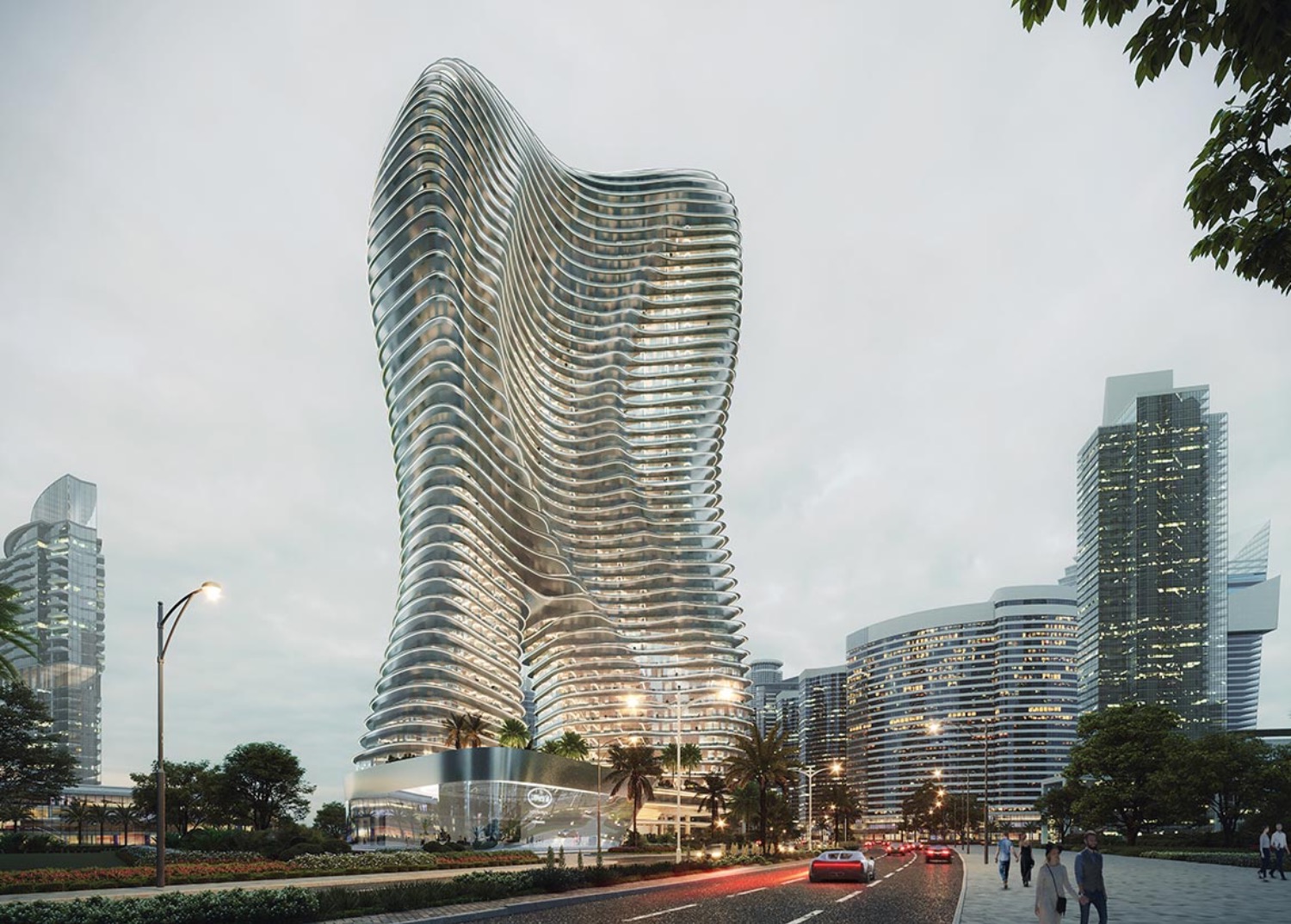

Dubai has just added a new headline-grabbing figure to its luxury property lore: a penthouse sold for Dh550 million, reportedly the most expensive penthouse deal in the Middle East. Beyond the jaw-dropping number, the sale signals how scarce, trophy-level homes—iconic views, top-floor privacy, and brand-grade service—are reshaping price expectations at the very top. It’s a reminder that in Dubai’s ultra-prime market, real estate is not just shelter or even investment; it’s a global lifestyle asset with its own gravitational pull.
The lift barely makes a sound.
You feel it more than you hear it—the soft change in pressure, the gentle stop, the hush that lands right before the doors slide open. Then the city appears like a revelation. Dubai is no longer around you. It is beneath you: ribbons of traffic, sharp-edged towers, the sea laid out in a dark, expensive-looking line.
Someone near you exhales a small, involuntary laugh. “That view,” they whisper, as if speaking louder might disturb it.
This is the world a Dh550 million penthouse sale belongs to—a place where numbers are not just numbers, but symbols. According to reports, Dubai has recorded a Dh550 million penthouse transaction, described as the most expensive penthouse sale in the Middle East. And in a city addicted to superlatives, that still lands with a thud.
Dubai’s luxury property market has been busy rewriting its own limits: waterfront mansions, branded residences, ultra-high floors with private pools and terraces that look like they were cut out for a film set. Yet a penthouse record carries a special charge. Penthouses are the rarest form of urban luxury—limited by physics, planning, and architecture. You can build another tower. You can’t easily build another “top.”
That’s why a single headline transaction can ripple outward. It becomes a new reference point—an anchor price in the minds of sellers, buyers, valuers, and developers. In the days after a deal like this, language tightens. “We can negotiate” turns into “We’re benchmarked to the record.”
At first glance, it’s tempting to translate the price into something measurable: square footage, bedroom count, ceiling height. But the truth is that ultra-prime real estate isn’t priced like regular housing. It’s priced like art, like a one-off watch, like a waterfront plot that simply doesn’t exist anywhere else.
What buyers pay for at this level is a stack of intangibles that are hard to replicate:
In that sense, the Dh550 million figure doesn’t merely reflect a hot market; it reflects a market where scarcity is engineered and monetised.
Who buys a penthouse at this altitude—financially and literally? Usually, it’s not one simple profile, but a blend: global entrepreneurs, family offices, international high-net-worth individuals, sometimes buyers who already own multiple homes and want a Dubai base that feels definitive.
In luxury sales rooms, the motivations tend to arrive in fragments, like lines in a play:
“I need a place my family will actually use.”
“I’m in and out—connectivity matters.”
“I want something that can’t be replicated.”
“I want security.”
Dubai answers these in its own dialect: infrastructure that moves fast, lifestyle that photographs well, and a property ecosystem designed to serve people who expect frictionless living. At the top end, that ecosystem—developers, brokers, legal processes, property management—has become increasingly specialised.
From the outside, Dubai can look like an endless construction montage: cranes, billboards, glossy renderings promising the next spectacular thing. But the ultra-prime segment is not a mass market. True trophy penthouses—those with the most commanding views, the best terraces, the most privacy—are limited. And that’s what gives them resilience as status assets.
The Dh550 million sale is also a reputational marker. It says something simple, loudly: Dubai is not merely competing with regional luxury hubs; it is courting the same global audience that compares cities like London, New York, Hong Kong, Singapore—and then asks a different question: Where can I live best, with the least friction, right now?
Imagine standing by a glass wall that doesn’t feel like a wall. The city’s light spills over your fingertips as you touch the cool surface. Somewhere far below, horns and engines form a thin, distant hiss—more atmosphere than noise.
A broker, perfectly neutral, gestures toward a terrace. “Sunset is the moment,” they say.
You step outside. Wind, warm and clean, brushes your face. The skyline shifts as if it’s turning a page. And suddenly you understand why ultra-prime property is sold with emotion before it’s sold with spreadsheets. At this level, the purchase is a form of belonging—to a view, to an address, to a particular idea of arrival.
For investors, the real importance of a Dh550 million penthouse sale isn’t that it’s aspirational—it’s that it functions as a price discovery event at the very top of the market. Ultra-prime transactions can reframe expectations for comparable stock, influence asking prices, and strengthen a developer’s ability to justify premium launches nearby.
1) Benchmarking and the “halo effect”. Record sales create a halo around a building, a micro-location, and even a developer brand. That can translate into higher resale ambitions from other owners and firmer pricing for similar high-floor units. Investors holding adjacent luxury inventory may benefit from improved comparables—especially when the record is widely publicised.
2) Scarcity beats square metres. In ultra-prime, replication risk matters more than average price per sq ft. Investors should prioritise assets with defensible scarcity: protected views, unique layouts, meaningful outdoor space, privacy, and a level of service that can’t be easily matched by the next launch.
3) Liquidity is real—until it isn’t. Dubai’s global buyer pool can support liquidity at the top end, but the buyer universe for nine-figure dirham homes is naturally thin. That means an investor’s exit strategy must be designed early: target buyer profiles, marketing channel, holding period, and timing. A record headline helps storytelling, but it doesn’t replace disciplined exit planning.
4) Spillover opportunities in “near-prime”. Not every buyer can stretch to Dh550 million, but many will chase proximity—same district, same brand ecosystem, same view corridor. This often boosts demand for sub-penthouses, large two- to four-bedroom units in prime towers, and high-quality branded residences at lower entry points. For investors, these can offer a better balance of liquidity and yield while still riding the prestige wave.
5) Rental yields: selective, cost-sensitive. Ultra-prime rentals can be strong, especially for corporate or long-stay luxury demand, but operating costs (service charges, maintenance, furnishing standards, concierge-level expectations) are significant. Underwriting should be conservative, with close attention to net yield rather than headline rents.
Investor takeaway: The Dh550 million record underscores Dubai’s positioning as a global ultra-prime destination. The smart play isn’t to chase records—it’s to invest where the same forces behind the record are present: engineered scarcity, enduring desirability, and a clear path to liquidity.