
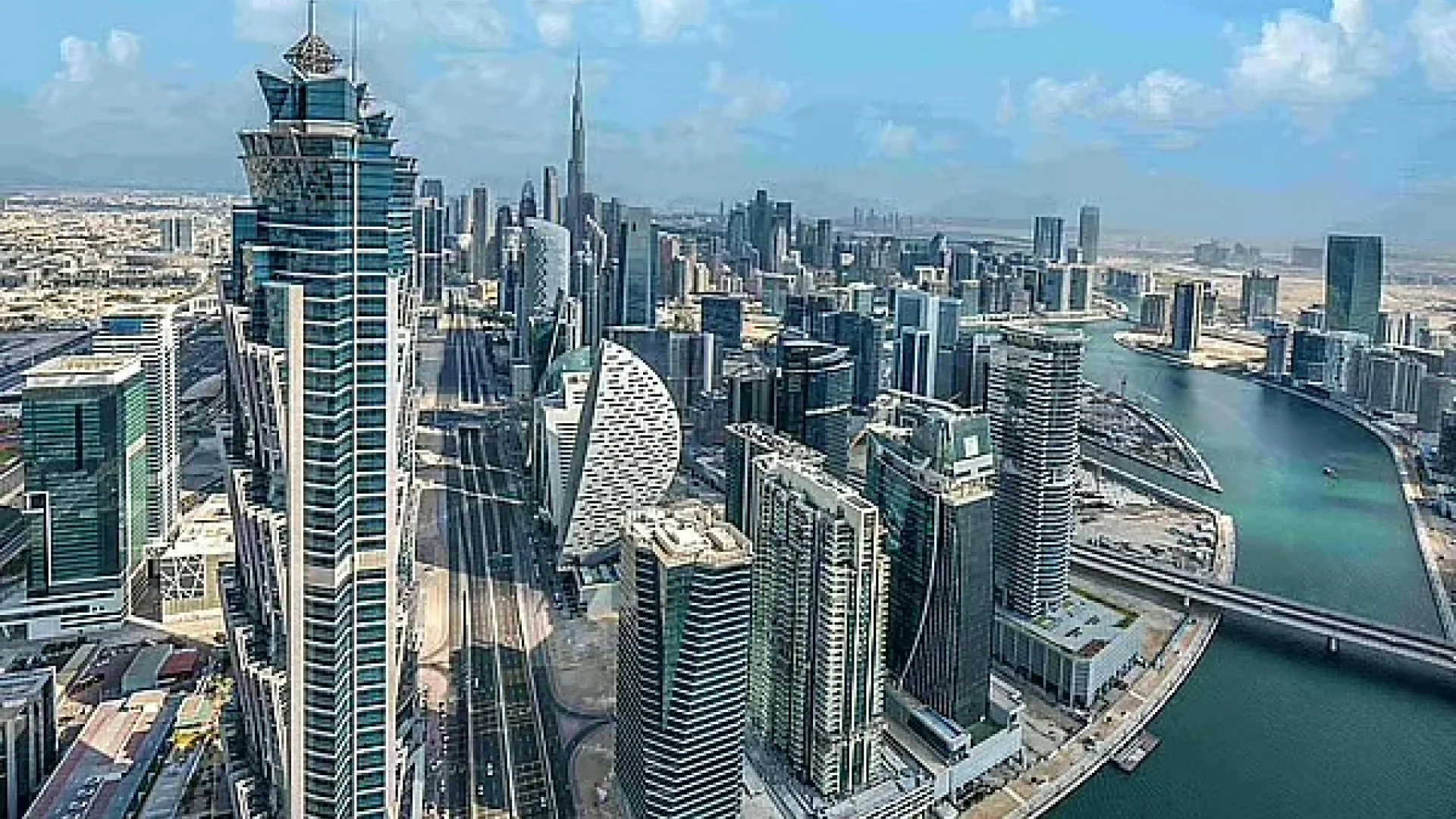

Dubai’s property market in 2025 isn’t just busy — it’s humming, with leading developers reporting record sales driven by off-plan momentum and high-end demand. New launches are being absorbed fast, especially in master-planned communities and prime, lifestyle-heavy locations where views, walkability and brand names translate into price power. The buyer base looks increasingly international and end-user friendly: families, entrepreneurs and newcomers sit alongside investors hunting phase-one pricing. The headline numbers point to a market that sells not only homes, but a vision of the city’s next chapter — and buyers are racing to reserve a line in it.
The glass doors whisper open and the cool air hits first — crisp, perfumed, showroom-clean. In front of me, a scale model of Dubai glitters under spotlights. Tiny towers. Tiny roads. A miniature coastline that looks almost too perfect to be true. A sales agent leans in, lowering his voice as if we’re sharing a secret. “Two units left on this stack,” he says, tapping a floor plan with a pen. Not a threat. Not a promise. A countdown.
This is what Dubai real estate feels like in 2025: fast, cinematic, and just competitive enough to make even calm people speak quickly. Across the city, major developers are reporting record sales, propelled by a familiar engine — off-plan buying — and supercharged by global wealth flows, lifestyle migration, and a product mix that keeps reinventing itself. In the time it takes to finish an espresso, a launch can flip from “available” to “waitlist.”
Dubai doesn’t “release” buildings. It premieres them. There are LED screens, glossy renders, a show apartment staged with the kind of cushions nobody actually owns — and a steady soundtrack of micro-dialogues that sound like the market’s pulse.
“What’s the handover date?”
“Is this view protected?”
“Service charges — give me the range.”
Answers come polished, practiced. Then the sentence that changes posture in the room: “Prices move in the next phase.” Suddenly shoulders straighten. A couple that planned to “think about it” starts calculating deposits on the fly.
Record sales in 2025 are being fueled by several forces working together. Off-plan remains the headline act: buyers lock in early pricing, spread payments over time, and bet on Dubai’s growth between booking and handover. Prime and luxury demand — especially waterfront, branded residences, and landmark addresses — adds torque. And master-planned communities keep pulling in end users who aren’t chasing a quick flip; they’re buying schools, parks, retail, and a version of daily life that feels curated.
In the waiting area, Dubai speaks in layers. English overlaps with Arabic, Russian, Hindi, French. A father scrolls through floor plans the way people once scrolled through holiday photos. A child drives a toy car along the “roads” of the model city. Someone asks about the reservation fee. Someone else asks about rental demand. Another buyer wants to know whether the developer has delivered on time before — the kind of question that signals a market maturing in real time.
Dubai’s appeal is still its combination of accessibility and aspiration: flights everywhere, a streamlined buying process, and a lifestyle that sells sunshine and infrastructure in the same breath. Add the city’s reputation as a regional safe haven and a magnet for globally mobile talent, and the demand story gets bigger than property. It becomes a relocation story. A business story. A family story.
Record numbers don’t come from demand alone; they come from products designed to be bought. In 2025, developers are leaning hard into saleability:
Dubai is selling more than square feet. It’s selling scenes. A morning run under palm shade. A balcony breakfast with a marina horizon. The “quiet” of a master plan that has everything inside it — until you realize quiet is a premium feature too.
Yes, the mood can feel euphoric. But the conversations are sharper than they were in earlier boom cycles. Buyers compare service charges and resale prospects. They ask about view corridors and traffic noise. They look at the developer’s track record the way you’d look at a restaurant’s reviews before booking a birthday dinner.
Agents talk less about quick flips and more about holding periods. Two years. Five years. A plan that includes furnishing, holiday rentals, long-term tenants, or a family move-in timed to a school calendar. When a market is liquid, strategy becomes the differentiator.
Dubai builds — it always has. That’s part of the city’s identity and its risk equation. Record sales often inspire more launches, which eventually become more handovers. The balancing act in 2025 is timing: releasing enough inventory to meet demand, without flooding specific micro-markets with too many similar units at once.
That’s why “micro” matters more than ever. Not just which district — which side of the tower. Which line. Which floor. Which view is permanently open, and which one might become someone else’s balcony. In a city where cranes rewrite skylines, certainty is valuable.
A friend who recently bought off-plan said something that stuck with me. He didn’t talk about cap rates or appreciation charts first. He talked about momentum. “I’m not investing in an apartment,” he said. “I’m investing in the next version of the city.”
It’s the kind of sentence people say when they feel the ground moving — in a good way. And it helps explain why record sales cluster around master plans and iconic locations: buyers want to be where growth feels inevitable, where demand feels deep, and where the resale story seems easiest to tell to the next buyer.
As the showroom lights dim, the small details linger. The click of a reservation confirmation. The way a floor plan gets screenshot, forwarded, and discussed in a group chat before the official brochure even arrives. The soft urgency in every sentence: now, now, now.
1) Off-plan still sets the tempo: Record developer sales typically signal strong off-plan absorption. For investors, the biggest pricing edge is often in phase-one releases, before step-ups in later phases. A disciplined approach is to track launch pricing by phase, budget all fees and furnishing costs early, and decide upfront whether the exit is (a) resale before handover, or (b) rental income after handover.
2) Micro-location and developer quality matter more than “Dubai”: In a fast market, broad optimism can hide weak pockets. Prime waterfront, established master plans and top-tier developers tend to hold liquidity better. Secondary locations can perform too — but usually require sharper entry pricing and stronger differentiation. Investors should underwrite the unit like a product: layout efficiency, view protection, noise sources, walkability, and the community’s long-term management.
3) Returns: balance appreciation and net yield: 2025’s momentum can reward capital gains between booking and handover, but sustainable performance relies on net rental yield after service charges and operating costs. Studios and 1–2 bedroom units in high-demand lifestyle nodes often remain the most liquid, while larger units may depend more on end-user demand cycles.
4) Payment plans are leverage — handle with care: Developer payment plans can boost equity returns, but they also encourage speculative behavior. Investors should stress-test liquidity: can you meet installments if resale slows, and can you hold through handover if needed? A plan that survives a slower quarter is a plan worth having.
5) Watch delivery waves: Strong sales today can translate into concentrated handover volumes later. When many similar units deliver at once, rents and resale prices can face short-term pressure. The best defense is differentiation (rare views, better lines, higher floors, unique layouts) and choosing projects with a proven brand premium and clear tenant demand.
Bottom line: The 2025 record-sales story points to real momentum — but investors are rewarded for precision, not headlines. In Dubai, the winning question isn’t “Is the market hot?” It’s “Will this specific unit still be the one people want next?”