
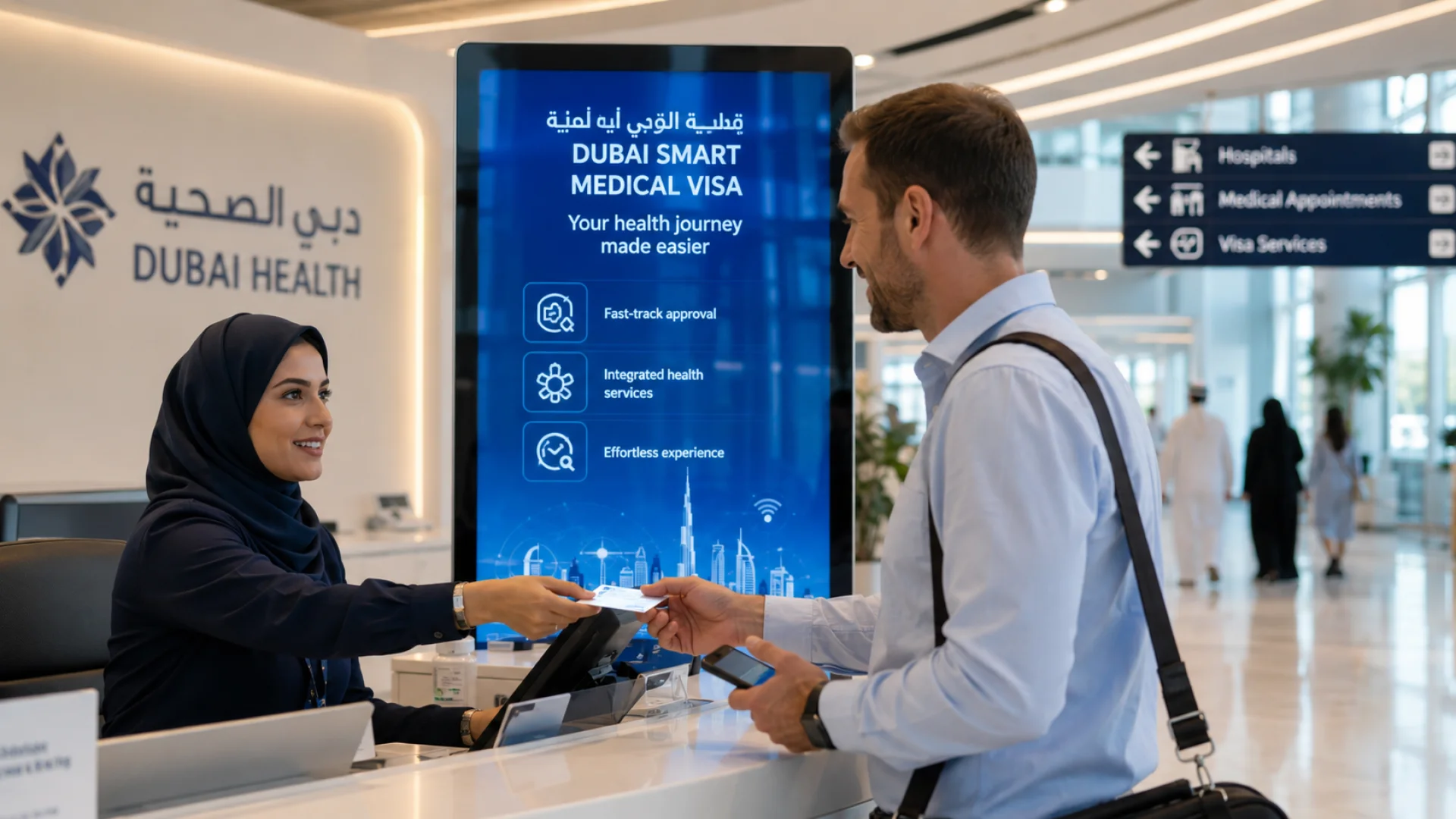

Medical travel rarely begins with a suitcase—it begins with a question: “Can I get there in time, and will the paperwork keep up with my treatment?” Dubai is answering with a new Smart Medical Visa designed to smooth the path for international patients, reducing friction between clinics and immigration steps and making the journey more digital and coordinated. The goal is a more predictable stay that can better match real-life treatment timelines, including recovery and follow-ups. In doing so, Dubai strengthens its push to grow medical tourism by making the patient experience feel supported from the first online inquiry to the flight home.
The glow of a phone screen can feel strangely loud at 2 a.m.
In a quiet room—hotel, rented apartment, sometimes a friend’s spare bedroom—someone scrolls through appointment confirmations and scanned reports. A passport photo. A lab result. A message from a coordinator that ends with the gentlest of all terrifying phrases: “We’ll need a few more days.”
For international patients, that sentence doesn’t just mean recovery. It means logistics. It means visas. It means the thin thread between focusing on your body and being dragged back into the administrative world of deadlines and stamps.
Dubai has seen this story often enough to want to rewrite its most stressful chapter. With its newly introduced Smart Medical Visa, the emirate is pushing for a medical-travel experience that is less paperwork-forward and more patient-forward—built around digital processes, clearer coordination, and a stay that fits the reality of treatment rather than the rigidity of a typical trip.
Healthcare doesn’t move in straight lines. A consultation turns into a test. A test becomes a second opinion. A second opinion becomes a procedure. Then comes the part no itinerary ever captures: rest, monitoring, follow-ups—time that is medically necessary but administratively awkward.
The Smart Medical Visa is meant to better reflect that arc. It’s positioned as a more streamlined, digital route for international patients coming to Dubai for treatment—an attempt to remove the “visa anxiety” that can hover over an already emotional trip.
Think of it as Dubai trying to take what hospitals already aim for—an end-to-end, coordinated patient journey—and extend that logic to the border and beyond.
Most people underestimate how many tiny things can derail a medical trip.
A test result arrives late. A specialist’s schedule shifts. A scan needs repeating. The body heals more slowly than expected—or faster, and the follow-up can happen sooner. Time stretches and snaps back. Plans change. Families renegotiate flights and work leave in hushed calls from hallways.
In those moments, bureaucracy is not a background detail. It becomes part of the patient’s mental load. “Can I extend my stay if I have complications?” “Can my spouse remain with me?” “What happens if the discharge date moves?”
By offering a medical-specific, smarter pathway, Dubai is trying to keep those questions from dominating the experience. The promise is simple: the city will work with the reality of care, not against it.
In global medical tourism, hospitals compete on expertise, technology, and outcomes—but cities compete on something softer and equally decisive: trust.
Trust is built through moments. How quickly a coordinator replies. Whether instructions are clear. Whether the patient feels looked after outside the operating room. Whether the journey—from the first email to the final follow-up—feels designed, not improvised.
Dubai has spent years building itself as a global hub where systems are expected to run smoothly: airports, hospitality, logistics, finance. Healthcare has been stepping into that same spotlight, with clinics and specialized centers expanding and a surrounding ecosystem growing around them—medical coordinators, translators, premium transport, recovery-friendly hospitality, and telemedicine links for pre- and post-care.
The Smart Medical Visa fits that trajectory. It’s not just about entry. It’s about removing friction at the exact moment a patient is least able to tolerate it.
Picture the clinic lobby in the early afternoon: bright, cool air, the soft choreography of nurses and reception teams, the hush of people trying not to show fear.
A patient leans toward a companion and whispers, “Do we need to change the flight?”
And instead of a shrug, instead of “call this number,” there’s a calmer answer: “We’ll take care of the next step. You’ll receive an update.”
That’s the emotional payoff of digitized, coordinated processes. Not the technology itself—but what it allows: less uncertainty, fewer interruptions, more room to focus on medical decisions and recovery.
For providers, smoother visa alignment can mean better scheduling and fewer administrative surprises. For patients, it can mean a trip that feels less like a gamble. And for Dubai, it’s another piece in the puzzle of making medical tourism not only possible—but genuinely welcoming.
Medical travel is never only medical. It triggers a chain reaction in how people live for a few days—or a few weeks—in a foreign city.
When the visa process is smoother and more tailored, the entire chain can operate with fewer shocks. That’s good for patients—and it quietly benefits the businesses and real estate that support them.
A new visa category is, at heart, a promise. And patients measure promises the same way they measure care: by how it feels in real life.
They will look for speed—fast responses, fewer steps. They will look for clarity—transparent requirements, predictable timelines. And they will look for support—help when the treatment plan changes, because it often does.
If Dubai’s Smart Medical Visa delivers on those expectations, it could turn a bureaucratic obstacle into a competitive advantage: not just “great hospitals,” but a city that makes it easier to arrive, stay, heal, and leave with dignity.
For real estate investors, Dubai’s Smart Medical Visa is a signal that the emirate is actively reducing friction in a high-value demand segment: international medical stays. That matters because medical travel generates accommodation demand with distinctive characteristics—often longer than leisure trips, less seasonal, frequently involving companions, and strongly biased toward comfort, privacy, and proximity.
1) Serviced apartments near healthcare clusters: The biggest near-term winners are likely to be serviced living products—furnished units, flexible leases, hotel-grade operations—within easy reach of major clinics and medical districts. Investors should prioritize buildings with elevators, quiet layouts, strong maintenance standards, good air conditioning performance, and simple access to taxis/ride-hailing.
2) Hospitality concepts built for recovery: Hotels and aparthotels that can credibly offer “recovery-friendly” stays (quiet rooms, healthier F&B, laundry reliability, partnerships with clinics, discreet concierge transport) can capture a premium niche. A smoother visa pathway increases conversion: fewer potential patients abandon travel due to administrative uncertainty.
3) Potential for steadier occupancy and longer length of stay: Medical demand can stabilize cashflows because it is not driven solely by holidays or events. However, it requires sophisticated operations: stays may extend unexpectedly, and operators must handle flexible booking policies and patient privacy needs without compromising yield.
4) Mixed-use upside and “health-adjacent” retail: Medical visitors and companions spend locally—on pharmacies, wellness retail, physiotherapy, healthy cafés, convenience services, and home delivery. Mixed-use assets close to medical nodes can benefit from curated tenant mixes that match this demand.
5) Operator quality becomes an investment lever: In medical-stay real estate, the building is only half the story. Strong operators—those who can build referral relationships with clinics and international patient coordinators—can defend occupancy and pricing. That operational moat can translate into more resilient returns.
Investor takeaway: By making medical travel easier to organize and potentially more predictable, the Smart Medical Visa supports demand growth for high-quality, flexible accommodation around healthcare hubs. Investors positioned in serviced living, recovery-oriented hospitality, and mixed-use assets near key medical districts may see durable, service-driven income opportunities.