
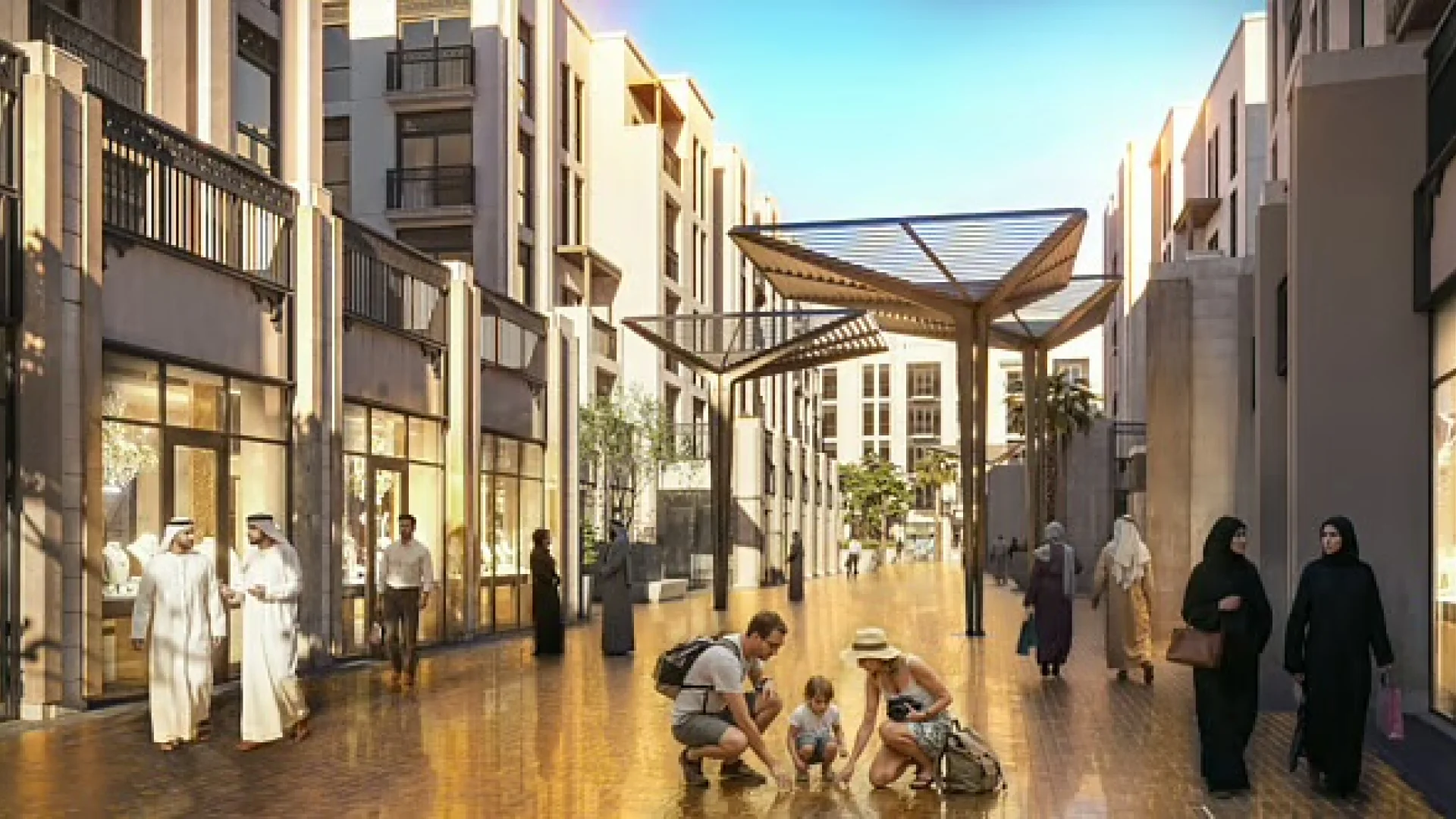

In Deira, where shop windows already glitter like small suns, Dubai is preparing a new urban calling card: the world’s first “Street Gold District” around the iconic Gold Souk. The plan is to elevate the streetscape, improve how visitors move through the area, and strengthen the district’s identity as a global gold-shopping destination. It’s a modernization that leans on heritage—keeping the souk’s human scale and bargaining spirit, while making the entire quarter easier to navigate, more photogenic, and more commercially coherent.
The light hits first. Not the sound of traffic, not the chatter—just a flash off a necklace in a display, a quick blink of brightness that makes you slow down. In Deira’s Gold Souk, gold doesn’t sit quietly. It hangs, it cascades, it stacks in dense, shining walls. You walk past one window and your reflection comes back warmer, richer, almost theatrical.
“Looking only?” a salesman asks, half-smiling, already lifting a tray as if it weighs nothing. “Or today is buying day?”
This is the scene Dubai wants to frame—and amplify. Around the famous Gold Souk in Deira, the emirate is planning what it calls the world’s first “Street Gold District”: not a single building or a sealed-off mall, but a connected street quarter designed to feel like one continuous destination. The goal is straightforward: a sharper look, smoother visitor movement, and a stronger identity for the gold trade at street level.
Think of it as giving a legendary market a clearer stage. The Gold Souk already draws tourists and serious buyers, but a district approach aims to make the experience more intuitive and more immersive—so people don’t just arrive, purchase, and leave, but wander, discover, and stay.
In practical terms, it’s the difference between a cluster of shops and a place that feels curated. The same merchants. The same craft. But the walk between them becomes part of the story—like chapters instead of scattered pages.
Deira has always had a different rhythm from the glass-and-steel postcard of modern Dubai. It’s more intimate, more conversational. The souk’s lanes carry a kind of accumulated trust: families buying wedding sets, visitors hunting for a first gold bar, long-time customers returning to the same counter because “he knows my taste.”
A woman leans in toward a display. A chain is lifted into the air, and the links catch the sun in tiny pulses. “This pattern is new,” the shopkeeper says, letting it drape across his palm. “See how it falls.” It’s a sales pitch, sure—but it’s also craft, pride, a moment of performance.
Dubai’s plan for a Street Gold District is, at its core, an attempt to protect that atmosphere while upgrading the frame around it. Because the truth is: in a city built on attractions, attention is currency. And heritage, if it isn’t cared for, can fade into the background noise of the next big thing.
Shopping has changed everywhere. People still buy, but they also document, compare, and share. They want places that are easy to read: where to start, where to turn, what not to miss. A district concept can make a historic marketplace feel legible to a first-time visitor without sanding off its personality.
That’s the tightrope Deira must walk. The Gold Souk’s charm is not only the merchandise—it’s the negotiation, the quick arithmetic, the “best price for you” said with a wink. If the streets become too polished, the souk risks feeling staged. If nothing changes, the area can struggle against newer retail zones designed for comfort and flow.
The promise of the Street Gold District is a middle path: keep the soul, improve the movement. Let the traditional market remain the hero, but give it better lighting, clearer entrances, and a street experience that feels intentional.
Stand near the creek and you feel it: Deira is not only commerce, it’s memory. Abras glide across the water. Signs in different scripts overlap like layers of time. Even the pace of walking is different here—slower, more observant, as if the neighborhood is asking you to pay attention.
A Street Gold District, if done well, doesn’t replace that. It underlines it. It makes the old story easier to read, and harder to ignore. In Dubai, superlatives often arrive in the form of height and scale. This one arrives as something else: a deliberate focus on streets—on the public realm where a city’s identity is felt most honestly.
District-making tends to ripple beyond retail. A more coherent, higher-profile visitor destination can affect adjacent property dynamics—especially in historic commercial areas. Around Deira, the Gold Souk and the creekside, watch for potential uplift in:
As always, the micro-location matters most: the street you’re on, the corner visibility, the walk time to the souk’s busiest lanes. In districts like this, one block can behave like a different market.