
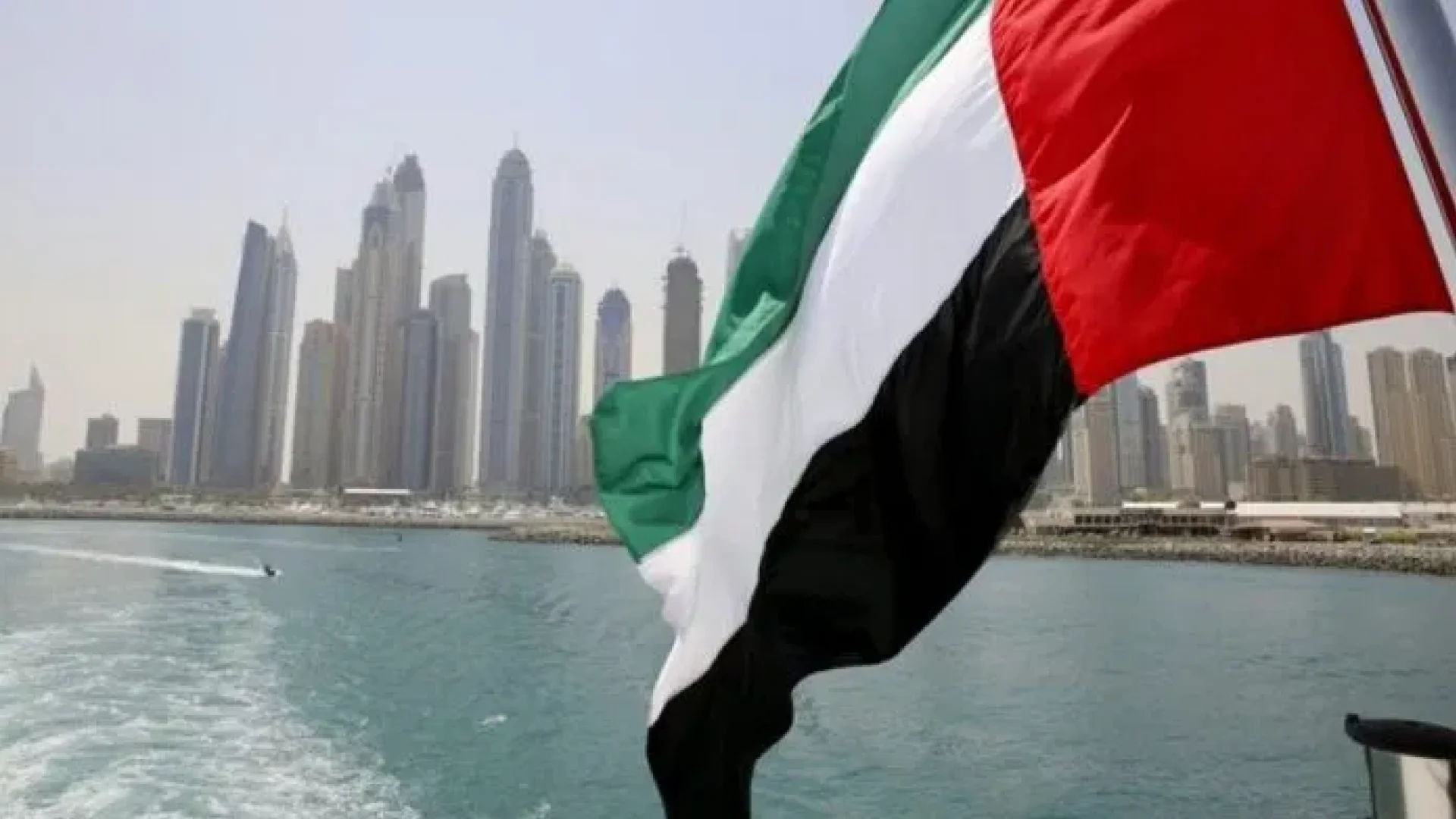

As Washington and Tehran edge toward another dangerous cycle, Dubai reappears as the region’s paradoxical capital of calm: discreet, hyper-connected, and relentlessly transactional. The article explains how the UAE—especially Dubai—tries to keep trade moving, money flowing, and diplomacy humming without being crushed between US sanctions enforcement and Iran’s proximity. A single escalation around the Strait of Hormuz can translate instantly into higher insurance, rerouted flights, pricier freight, and slower decisions. In a city built on movement, geopolitics becomes a line item—and a mood.
The creek looks almost theatrical at dusk. A wooden abra noses through the water, its engine coughing, while the skyline behind it burns with reflected sunlight. On the promenade, you can hear three languages in one breath—Arabic, English, Farsi—stitched together by bargaining and phone calls. Dubai’s superpower has always been rhythm: goods in, people through, capital parked neatly and then moved again.
But tonight the rhythm has an extra beat, faint but persistent—the kind you feel more than you hear. In a café where the air smells of cardamom and cold glass, a logistics manager leans in toward his screen. “If Hormuz goes hot,” he says, half to himself, “everything changes by morning.” He doesn’t mean the skyline. He means the spreadsheets.
The piece frames Dubai as a place that survives by remaining usable when others become complicated. It doesn’t shout its politics; it offers infrastructure. It doesn’t promise purity; it promises continuity—ports, airlines, free zones, banks, lawyers, brokers, the whole choreography that turns uncertainty elsewhere into transactions here.
That’s why the possibility of a US-Iran war—or even a sustained escalation—lands in Dubai like a weather warning for a city that lives outdoors. You might not see the storm yet. But you start moving furniture.
In Deira’s older lanes, the proximity is not theoretical. It’s in the saffron tins, the shipping receipts, the conversations that slip into Farsi mid-sentence. For decades, Dubai has been a commercial window for Iranian merchants and families: a place to buy, to route, to repackage, to breathe when restrictions tightened.
The article highlights the uncomfortable truth embedded in that history. When sanctions intensify, so does the incentive for detours—third-country intermediaries, re-export chains, grey-zone services. Dubai’s advantage—its connectivity—can also become its vulnerability if the world decides the hub looks too much like a loophole.
America is a security partner; Iran is a geographic fact. The UAE cannot move away from either. So it practices a specific form of statecraft: keep the temperature down, keep channels open, keep the economy insulated. The piece suggests that, compared with earlier eras, the UAE’s approach has become more disciplined—less swagger, more calibration.
In Dubai, calibration is operational. A bank compliance team asks for extra documentation. A corporate lawyer rewrites a clause. A shipping firm adds a war-risk premium. No speeches, no flags—just friction, quietly introduced into the machine.
The Strait of Hormuz is only a phrase until it becomes a surcharge. The article underscores how quickly maritime tension turns into real costs: insurers reprice risk, carriers adjust routes, cargo schedules wobble. Dubai’s model—logistics, trade, travel—depends on predictable flow. Even a partial disruption doesn’t need to shut the city down to make it feel different. It only needs to slow it.
And the effects ripple outward. Higher freight costs filter into consumer prices. Delays hit construction timelines. Uncertainty reshapes corporate planning. For investors, these second-order effects matter as much as the headline drama.
A striking thread in the piece is the emphasis on backchannels. The Gulf states, particularly the UAE, have learned that in a region where miscalculation is expensive, public bravado is a weak currency. So they invest in mediation, discreet contact, and de-escalation—sometimes hosting, sometimes facilitating, often just keeping doors open that others slam shut.
You can feel that in Dubai’s business districts: meeting rooms with tinted glass, invitations without photographers, conversations that end with “Let’s take this offline.” The city sells a particular kind of reassurance: not that crises won’t happen, but that systems will keep running.
The article reads geopolitical escalation not only as a military scenario, but as an administrative one: sanctions lists, financial restrictions, travel constraints, cyber risks. Dubai, as a global hub, is both exposed and adaptable. Exposed because it thrives on openness; adaptable because it has options—new markets, substitute routes, diversified sectors.
The question, then, is not whether Dubai “wins” from conflict. It’s what kind of marks conflict leaves on a city designed for speed. The most immediate marks tend to show up in:
What Dubai has learned to manufacture—almost like desalinated water—is normalcy. You step from a tense headline into a lobby that smells of polished wood and controlled air. You sign documents. You close deals. The city’s value proposition is that life can proceed. The article implies that this “operational calm” becomes more valuable in periods of regional volatility, attracting businesses and individuals looking for continuity.
But normalcy is also reputational. If global policymakers conclude Dubai is facilitating sanction evasion, the backlash arrives through banking relationships, regulatory scrutiny, and higher risk premiums. In other words: the city’s ability to stay open depends on being trusted.
Dubai sits on a tightrope: its connectivity makes it indispensable in a crisis—and vulnerable to pressure because of that same connectivity. The UAE’s strategy is to keep escalation away from its shores, keep diplomatic lines intact, and keep the hub compliant enough to remain plugged into global finance.
Dubai is an airport-city. When storms gather, the control tower doesn’t panic. It reassigns slots.
For property investors, US-Iran tension is less about dramatic worst-case scenarios and more about how uncertainty gets priced into money, movement, and decision-making. Dubai’s real estate market is deeply international; geopolitics influences it through risk premiums, liquidity, and migration of capital.
1) Demand patterns: short-term pause, medium-term “safe-functioning” inflows
In moments of regional stress, viewing and buying can slow as households and corporates wait for clarity. Yet Dubai can also see inflows from buyers seeking a stable, serviceable base—especially if the city continues to operate smoothly while alternatives feel constrained. Prime, end-user-friendly assets tend to hold up better than speculative fringe supply.
2) Cost of capital and liquidity: the quiet transmission mechanism
Even without direct disruption, wider risk aversion can tighten credit conditions and raise required returns. Investors should underwrite with buffers: more conservative leverage, realistic vacancy assumptions, and contingency for construction timing if logistics costs spike.
3) Compliance and source-of-funds: transaction friction can rise
Heightened sanctions enforcement typically increases KYC scrutiny. That can lengthen transaction timelines and reshape buyer composition, favoring transparent capital and institutional-grade processes. For the market, stricter compliance can be supportive long-term—credibility lowers systemic risk—but it may reduce velocity in the short run.
4) Sector sensitivity: where resilience often concentrates
5) Practical investor stance: build optionality
In a headline-driven environment, optionality is alpha. Favor assets with multiple exit paths (sell or rent), durable rental demand, and locations that remain liquid under stress. Dubai can still perform well in turbulent times—but only for investors who price geopolitical risk into timelines, funding, and exits rather than treating it as background noise.