
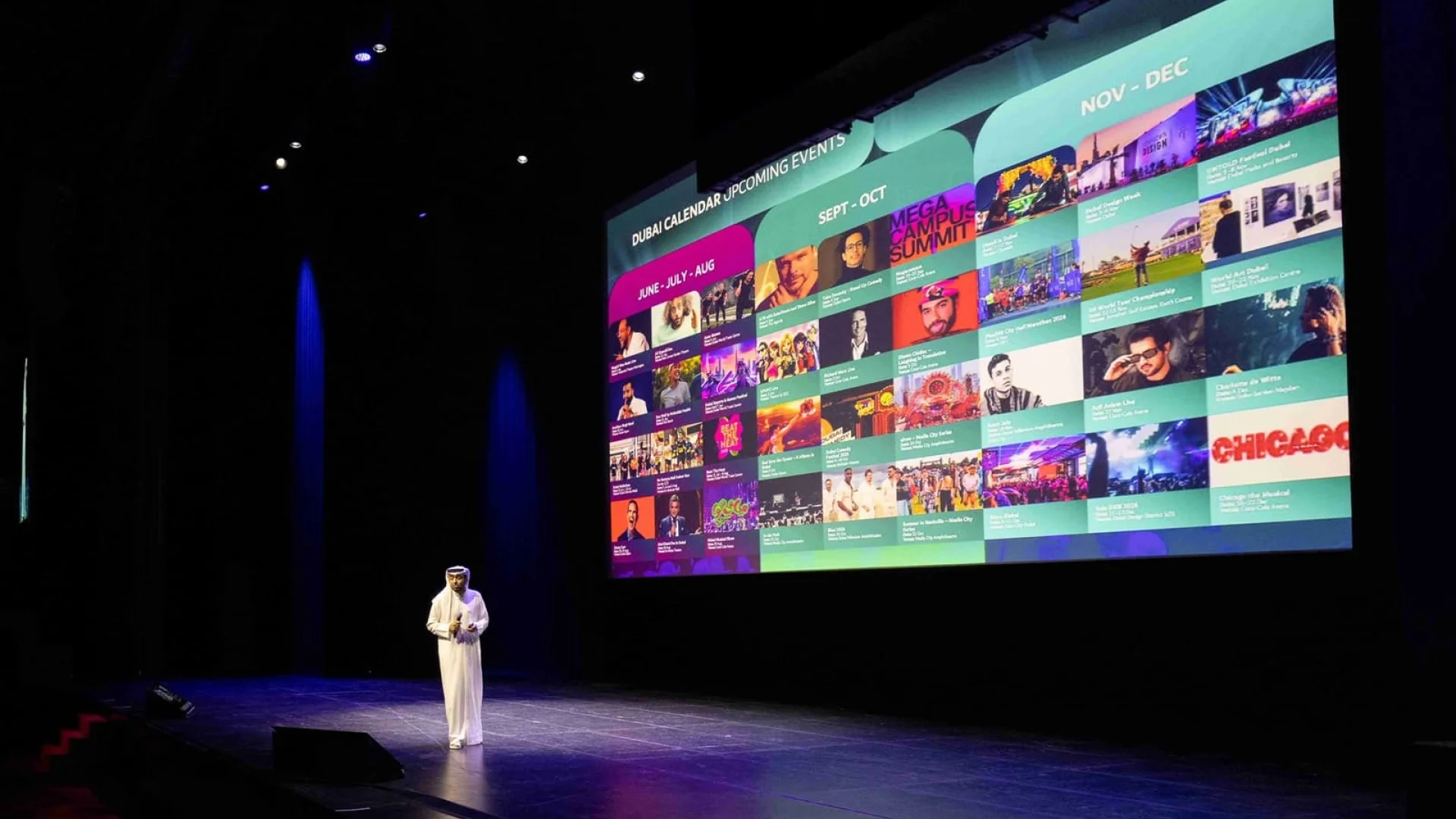
Dubai is doubling down on what it does best: turning a city into a live production where shopping, entertainment and travel blend into one seamless itinerary. For the rest of 2026, officials have set out a coordinated push across tourism, retail and events—designed to create more reasons to visit, more moments to spend, and more cues to return. The logic is simple and highly engineered: fill the year with magnets, smooth out seasonality, and convert footfall into longer stays and higher per-visitor outlay. What looks like a list of plans is, up close, a choreography of arrivals, crowds, and cash registers—Dubai’s “always-on” model turned up another notch.
The first thing you notice isn’t the skyline. It’s the tempo.
Outside a hotel lobby, the doors breathe people in and out in steady waves—families in matching trainers, conference badges swinging like pendulums, a couple arguing softly about whether they have time for “one quick stop” at the mall before dinner. A valet leans in, nods, and says, “Two minutes, sir.” Somewhere in the distance, a bassline from a nearby event venue thumps like a second heartbeat.
Dubai doesn’t just host visitors. It conducts them.
Dubai has revealed a fresh set of plans covering tourism, retail and events for the remainder of 2026—less a single announcement than a bundled strategy. The aim is to keep the city’s visitor economy moving: more reasons to come, more things to do once you land, and more timed incentives to spend across hotels, malls, restaurants, attractions and experiences.
This is not only about headline visitor numbers. It’s about behaviour: length of stay, per-capita spend, and repeat trips. By tightening the link between major events, shopping moments and travel offers, Dubai is effectively turning the calendar into infrastructure—an invisible map that directs crowds through the city’s most valuable touchpoints.
Dubai’s tourism machine has always understood the psychology of the “one more thing.” You arrive for a weekend and end up extending for an extra day because someone tells you about a show, an exhibition, a beach club, a restaurant you saw on social media. The plans for the rest of 2026 lean into that dynamic: create more moments that feel unmissable, and make them land in the right weeks to keep demand strong beyond traditional peak seasons.
Think of it as itinerary engineering. Families need different hooks than business travellers. Luxury guests respond to exclusivity and convenience. Event tourists follow the pull of a date on the calendar. Dubai’s approach is to offer overlapping reasons—so that one trip can satisfy multiple motivations at once: leisure plus shopping, business plus entertainment, culture plus cuisine.
The impact is felt not only at the airport. It shows up in late check-outs, sold-out restaurant reservations, and the simple fact that the taxi queue outside a venue doesn’t thin out until well after midnight.
In Dubai, retail isn’t a side activity. It’s a climate-controlled, highly social form of urban life. Malls are meeting places, entertainment hubs, dining districts, and—crucially—high-performing engines of tourist spend. That’s why retail is positioned as a central pillar of the 2026 push.
The city’s plan is to make shopping feel time-sensitive again: campaigns, seasonal activations, and event-linked retail moments that turn a generic “we can shop anytime” into “we should go now.” The best retail strategies don’t just offer discounts; they offer narrative. Limited-time pop-ups. Curated experiences. Weekend peaks that align with major events and school holidays.
You can hear it in the micro-dialogues that echo down glossy corridors:
“Is it only here?”
“Only this week.”
“Then we go tonight.”
Those small decisions—multiplied by thousands—are exactly what the city is trying to systematise.
Some cities treat events like decoration. Dubai treats them like transport links: they move people, money, and attention. By outlining plans for the rest of 2026 across the events landscape, the city is signalling continuity—more programming, more international pull, more repeatable formats that keep the destination in constant circulation.
When the event calendar thickens, the effects ripple outward. Hotels adjust pricing and minimum stays. Serviced apartments fill up. Restaurants flip tables faster. Ride-hailing demand spikes. Entire neighbourhoods take on a brighter, louder mood—more languages on the pavement, more cameras held high, more “Where are you from?” conversations at café counters.
And because Dubai is built for scale—venues, logistics, hospitality capacity—the city can absorb big influxes without looking surprised. That’s part of the brand: efficiency wrapped in spectacle.
Dubai has always had festivals, shopping seasons and blockbuster events. What stands out in the 2026 positioning is the visible bundling—tourism, retail and events presented as one coordinated product rather than parallel tracks.
It’s the difference between announcing a concert and designing a weekend around it. Between promoting a shopping campaign and linking it to arrivals, hotel offers, dining routes, and social-media-ready experiences. The city is not just programming entertainment; it’s programming movement.
Dubai’s visitor economy runs on a simple but powerful loop. The 2026 plans reinforce it:
The city’s genius is that it rarely sells one thing at a time. A visitor arrives for an event and leaves with shopping bags. A business traveller adds a beach day. A family holiday turns into a loop of attractions, dining, and “just one more mall.” It’s not accidental. It’s designed.
Dubai works because it mixes the cinematic with the ordinary. One moment you’re watching a supercar glide up to a hotel entrance; the next you’re standing behind a dad buying ice cream for three impatient kids. The city accommodates both without losing pace, and that widens the addressable market.
For 2026, that matters. A calendar full of reasons only performs if enough segments can respond at once—families, luxury travellers, short-break tourists, regional visitors, global business guests. The more diversified the demand, the more resilient the year looks on the revenue side.
For real estate investors, Dubai’s 2026 tourism/retail/events push matters less as a headline and more as a cashflow architecture. A denser, better-signposted calendar can improve forecastability—helping owners and operators model occupancy, daily rates, seasonality and ancillary revenue with more confidence.
Where the spillover is most direct:
Investor watchpoints for 2026: focus on micro-locations that benefit from both event spikes and everyday demand (the “two-engine” neighbourhoods). Evaluate operational capability in short-stay and serviced living—competition rises quickly when demand is visible. And prioritise assets that are themselves part of the experience: views, amenities, walkability, brand partnerships and curated communal space increasingly influence pricing power.
Ultimately, Dubai is signalling something investors value: not just growth, but rhythm. When a city can create predictable pulses of demand—weekends that sell themselves, seasons that don’t go quiet—real estate strategies in hospitality-adjacent segments become easier to underwrite, scale and optimise.