
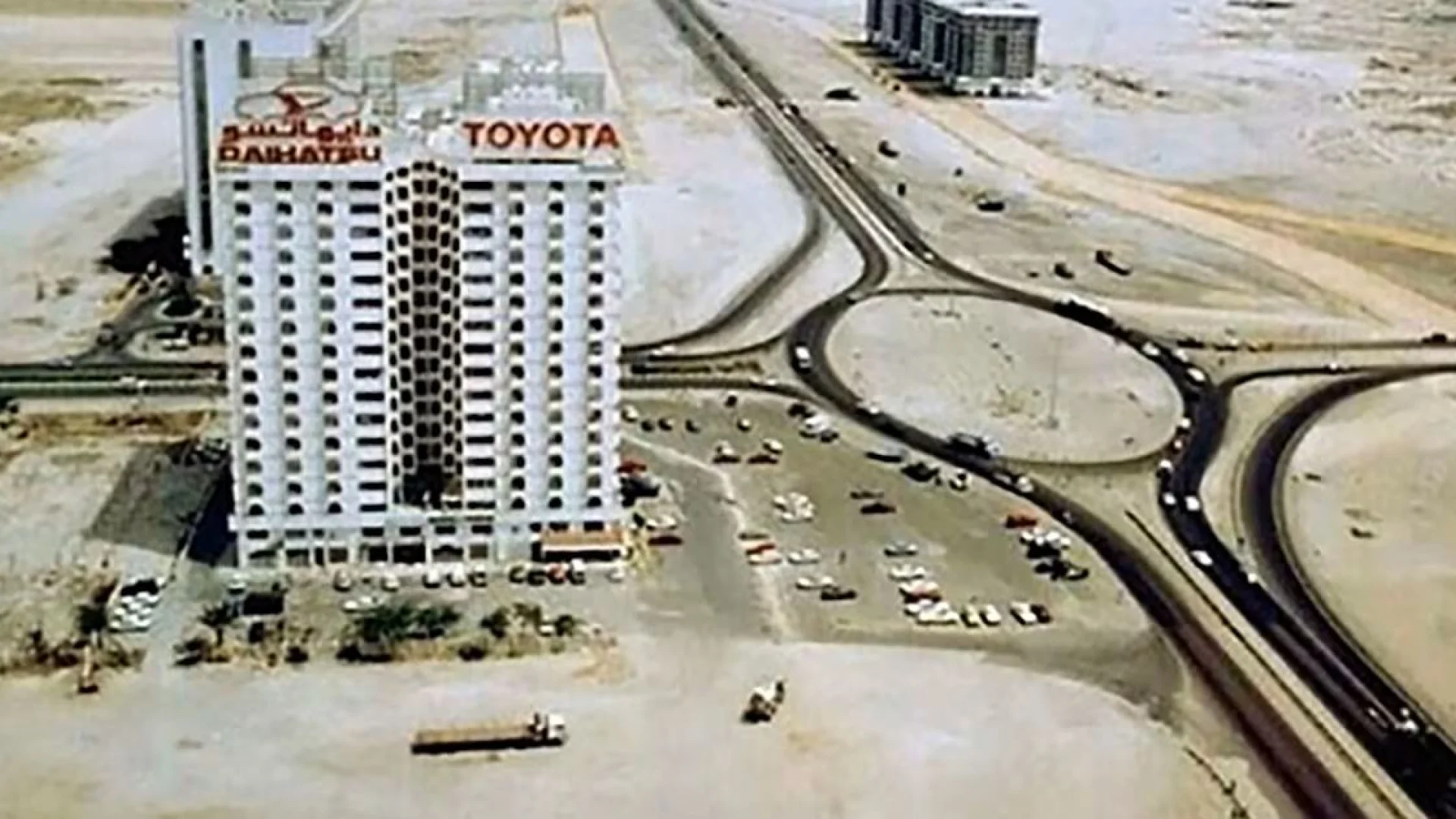

A city’s compass is about to be redrawn. Dubai’s Toyota Building, the bright, unmissable wayfinder on Sheikh Zayed Road, is set to come down in 2027—closing a chapter that shaped how residents gave directions, met friends, and bought their first car. The site is expected to be repositioned for the next cycle of urban life, in line with Dubai’s drive for denser, mixed, better-connected hubs. Details of the successor scheme remain under wraps, but the message is clear: the road ahead asks new questions of a prime address.
Dusk slides over Sheikh Zayed Road like a ribbon of ink. Towers wink awake. Brake lights bead into a crimson necklace. And above the rush—exactly where you expect it—the red badge: Toyota. “Here?” the driver asks, flicking the indicator, eyes lifted to the glow. You nod. In Dubai, this little exchange is muscle memory. By 2027, it becomes a memory, full stop.
The Toyota Building is set for demolition in 2027. It’s practical news with emotional weight. The structure has long been more than a showroom and service address. It’s a point of reference—spoken, texted, mapped. A beacon that stitched itself into the city’s mental atlas.
Its departure says something fundamental about Dubai. The city doesn’t just grow; it edits. It retires icons not out of indifference but out of intent. Sites along the main artery are being reprogrammed to do more with every square meter: host multiple uses, pull people to ground level, plug into transit, shade sidewalks, cut emissions, and tell a fresh story for the next decade.
On the ground, big trends show up in small moments. A salesperson who’s watched models evolve year by year. A service tech who knows the morning echo under the atrium. Long-timers with “meet you by Toyota” saved into their phones. Change in Dubai is ordinary—and sometimes oddly intimate.
The logic is urban and clear. Prime frontages must carry more life per hour: workplaces up top, hospitality and retail at the base, porous lobbies spilling onto shaded pavements, and transit within a few shoe lengths. Mixes like these don’t just lease; they live. They give a citizen something to do at 11 a.m., 6 p.m., and again after dark—without crossing a highway.
And still, this is a goodbye. That hush you hear is the collective intake when a long-trusted landmark exits stage left. The red glow that once cut through sandstorms and summer haze will blink off. For a night or two, the skyline will look unfamiliar. Then the work lights will come on, and a new rhythm will begin.
Dubai’s habit of reinvention can read like velocity. But it’s choreography. Corridor by corridor, the city aligns real estate with mobility, climate goals, and street life. Buildings become platforms: for jobs, for leisure, for rituals like morning coffee and evening walks. The strongest addresses are not the tallest—they’re the ones that work hardest from ground to crown.
So what replaces the Toyota Building? The market will speculate; the plans will land when they’re ready. Given the site’s visibility, expect uses that welcome the public, create address value day and night, and make the sidewalk the real star. Think less about a facade you drive past and more about a place you step into.
For investors and developers, 2027 is more than a date; it’s a signal flare. The deliberate retirement of a headlining landmark says the corridor is entering a new performance. Here’s what to watch—and how to get ready:
Keep your eye on:
Bottom line: where a red logo goes quiet, the next story gets a louder brief. Plan for 2027 as a controlled pause—and 2030 as opening night.